
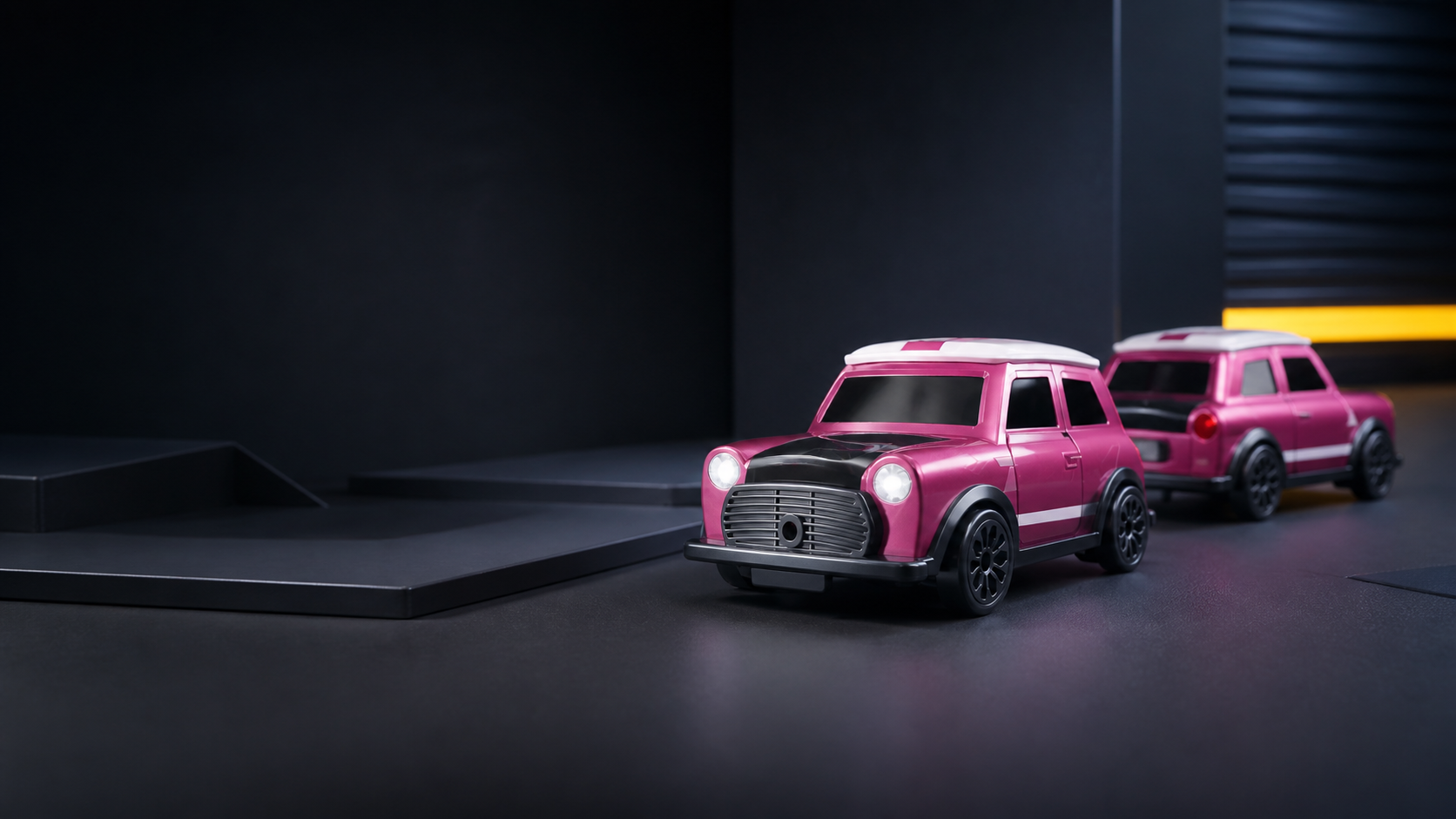
The winning move for sourcing RC cars in 2026 is to split your buy between two lanes: high-volume CoreRCCar under $10 for TikTok-style impulse sales, and $50–$350 hobby-grade rigs where durability and brand justify the margin. Electric models own 68% of the market, and the category is projected to hit USD 1.03 billion by 2032 at a 14.4% CAGR. This guide ranks the 10 most profitable RC car types for wholesale buyers—off-road buggies, drift cars, rock crawlers, high-speed racers—and tells you which to stock, what MOQ to expect, and which questions to ask your factory before you commit.
Key Takeaways
- Electric RC cars dominate: 68% of the market. Stock brushless motor models—they run about 27% faster than brushed, a spec that sells itself to hobbyists.
- The market splits into two lanes: sub-$10 CoreRCCar (drift cars moved 78k+ units on TikTok) and $50–$350 hobby-grade trucks where brands like Traxxas (16% global share) carry premium margins.
- Drift cars are your viral volume play, but vet the supplier hard—cheap drift chassis break at the drive shaft. Ask for the exact failure mode on the part that snaps.
- Skip wired RC cars entirely. 2.4GHz wireless is the standard; anything else is dead stock waiting to happen.
- For bulk orders, demand a sealed golden sample for color and fit, and make sure your lab report matches the production lot—a type-test report doesn't cover a later batch unless SKU, materials, and date align.
Top 10 RC Car Picks for Wholesale 2026
1. Off-Road Monster Trucks (Bashing) — Best for volume and durability. The $50–$150 entry-level segment is where Bezgar and Redcat dominate. Big tires, plastic or aluminum bodies, and enough suspension to survive a drop make these the workhorses CoreRCCar-grade bashing. For resellers, this is the safest bet for repeat orders because hobbyists break parts and come back for spares. Stock the brushless versions if you can; the 27% speed bump is a talking point your retail customers will hear from their own customers.
2. Drift Cars — Best for viral TikTok volume. One top drift model moved 2.6M+ units; another sold 78,445 units on TikTok. These are cheap to make, but the drive shafts and diffs are the weak point. If you're buying unbranded for impulse sales, ask the factory which part fails first and get a replacement parts pack in the same container. This is a high-volume, low-margin play, so nail your CBM and freight cost.
3. Rock Crawlers — Best for niche margins. Crawlers are slow, technical, and loved by enthusiasts who'll pay $100–$300 for a rig that climbs over rocks. Demand is lower than bashing trucks, but margin per unit is higher because buyers are less price-sensitive. Look for 4WD with realistic low-speed torque. A brushed motor is fine here; speed isn't the selling point—it's the crawl ratio.
4. High-Speed Racing Cars (On-Road) — Best for performance buyers. These are the speed demons: 30+ mph on flat pavement. Brushless motors are the draw, and the 27% speed advantage over brushed is the spec that closes the sale. The downside is they're fragile—one curb and you're replacing a suspension arm. Stock spare parts or accept higher return rates. For B2B, buy in smaller quantities and test one container before committing.
5. Stunt & Flip Cars — Best for gift and impulse buys. These do backflips and barrel rolls, and they're cheap to make. The plastic body takes a beating, so the failure mode is usually the battery door or the charging port. Ask about battery access and retention—a loose battery door is a return you don't want. These sell well as birthday gifts; think $15–$30 retail.
6. Buggy (Off-Road) — Best for all-rounder volume. Buggies are the classic RC shape, and they work on dirt, gravel, and pavement. They sit between monster trucks and racing cars on price and durability. If you're filling a mixed container, buggies are the safe middle shelf. Go 2.4GHz, brushless if the price allows, and you'll cover both gift-buyers and hobbyists.
7. STEM / Build-Your-Own Kits — Best for the blue ocean. 62% of parents say they CoreRCCar that build problem-solving skills. These kits are lower competition and justify a higher price point because the buyer sees educational value. The catch: they're harder to assemble, so include clear instructions and test the tooling. A kit that breaks during assembly is a one-star review waiting to happen.
8. 2.4GHz Radio-Controlled Trucks (Entry-level) — Best for price-point coverage. These are the $20–$40 trucks that fill the void between CoreRCCar and hobby-grade. They're not fast, but they're reliable and cheap to ship. The key spec is the 2.4GHz radio—if a supplier offers a wired version, walk away. Wired RC is obsolete, and your customers know it.
9. Aluminum-Bodied Monster Trucks — Best for differentiation. The trend in the $50–$100 segment is aluminum bodies over plastic—they feel premium and survive crashes better. If you can source an aluminum-bodied truck at a competitive price, you'll stand out on Amazon and in brick-and-mortar. Ask the factory for the aluminum grade and wall thickness; thin aluminum dents, and a dented body is a return.
10. Eco-Friendly / 3D-Printed Chassis Models — Best for the green niche. 47% of companies are moving green, and some RC buyers care. This segment is small but growing. You'll pay more per unit, and the MOQ might be higher because the materials are less common. If your customer base includes eco-conscious retailers, this is a differentiator—but it's not a volume play yet.
Picks at a Glance
| Off-Road Monster Trucks | Price: $50–$150 | Material: plastic or aluminum body | Best for: volume bashing, spare parts revenue |
|---|---|
| Drift Cars | Price: under $10 | Material: plastic chassis | Best for: viral TikTok impulse sales, low-margin volume |
| Rock Crawlers | Price: $100–$300 | Material: plastic with metal drivetrain | Best for: niche margins, enthusiast buyers |
| High-Speed Racing Cars | Price: $50–$350 | Material: plastic with brushless motor | Best for: performance buyers, spare parts |
| Stunt & Flip Cars | Price: $15–$30 | Material: plastic | Best for: gift market, impulse buys |
| Buggy (Off-Road) | Price: $20–$100 | Material: plastic | Best for: all-rounder volume, mixed containers |
| STEM Kits | Price: $30–$100 | Material: plastic parts, buildable | Best for: educational blue ocean, parent buyers |
| Entry-level 2.4GHz Trucks | Price: $20–$40 | Material: plastic | Best for: price-point coverage, reliable gift buys |
| Aluminum-Bodied Monster Trucks | Price: $50–$100 | Material: aluminum body, plastic chassis | Best for: differentiation on Amazon and retail |
| Eco-Friendly Chassis Models | Price: higher (varies) | Material: 3D-printed or recycled | Best for: green niche, brand storytelling |
How to Choose RC Cars for Wholesale: A Buyer's Checklist
Match your channel to the product. Selling on TikTok or Amazon for impulse buys? Skew toward drift cars and stunt trucks under $30. Targeting hobby shops or specialty retailers? Stock brushless monster trucks and rock crawlers—they'll pay for themselves in margin and parts sales.
Filter by durability. Outdoor RC cars fail in specific ways: sun-bleached plastic bodies, corroded battery contacts from chlorinated water (if used near pools), and cracked chassis from drops. Ask your factory which part fails first and how they test it. The answer will tell you more than any spec sheet.
Treat battery safety as non-negotiable. CoreRCCar need battery polarity, charging, thermal, access, retention, and abuse checks that match the battery type and charger configuration. A cheap Li-ion pack without protection circuitry is a recall waiting to happen. Ask for the battery's UL or IEC 62133 test report, and make sure it matches the production lot.
Check the lab report against your PO. A type-test or golden-sample report does not automatically cover a later production lot. Match the report's SKU, materials, colors, and production date/cohort to your order. If the factory can't match it, the report is just paper.
Know where it's made. Injection-molded plastic RC cars are overwhelmingly made in Chenghai, China. CoreRCCar come from Yunhe, plush from Yangzhou, and general goods from Yiwu—but RC cars are a Chenghai specialty. If a supplier claims otherwise, it's likely a trading company, which is fine—just know you're paying a middleman.
Nail your Incoterms. FOB without a named place (Shantou or Shenzhen) is a freight argument waiting to happen. Write the Incoterms version and the named port into your PO.
FAQ
What MOQ should I expect for custom RC car orders?
For standard OEM models, MOQs typically start at 500–1000 units per model. For custom branding or tooling, expect at least 2000–3000 units. Always confirm the MOQ in writing, and ask if a lower MOQ is possible for a mixed container—some factories allow it at a higher per-unit price.
Which certifications do RC cars need for the US and EU?
For the US, CoreRCCar generally need ASTM F963 and CPSIA compliance (lead, phthalates). For the EU, you'll need EN71 and CE marking, plus a UKCA for the UK. A lab report must match your production lot—type-test reports don't cover later batches unless SKU, materials, and date align.
How do I prevent sun fading and breakage in outdoor RC cars?
Sun fading is a pigment issue—ask the factory about UV-stabilized color masterbatch. Breakage is often a wall-thickness problem in the plastic; request a drawing with critical-to-quality dimensions called out so the factory focuses on those. Always test a pre-production sample outdoors before committing to bulk.
What's the restock cycle for popular RC car models?
Popular hobby-grade models sell out fast, especially after a viral TikTok post. For drift cars, consider a standing order with a factory in Chenghai for monthly restocks. For premium models, keep a buffer of spare parts—that's where the margin is.
Are brushless motors worth the extra cost?
Yes, if your buyers care about speed. Brushless motors are about 27% faster than brushed and more durable, but they add $10–$30 to the unit cost. For the $50–$150 hobby segment, it's a spec that justifies a higher price. For sub-$CoreRCCar, stick with brushed to keep the price point.
Sources
Related Products & Categories
Request a Quote
Ready to spec your next RC car container? Send your target price, quantity, and destination port to our sourcing team, and we'll match you with vetted factories that can meet your MOQ and certification needs.