
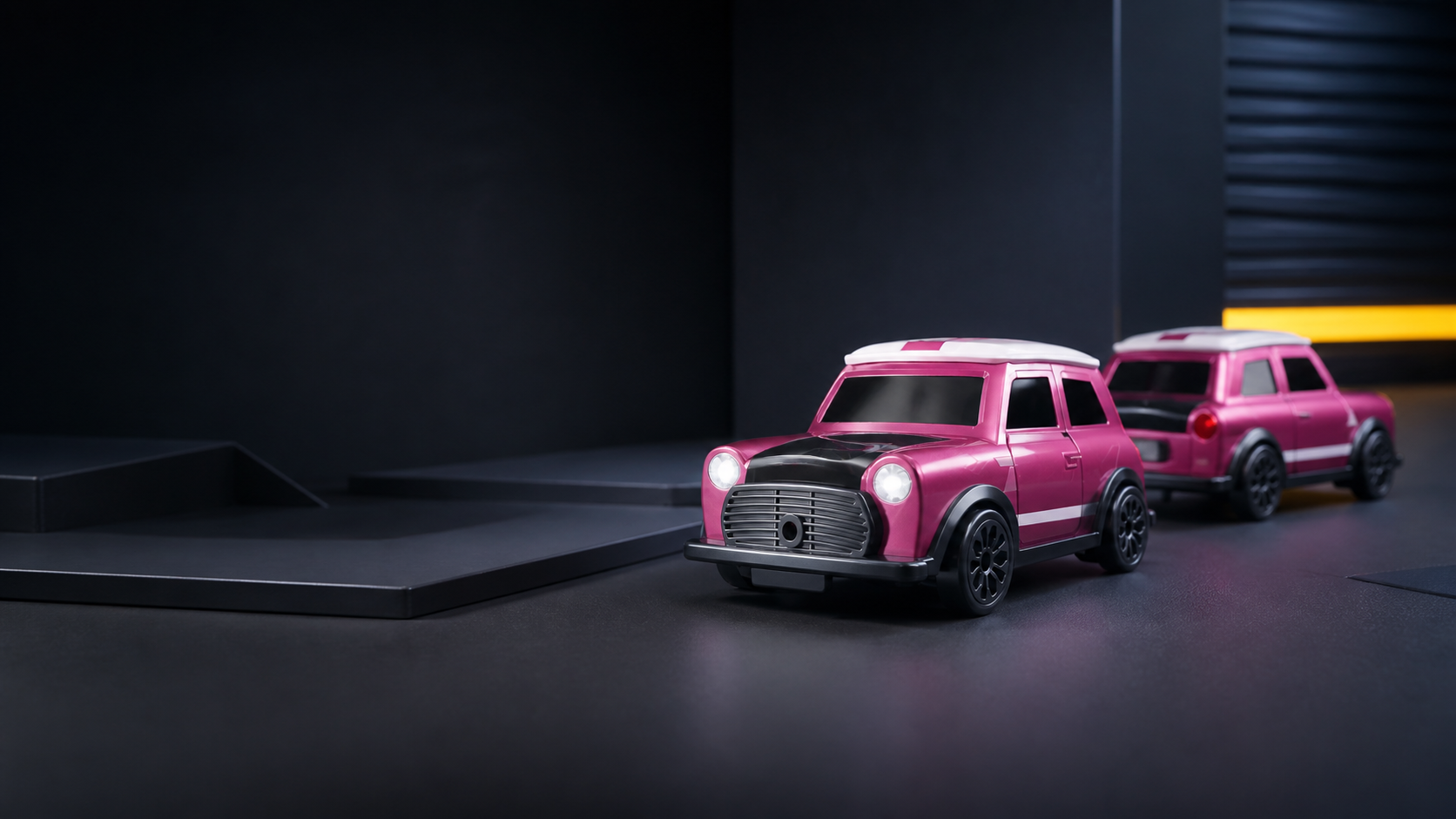
The right charging configuration for an CoreRCCar is a destination-market decision that determines whether your shipment clears customs, passes retail compliance, and avoids returns. For each market you must specify the physical plug (US Type A/B, EU Type C/F, UK Type G), the voltage label (120V vs. 220–240V), and the compliance evidence (FCC for US, UKCA for GB, CE for EU) that matches the exact SKU lot. This article gives importers, Amazon sellers, and private-label buyers a practical checklist for requesting the correct charger, cable, wall adapter, and paperwork for each destination.
Key Takeaways
- For US orders, request a charger that supports 120V and carries FCC Part 15B evidence; verify the FCC filing and logo, not just a sticker.
- For EU orders, specify CE with EN 62368 (or EN 60950) and RoHS compliance; ask for the Declaration of Conformity and test report.
- For UK (Great Britain), use UKCA marking—but remember Northern Ireland may require CE or CE UKNI; confirm the destination before selecting evidence.
- Wide-voltage input (100–240V) can cover multiple markets, but each market still requires its own safety and EMC certification; do not assume one certificate covers all.
- Packaging contents must match the destination: include the correct plug head, voltage label, and translated instructions; never rely on a generic 'global' pack.
How to Match Charger Specs to Each Destination
The physical plug is the first spec to lock down. US uses Type A/B (120V), EU uses Type C/F (220–240V), UK uses Type G (230V), Japan uses Type A (100V), Australia uses Type I (240V). The wall adapter must physically fit the outlet and the voltage label must match the grid—otherwise the charger may not work or could be unsafe.
Next, the compliance evidence. For the US, FCC Part 15B covers electromagnetic compatibility; the charger must support 120V and be tested by a US-recognized lab. For the EU, CE requires EN 62368 (or EN 60950) for safety and EN 55032/EN 55024 for EMC, plus RoHS for hazardous substances. The UK uses UKCA, but Northern Ireland may require CE or CE UKNI—confirm the exact destination.
For Japan, PSE certification is needed—Diamond PSE is compulsory for certain products, tested by a METI-designated lab; the charger must support 100V and include Japanese safety warnings. South Korea requires KC certification with K 62368 and K 55032 reports. Australia/New Zealand require RCM with AS/NZS 60950 and CISPR 32, and registration with EESS.
Ask the factory for the actual test report for each market—not just a claim. Paperwork that does not match the lot is not paperwork. A UKCA certificate on an electric bubble machine does not cover a VOC file; similarly, a CE report for one SKU does not apply to another. Map market, lot, and which file covers which test.
What to Put in the RFQ: The Charger Specification Checklist
Include these line items in your RFQ for an RC car with charger so the factory knows exactly what to pack: plug type (US/EU/UK/etc.), voltage input and output (e.g., 120V AC to 5V DC), connector type (USB-A, USB-C, barrel), cable length, and compliance marks required (FCC, CE, UKCA, etc.).
Also specify the packaging contents: charger, USB cable, wall adapter (if any), and instructions in the destination language. Warnings and instructions should be translated and placed according to each market's language requirement—not copied from one English package.
Request the efficiency test report at 25%, 50%, 75%, and 100% load; no-load power must meet DOE Level VI (US) or CoC Tier 2 (EU) thresholds. For sensitive electronics, ask about ripple voltage and hold-up time—excess ripple can cause communication failures or audio artifacts.
Confirm the MOQ and lead time for the specific charger configuration. MOQs vary by factory and product; for example, some RC car SKUs have MOQs as low as 16 units, while others require 120–180 units. Ask for the exact MOQ for the charger variant you need.
Where These CoreRCCar and Chargers Are Typically Produced
Most injection-molded plastic CoreRCCar, including the charger and cable, come from the Chenghai district in Shantou, Guangdong. The bulk of 2.CoreRCCar-grade RC cars, stunt cars, and wall climbers are made there. CoreRCCar are more likely from Yunhe (Zhejiang), plush from Yangzhou, and general merchandise from Yiwu.
When you source from Chenghai, expect factories that are used to export compliance—many already hold FCC, CE, and RoHS reports for their standard SKUs. But don't assume a generic report covers your lot. Ask for the certificate that matches your SKU and production date, and verify the plug type and voltage label on the golden sample before mass production.
For line clearance: a new SKU can start with the last SKU's labels still in the hopper. Insist that the factory clears labels, colors, and work instructions before starting your order. A mixed label reaching a retailer is a recall risk, not a minor error.
Destination Market Charger Specs at a Glance
| US | Plug Type A/B; 120V; FCC Part 15B; DOE Level VI efficiency; English instructions |
|---|---|
| EU | Plug Type C/F; 220–240V; CE (EN 62368/EN 55032); RoHS; multilingual instructions |
| UK (GB) | Plug Type G; 230V; UKCA; CoC Tier 2; English instructions |
| Japan | Plug Type A; 100V; PSE (Diamond if compulsory); Japanese safety warnings |
| Australia/NZ | Plug Type I; 240V; RCM (AS/NZS 60950 + CISPR 32); EESS registration |
How to Verify the Charger Before Shipping
Request a golden sample before mass production. Check the plug type, voltage label, and that the correct cable and adapter are actually packed—not just listed on the spec sheet.
Request the compliance reports for the specific market: FCC filing for US, Declaration of Conformity for EU, UKCA for GB, PSE for Japan, KC for Korea, RCM for Australia. Verify the report covers your SKU and lot, not a similar product.
For US tracking labels, the packaging can carry the production cohort and source information when the product itself cannot fit every field. Ensure the CPC (Children's Product Certificate) is matched to the SKU, not to the factory door.
FAQ: Charger and Cable Sourcing by Market
What MOQ should I expect for a custom charger configuration from Chenghai?
MOQs vary by factory and product. For RC cars with charger, some SKUs have MOQs as low as 16 units, but charger-specific MOQs may differ. Ask the factory for the MOQ per charger variant before placing a PO.
Can I use one charger for both US and EU markets?
You can use a wide-voltage (100–240V) charger with interchangeable plugs, but each market still requires its own certification (FCC for US, CE for EU). You must verify that the charger carries the correct compliance mark for each destination.
What compliance evidence do I need for the UK after Brexit?
For Great Britain, use UKCA marking. For Northern Ireland, you may need CE or CE UKNI. Confirm the exact destination before selecting evidence, because the two regions use different routes.
How do I verify the factory's certification is real?
Ask for the actual test report from a recognized lab, not just a claim. Check the report's product description, model number, and issue date against your SKU. Paperwork that does not match the lot is not paperwork.
What should I specify in the RFQ for the USB cable?
Specify connector type (USB-A vs USB-C), cable length, and whether it carries data or just charging. If it has a fast-charging chip, request EMC compliance evidence.
Sources
Request a Quote
Ready to source CoreRCCar with the correct charger configuration for your market? Contact us for a quote and we'll help you match the plug, voltage, and compliance evidence to your destination.