A Children's Product Certificate (CPC) is issued by the responsible manufacturer or importer for applicable US children's products, and it identifies the rules supported by the testing evidence. The practical consequence for a US CoreRCCar order is blunt: you cannot treat a PDF a factory emails you as the certificate. Before the CPC exists, three things must already exist — a mapped rule set for the product and age grade, testing at a CPSC-accepted third-party laboratory, and a report whose SKU, materials, colors, and production date/cohort match the purchase order. The CPC is a downstream output of accountable records, not the starting document.
Key Takeaways
- - The manufacturer or importer issues the CPC. The laboratory does not sign it as the certifying party — a report carrying a lab's letterhead is evidence, not the certificate itself.
- - Required-rule testing for US children's products must be performed by a CPSC-accepted third-party laboratory; a lab without that acceptance cannot supply the underlying evidence.
- - A type-test or golden-sample report does not automatically cover a later production lot. Match report SKU, materials, colors, and production date/cohort to the PO before you accept the certificate as valid for that shipment.
- - A CPC is product-specific. It should not be described or accepted as a blanket factory certificate covering everything a supplier makes.
- - Where a claim concerns spray, lithium batteries, FCC, or IP/licensing, no generic certificate answers it. Ask the factory for the actual report rather than asserting a compliance claim you have not read.
What Actually Goes Into a CPC for an CoreRCCar Order?
A CPC identifies the product, the responsible party, and the specific rules that the testing evidence supports. According to CPSC business guidance, the certificate is based on testing results and identifies the applicable rules and responsible parties, and it is product-specific rather than a factory-wide credential. A document tied to one SKU and one age grade tells you nothing about a different mold, a different color run, or a different battery configuration.
For an RC vehicle, the rule map starts with the product and its age grade, not with the certificate. CoreRCCar safety guidance notes that children'CoreRCCar generally require testing at a CPSC-accepted laboratory and a Children's Product Certificate, and that the product, age grading, and applicable rule set must be mapped before a compliance statement is drafted. Age grading drives small-part assessment too: CPSC small-parts guidance connects age grading and small-part risk, and flags that assemblies, detachable accessories, and packaging components need the same review discipline — relevant when a car ships with a controller, spare parts tree, or decorative pieces.
The rules cited on the CPC must be read from the current regulation, not from memory or a prior project. 16 CFR Part 1250 incorporates ASTM F963, and the applicable edition should be read from the current regulation before a report is quoted. ASTM's own standard page makes the same point from the other direction: the exact edition and its incorporated regulatory status should be checked before quoting the standard. A report that names a configuration, age grade, and standard edition that no longer line up with the current regulation is not a shortcut — it is an open question.
Who Is Legally Responsible for Issuing the CPC?
The manufacturer or importer is responsible for issuing the CPC, and the laboratory does not sign it as the certifying party. Labs test and report; they do not certify your product for the US market. When a supplier forwards a report and calls it "the certificate," the accountability gap has not been closed — it has just been moved to whoever imports the goods.
If you are the importer of record, the issuance obligation sits with you or the manufacturer, and you need the raw inputs to issue a defensible document: the rule list, the test report for those rules, the identity of the responsible party, and the production identity of the goods. Treat the CPC as a controlled record you own and version, not a file you receive. When a SKU, material, color, or production cohort changes, the record changes with it.
Which Standard or Rule Applies, and What Document Proves It?
| CPC (US children's products) | Region: US. Covers: identification of the rules supported by testing evidence, plus responsible parties. Proof document: the CPC itself, issued by the manufacturer or importer — not the lab. |
|---|---|
| CPSC-accepted third-party lab testing | Region: US. Covers: testing of required rules for children's products. Proof document: test report from a CPSC-accepted laboratory. |
| 16 CFR Part 1250 / ASTM F963 | Region: US. Covers: toy safety requirements as incorporated in the current regulation. Proof document: test report naming product configuration, age grade, and standard edition — check the current edition before quoting. |
| Tracking labels | Region: US. Covers: permanent tracking information supporting product identification where applicable. Proof document: label artwork and lot-control records reviewed together with packaging and product markings. |
| Small-parts assessment | Region: US. Covers: age grading and small-part risk for the actual product configuration, including assemblies and detachable accessories. Proof document: assessment tied to the specific configuration — varies by spec. |
| CoreRCCar Safety Directive 2009/48/EC | Region: EU. Covers: essential safety requirements, CE marking, and EU Declaration of Conformity CoreRCCar placed on the EU market. Proof document: conformity documentation matched to product scope — this is a separate legal instrument from the US CPC. |
| EU General Product Safety Regulation (EU) 2023/988 | Region: EU. Covers: general product safety obligations, with importer, manufacturer, and product-identification information mapped to the market role. Proof document: role-specific documentation — a separate instrument from CoreRCCar Safety Directive. |
Why a Passing Lab Report Is Not a Shipment Certificate
A type-test or golden-sample report does not automatically cover a later production lot. A report can be genuine, from an accepted lab, cite the right rules, and still describe a product that is not the product on the water — because the report was run on a golden sample, and the production run used a different material batch, a different colorant, or a different component supplier.
The control is a match exercise, not a document request. Importers should match report SKU, materials, colors, and production date/cohort to the PO. In practice that means putting the report next to the purchase order and confirming four things line up: the SKU, the bill of materials for the run, the colorway, and the production window. If the report predates the production cohort, or names a colorway you did not order, you have a gap.
Production identity is also where tracking labels enter the picture. CPSC tracking-label guidance frames tracking information as permanent and supportive of product identification where applicable, with packaging, product markings, and lot control reviewed together. A tracking label that lets you walk from a shipped unit back to a production cohort is what makes the report-to-PO match auditable months later, when nobody remembers the order.
How Should You Build the CPC Workflow Step by Step?
Build the workflow backwards from the PO, not forwards from the certificate. Sequence: map the product and age grade to the applicable rules; confirm the testing laboratory's CPSC acceptance; verify the report against those rules and the current regulation edition; match the report's SKU, materials, colors, and production date/cohort to the PO; then issue the CPC as the manufacturer or importer. The laboratory owns only the testing step.
Put the match check on the pre-shipment checklist, not the post-arrival one. Once goods are in a US warehouse, a mismatched report is expensive to fix and impossible to backdate. Ask for the report and the production identity before the run ships, and hold the balance payment against that check if your supplier agreements allow it.
Keep records as controlled documents with versions. The consolidated regulation text and incorporated standard editions can change, and CPSC guidance is explicit that the applicable edition should be read from the current regulation before a report is quoted. When the rule set changes, the affected SKUs need a re-check — which requires knowing which report supported which certificate for which production cohort.
What the EU Framework Looks Like, and Why It Is Not Your US Certificate
The EU runs a parallel but separate system, and mixing the two creates bad documentation. Under CoreRCCar Safety Directive 2009/48/EC, toy products placed on the EU market must meet the applicable essential safety requirements, and CE marking and an EU Declaration of Conformity belong to that conformity process and must be matched to the product scope. That is a different legal instrument from the US CPC.
The EU also operates the General Product Safety Regulation (EU) 2023/988, which the source set treats as a separate legal instrument from CoreRCCar Safety Directive, with importer, manufacturer, and product-identification information mapped to the relevant market role. If you sell into both markets, keep two document chains. A CE-marked box and a US CPC address different regimes, and a supplier's file folder labeled "certificates" will not tell you which is which.
The Directive's transposition and application dates belong to the 2009/48/EC instrument as described by the European Commission'CoreRCCar safety page. The broader EU digital product passport discussion is a separate topic from both the US CPC and CoreRCCar Safety Directive; where official text does not confirm an application date for a given product category, the honest position is that the timeline is not confirmed from official text. Do not convert a secondary article's headline year into a deadline.
What Should You Ask a Supplier Before You Accept a Compliance File?
Ask for the report and the certificate as two separate documents, and ask which one carries the responsibility. If the supplier sends one PDF, ask who issued it and in what capacity. A laboratory report names the lab; a CPC names the manufacturer or importer as the certifying party. If the document does not distinguish the two, it is not a compliance record.
Then ask the four match questions: which SKU was tested, which materials and colors were in the tested sample, which production date or cohort does the report cover, and which regulation edition and standard edition are cited. A supplier who can answer all four has a working compliance process. A supplier who answers with a folder of certificates for other models has a template.
For claims outside the CoreRCCar rule set — spray mechanisms, lithium batteries, FCC, or IP and licensing — do not accept a summary sentence. The approved material for this article does not support any specific claim on those points, and neither will a supplier's marketing sheet. Ask the factory for the actual report, read the scope statement, and check whether the tested configuration matches the product you are buying.
How to Choose Between Two Suppliers Who Both Claim Full Compliance
Choose the supplier who can produce a report-to-PO match on your specific SKU over the supplier with the larger certificate folder. A single report that names your SKU, your materials, your colorway, and a production cohort that matches your order is worth more than a binder of documents for other models.
Choose the supplier who separates the lab's role from the issuer's role. A supplier who says "the lab certifies it" is describing a process that does not exist under the US framework, and that misunderstanding will resurface the first time a rule set or production cohort changes.
Choose the supplier who treats the certificate as a versioned record tied to production, not a one-time pre-sales artifact. If your product line runs across multiple colorways or a mid-season component change, the compliance file has to move with it. Ask how they handle a material substitution — the answer tells you whether you are buying a process or a PDF.
FAQ
Do wholesale RC car suppliers provide EN71, ASTM or CE documents by SKU for export?
Suppliers may hold test reports and certificates, but the document that matters for a US order is the CPC issued by the manufacturer or importer, and it is product-specific — not a factory-wide credential. Ask for the report and the certificate separately, and confirm the report names your SKU, age grade, materials, and the applicable standard edition. EN71 and CE belong to the EU conformity framework and do not substitute for a US CPC.
Who actually signs the Children's Product Certificate — the factory or the lab?
The manufacturer or importer issues the CPC; the laboratory does not sign it as the certifying party. The lab's output is the test evidence that supports the rules listed on the certificate. If a supplier presents a lab report as the certificate, the issuance obligation has not been met, and as importer of record you may be carrying it.
Does a passing test report cover every later production run of the same RC car?
No. A type-test or golden-sample report does not automatically cover a later production lot. Importers should match the report's SKU, materials, colors, and production date/cohort to the purchase order before treating the certificate as valid for that shipment. A report that predates the production cohort, or names a different colorway, leaves a gap.
What information should I request from a factory before placing a US CoreRCCar PO?
Request the test report for the specific SKU from a CPSC-accepted third-party laboratory, the rule list the report supports, the identity of the party issuing the CPC, and the production cohort the report covers. Then verify the report's SKU, materials, and colors against your order. For spray, lithium, FCC, or IP claims, ask for the actual report rather than a summary statement.
Is a CE certificate or EU Declaration of Conformity enough for selling CoreRCCar in the US?
No. CE marking and an EU Declaration of Conformity belong to the EU conformity process CoreRCCar Safety Directive 2009/48/EC, which is a separate legal instrument from the US CPC framework. Selling into both markets means maintaining two document chains matched to the respective product scope. A CE file does not satisfy US children's product certification requirements.
How long should I keep CPC-related records for an CoreRCCar order?
The approved material for this article does not confirm a specific retention period, so treat it as a policy decision to confirm against current official guidance. Practically, keep the certificate, the supporting report, the rule list, and the production-identity match together so a later rule or edition change can be traced back to the affected SKU and production cohort.
Sources
Build the Compliance File Around the Order, Not the Folder
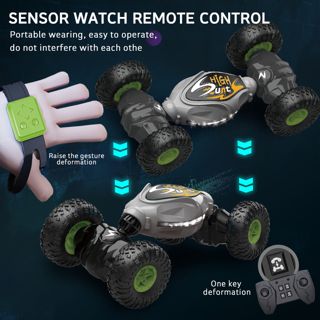
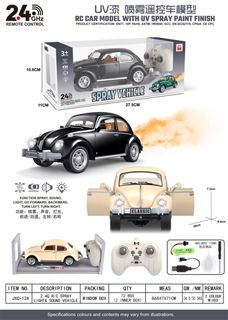
If you are sourcing RC vehicles for the US market and want the compliance conversation to start from evidence rather than a template, look at how a specific model is documented end to end. Review the [2.4GHz 7-Channel Beetle RC Car with Lights, Sound and Spray](https://www.corerccar.com/products/2-4ghz-7-channel-beetle-rc-car-wholesale/) and the [Children Stunt RC Car with Light and Music, Gesture Control and Spray](https://www.corerccar.com/products/gesture-stunt-rc-car-lights-music-wholesale/), then request the test report and rule list for the exact SKU and production cohort you intend to order. Match the documents to the PO before the run ships — that is the step that makes the certificate worth having.