Treat every performance or material line on your custom RC packaging as a claim you must be able to defend with a document, not a marketing flourish. Private-label control means you, not the factory, own the wording on the box, so the packaging copy is only as safe as the evidence behind it.
This page covers the claims that cause the most trouble CoreRCCar-grade RC packaging: toy-grade positioning versus hobby-grade racing language, alloy wording, channel count, light/sound/spray effects, charging and battery statements, age grading, and prohibited IP claims. For each one, the rule is the same: use only what the factory can hand you in writing, or ask for the actual report before you print.
The practical decision this page helps you make: which statements go on the box, which get softened, and which get cut until a document exists.
What changed before tooling
As of 2026-10-09, nothing in the supplied materials changes the single pre-tooling confirmation this article is built around: CoreRCCar-grade RC packaging, you must confirm which performance and material statements are supportable before the artwork is locked, because reprinting packaging after tooling is the expensive mistake.
According to CPSC guidance on material changes to children's products, after a material change the affected requirements must be retested and a new CPC issued from the resulting passing tests. That is not a new deadline for CoreRCCar, but it is directly relevant to any private-label change you make to CoreRCCar-grade RC car, because a material or component swap can move the product out of the scope of an earlier report. Do not assume an earlier report automatically covers the revised configuration.
No official text in the supplied materials confirms a new applicability date for CoreRCCar packaging, so treat any specific compliance deadline you see quoted elsewhere as unconfirmed until you read the original document. The CoreRCCar safety rule discussion circulating in 2026 is a legislative process item; the timeline for actual application to this product category is not confirmed from the official text available here. Keep it out of your packaging copy until you have a source that states the applicable date.
The confirmation to add to the PO
Add one line to the purchase order that settles the claim question before tooling: 'No performance, material, battery, range, channel, effect, age-grade, or brand claim may appear on packaging artwork until the buyer has received and approved the supporting document for that claim.' That single clause turns a vague artwork review into a checklist, and it puts the burden of proof on the party that actually holds the report.
Ask the factory to separate unchanged components from changed materials before any private-label revision. If your custom packaging changes CoreRCCar itself — a different body color, a swapped battery pack, a new light module — the affected requirements need retesting and a new Children's Product Certificate built from the passing tests. Confirm in writing who coordinates that document review: the factory, the testing lab, or you as the importer.
Worked example (illustrative, not a real shipment): a buyer orders roughly 1,200 units of CoreRCCar-grade 7-channel RC car split across two destinations, with a window box for the EU retail run and a polybag-plus-hangtag for a US marketplace run. CoreRCCar body is unchanged, but the buyer swaps the battery pack for a different supplier to hit a cost target. The claim audit happens at the sample stage. The packaging copy still says the original run time. The factory's earlier report covers the old battery pack, not the new one, so the affected requirements need retesting and a new certificate before the EU shipment clears document review. That is the step where the goods get held: not at customs necessarily, but at the buyer's own compliance check when the listing documents do not match the tested configuration.
Which claim type needs which document
| Toy-grade positioning (vs hobby-grade racing) | Use 'toy-grade' for age-appropriate play language; no document needed for the positioning itself, but do not borrow hobby-grade speed or racing claims, which are excluded from this category. |
|---|---|
| Alloy / material wording | Ask the factory for the material spec sheet. Confirm whether 'alloy' means a specific alloy content or a coating over ABS before printing. Catalog material fields are recorded reference only. |
| Channel count | Ask what each channel actually controls and get it in the spec. Do not print a channel number that the factory has not confirmed for your exact configuration. |
| Light / sound / spray effects | Confirm which effects are factory-fitted versus optional. If spray involves any liquid, ask for separate review before claiming it on packaging. |
| Charging and battery statements | Ask for the document that states the actual battery chemistry and capacity. Do not print mAh, run time, or charge time unless the factory provides the supporting report. |
| Age grade | Ask what age grade the factory's documentation supports and what it is based on. A SKU name containing an age does not establish the grade. |
| FCC / 2.4GHz module | Ask whether the factory holds FCC or equivalent documentation for the 2.4GHz module and request the report. Do not print a compliance mark you have not seen. |
| Brand and IP claims (vehicle marks) | Ask for a license or authorization document for any brand mark. Catalog names alone do not establish licensed status; do not print a mark without the document. |
| Certification marks (ASTM F963 / EN71 / CE / CPC) | Print only marks that match the actual product and the actual report. A certificate for one material does not certify the CoreRCCar. |
CoreRCCar-grade RC packaging claims usually break
The friction is rarely CoreRCCar. It is the gap between what the catalog says and what the report covers. Catalog snapshots record material, size, weight, carton quantity, MOQ, and unit price as reference only, and each one explicitly states that no certification, age suitability, licensing, or factory capacity is established. Recorded attributes are not verified attributes, and packaging copy has to live on the verified side.
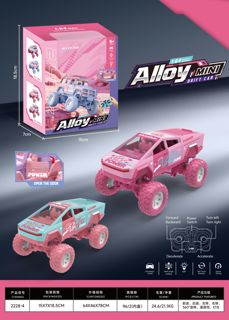
One product line illustrates the pattern. The Alloy Pickup 7-Channel RC Car carries an Alloy/ABS material field and a 288-unit MOQ in the recorded reference. That tells you what the catalog recorded, not what the packaging may claim. Before any 'alloy body' or durability line goes on the box, you need the material spec sheet and a golden sample check against the approved configuration. If your private-label run changes the body material or the finish, run the change through the same review that CPSC guidance describes for any material change to a children's product.
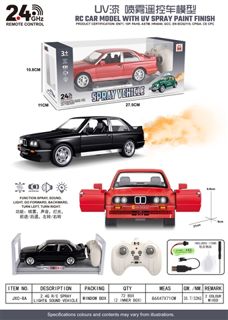
The same discipline applies to effects and charging. Lights, sound, and spray are the features buyers most want to headline, and they are also the ones most likely to be optional or configuration-dependent. Confirm which effects ship on your exact SKU, then match the packaging wording to that. For charging, the only safe sentence is the one the battery document supports.
The prohibited claims list
Some claims should not appear CoreRCCar-grade RC packaging at all, regardless of what a competitor prints. Hobby-grade 1/10 racing claims, unauthorized brand licensing, and trademarked blaster-style claims are the three that cause the most damage, because they invite either a compliance challenge or an IP complaint.
Brand marks on vehicle-styled RC cars are the sharpest edge. A catalog name that echoes a real vehicle model does not mean the factory holds a license, and printing that mark on your private-label packaging without authorization shifts the liability to you as the brand owner. Ask for the license document or remove the mark. There is no middle option.
The rest of the list is about restraint. Do not print a certification mark you have not seen. Do not print a performance figure the factory cannot support. Do not print an age grade that the documentation does not establish. Do not print a sustainability or material-safety claim that the scope-specific certificate does not cover. Each of these is a claim the buyer owns once their brand is on the box.
How to run the claim audit with any factory
The process works the same whether you are dealing with a large exporter or a small workshop, because it is a document flow, not a relationship test. Start by listing every claim you want on the packaging, grouped by type: performance, material, effects, charging, age grade, and IP. Send that list to the factory with the request that each line be matched to a document or marked unsupported.
When the factory returns the list, sort the answers into three buckets: verified, recorded-only, and unsupported. Verified claims go on the box. Recorded-only claims get softened to a description that does not assert a number or a certification. Unsupported claims come off entirely until a document appears. This sort is the whole exercise, and it takes about an hour once you have the factory's replies.
Lock the artwork only after the golden sample confirms the physical configuration matches the verified claims. The pilot run is where you catch a mismatch between the box and CoreRCCar. If the box says spray and the pilot unit does not spray, that is a packaging reprint, not a factory fix. Build the audit into the sample approval step, not the production step.
For any private-label change that touches material or components, run the change-control question in writing: which tests must be repeated, and who coordinates the certificate review. If the answer is unclear, hold the artwork. A delayed print run costs less than a shipment that cannot be documented.
FAQ
Which performance claims can I safely print on custom RC packaging?
Print only the claims the factory can match to a document. Range, run time, charge time, and battery capacity all require a supporting report before they go on the box. If the factory cannot provide the document, describe the feature without asserting a number.
Can I put a brand name or vehicle mark on my private-label packaging?
Only if the factory provides a license or authorization document for that mark. A catalog product name that resembles a real vehicle does not establish licensed status. Without the document, remove the mark, because the liability sits with you as the brand owner.
What happens to my packaging claims if I change the material or battery for a private-label run?
Affected requirements need retesting and a new Children's Product Certificate built from the passing tests, per CPSC guidance on material changes to children's products. Separate unchanged components from changed materials and confirm who coordinates the document review. An earlier report does not automatically cover the revised configuration.
Do I need to reprint packaging if I change the age grade?
Yes, if the age grade appears on the packaging and the documentation no longer supports it. Age grading should match the certificate and the tested configuration. A mismatch between the box and the listing is one of the most common document-review failures.
Can the factory print a certification mark like ASTM F963 or CE on my box?
Only when the mark matches the actual product and the actual report. A certificate for one material does not certify the CoreRCCar, and a mark printed without a matching report shifts the risk to you. Ask for the report before the artwork is approved.
How do I handle spray, light, and sound features in packaging copy?
Confirm which effects are factory-fitted on your exact configuration versus optional, and match the wording to that. If spray involves any liquid, get separate review before claiming it. Do not headline an effect that only ships on a different SKU.
Sources
Send your packaging claim list before you approve artwork
Send your draft packaging copy and the claim list you want to use. Each line gets matched to the document that supports it, the ones that need softening or removal get flagged, and the material and change-control questions get confirmed before tooling. If you are still scoping the product, start from CoreRCCar-grade 7-channel platform and build the claim set around what the factory can actually document.