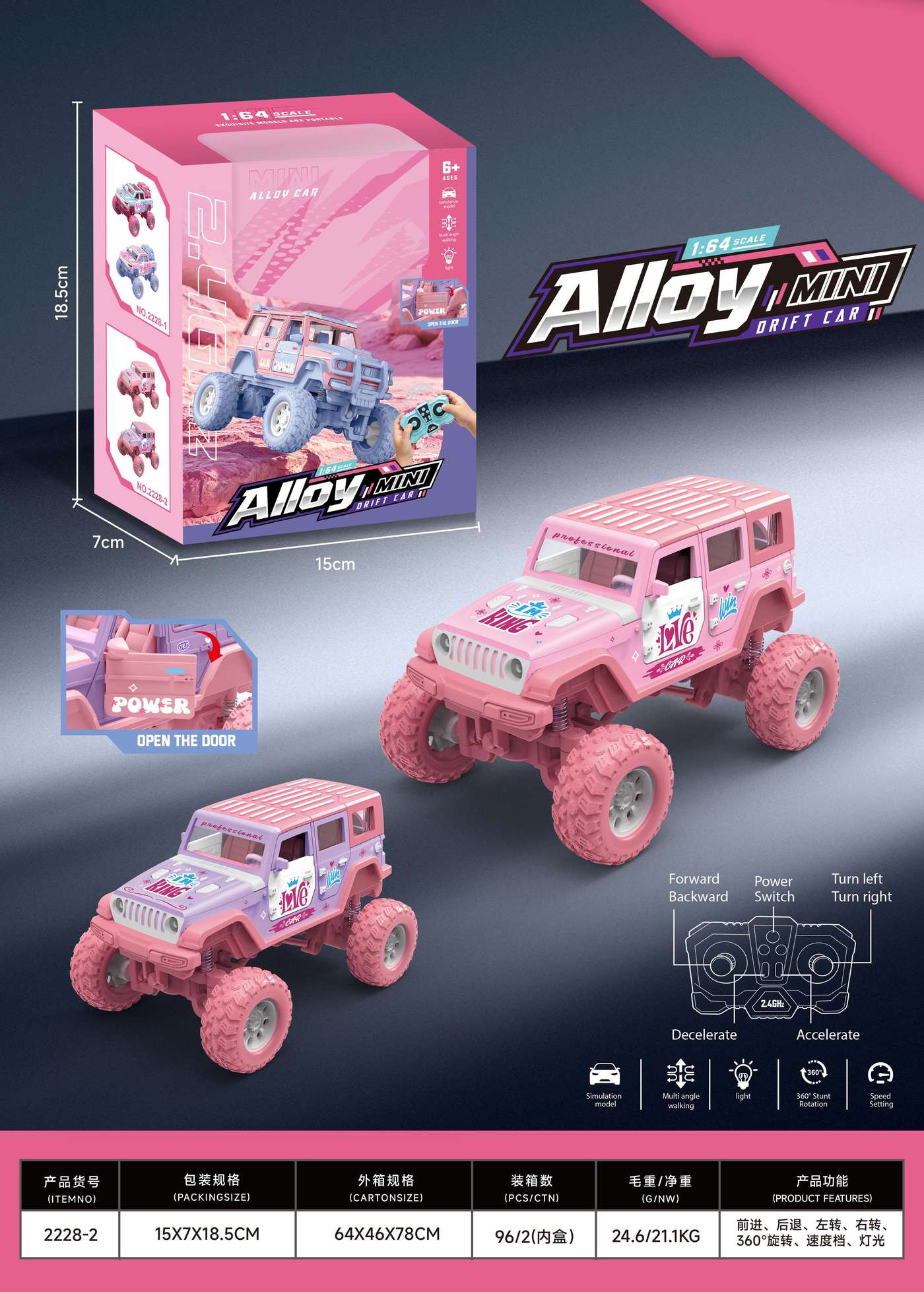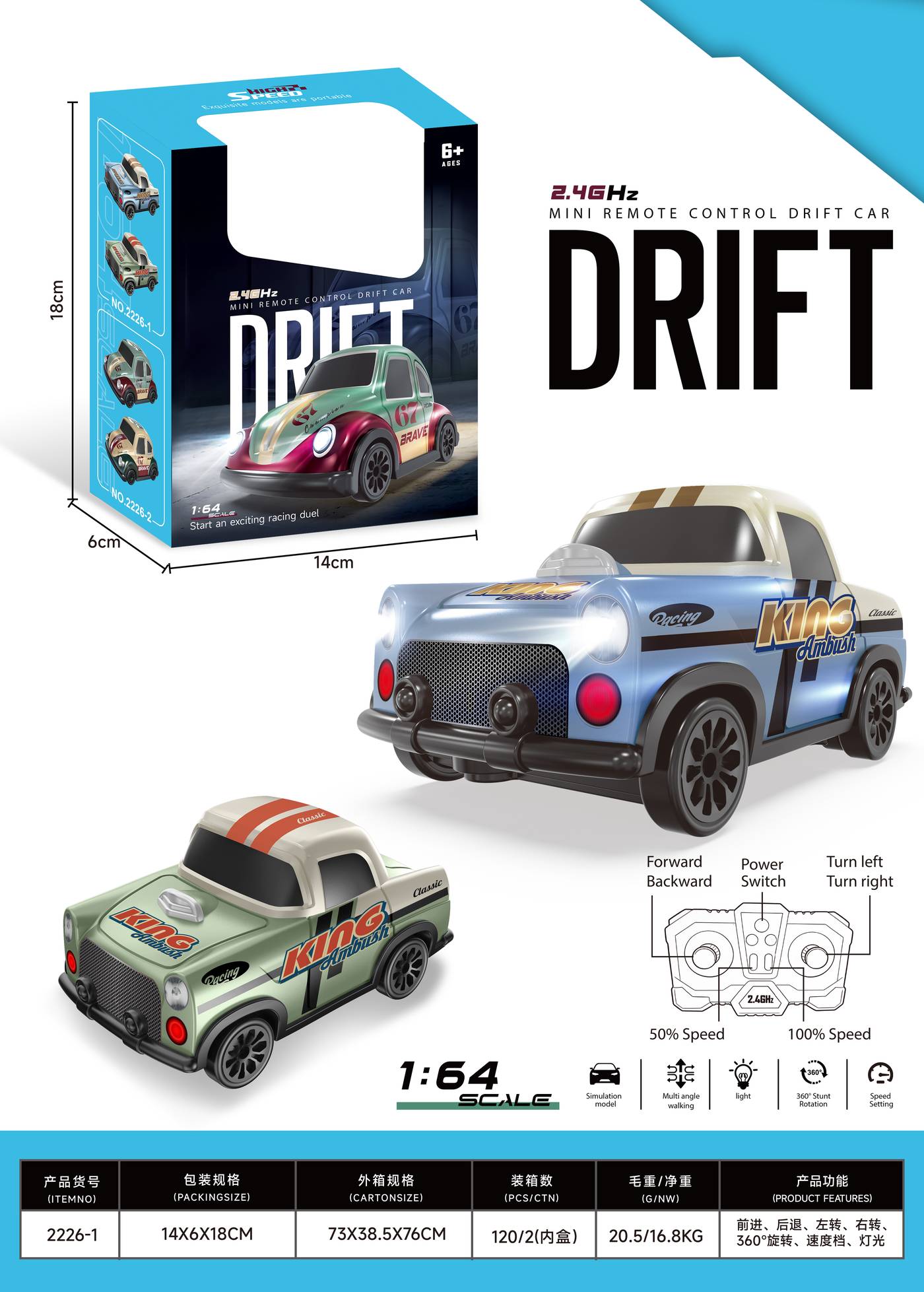
Mini cars, seven-channel cars and RC trucks can share one consolidated shipment plan — but only if three things line up: ready dates, carton-level data and paperwork that matches each lot. Consolidation is a logistics decision, not a product decision. Treat "same factory, same container" as proof that the three families are compatible, and you hand the delay risk to whoever booked the vessel.
Buyers often assume that because all three families sit in the same RC category and come from the same Chenghai cluster, they can be quoted, inspected and shipped as one order. They cannot. A 1/26 stunt car and a 1/16 off-road truck may share a 2.4GHz protocol and nothing else — different tooling, different battery packs, different carton geometry, different test files. What consolidates cleanly is the container, the booking and the inspection visit. What does not consolidate is the evidence trail.
Key Takeaways
- Decide consolidation per lot, not per brand: if any family's ready date is still "estimated" rather than confirmed, ship it separately or accept that the whole container waits for the slowest SKU.
- A type-test or golden-sample report does not automatically cover a later production lot — match report SKU, materials, colors and production date to the PO before you load mixed cartons.
- Battery-related marking duties depend on the battery category and the applicable implementation date, so do not assume one universal label covers every powered unit in the container.
- Write the loading instruction (double-wall, corner boards, ECT, pallet height) into the booking file; corner-sensitive goods lose claims when the instruction is a thank-you note.
- Name the delay owner per family — factory, consolidator or buyer — before the booking is placed. Unassigned delay is the single most expensive line item in a consolidated RC shipment.
What MOQ and case-pack reality should I expect across a mixed RC order?
MOQ in this category is set per SKU, not per container, and it varies widely across the family. In the current catalog, mini and stunt cars sit in the lower bands (from 12 units on a 1:14 high-speed car up to 119 units on a 1:16 rock crawler), while drift and stunt variants commonly run 36 to 108 units depending on the model. The practical consequence for consolidation is that a single mixed PO is really five or six separate production runs that happen to end in one container.
Case pack is the number that decides whether consolidation saves money or costs it. Ask for pieces-per-carton and carton dimensions per SKU before you build the loading plan. A supplier that can give you assorted colors, retail-ready packaging and pieces-per-carton data for packing lists is doing what a mixed container actually requires. A supplier that answers with a single carton size for the whole family is telling you the loading plan will be improvised at the warehouse.
Tighter MOQs per SKU give you a fuller container faster, but they also multiply the number of production lots you must inspect and trace. If your destination is a supermarket or gift distributor that needs one clean barcode per SKU, do not let a low-MOQ filler SKU drag a mixed carton into a retail-compliance problem.
Which questions settle ready-date alignment before you book?
Ask for a ready date per family, not per order. "The order will be ready in 30 days" is not an answer when three families are involved; you need three dates plus a named owner for slippage on each. If the factory cannot give separate dates, treat the whole PO as one production lot and plan inspection accordingly.
Then test the alignment. If mini cars finish two weeks before the trucks, you have three options: hold the early lot at the factory (ask about storage terms and who carries the risk), move the early lot on a separate booking, or accept that the consolidated container ships when the last family is packed. Each option has a cost, and only the buyer can decide which one is cheaper than the margin on the order.
A production schedule buffer is not a substitute for a confirmed date. Treat factory-stated capacity as a planning input, not a verified fact, until the product type, machine mix, shifts, tooling and recent records have been checked. The same discipline applies to lead time: tooling, first sample, testing, production, packaging and shipping are different dependencies, and one total number hides them.
Consolidation Checkpoints: What to Verify and What Should Stop the Load
| SKU and golden-sample trace | Every unit in the plan traces to a SKU or golden-sample check. Red flag: the family "matches the sample" with no SKU link or color/material confirmation. |
|---|---|
| Ready date per family | Three separate confirmed dates and a named owner for slippage. Red flag: one blanket date for the whole order or "should be ready". |
| Battery record for powered units | The factory sends the battery document it actually holds for each powered unit. Red flag: a verbal chemistry or capacity claim with no document attached. |
| Carton list per SKU | Pieces-per-carton, carton dimensions and gross weight per SKU. Red flag: one carton size quoted for the entire family. |
| Mixed-loading instruction | Double-wall, corner boards, ECT and pallet height written into the booking file. Red flag: loading left to the forwarder's discretion. |
| Inspection and release terms | The agreed inspection plan on the PO states the sampling basis and defect classes. Red flag: a catalogue sentence offered in place of a PO term. |
| Paperwork-to-lot match | Each certificate or file maps to a market, a SKU and a production lot. Red flag: one certificate presented as covering two different products or markets. |
| Tracking label content | Manufacturer, date and lot appear on product or pack as required, matched to the SKU. Red flag: a barcode with no tracking content behind it. |
| Tooling terms (private label only) | Fee, ownership, storage period and idle-tool outcome frozen in writing. Red flag: tooling discussed as a handshake after the fee is paid. |
| Delay ownership | A named party per family for late ready dates, document gaps and rework. Red flag: "the factory will handle it" with no name attached. |
How do battery records and lithium documentation fit a mixed container?
Every powered unit in the shipment needs a document, not a description. Ask the factory which battery record it holds for each powered SKU and to send the actual file. Do not write chemistry, capacity or transport classification into your own paperwork on the strength of a chat message — the shipping file and the product file have to agree, and only the factory's document can establish what is true for that lot.
Battery-related information and marking duties depend on the battery category and the applicable implementation date, and CoreRCCar file should not assume one universal label covers everything. Where an official text does not confirm the application date for a category, treat the timeline as not confirmed from official text rather than writing a fixed date into your compliance calendar.
Practical sequence: collect the battery records per powered SKU, cross-check them against the packing list, and only then release the booking. A battery document that arrives after the container is sealed is a document you cannot use.
What does a workable mixed-loading plan look like?
Start from the carton list, not from the container size. Build the loading plan SKU by SKU, then test whether the combined cartons reach your target CBM without stacking corner-sensitive goods under heavier freight. Corner-sensitive CoreRCCar are where mixed containers fail: the booking instruction is the document that protects you, and it has to say double-wall, corner boards, ECT and pallet height explicitly.
Then decide how the container is split. If two destinations or two retail pack formats share the load, pre-plan the separation at carton level — mixed pallets that have to be re-sorted at the destination usually cost more than the freight saved. Retail-ready packaging and assorted colors belong in the packing list conversation, not in a warehouse improvisation.
Worked example (illustrative, not a real shipment): a buyer consolidates three families into one 40HQ — roughly 400 mini stunt cars, 150 seven-channel stunt units and 60 off-road trucks, split across two destinations with different retail pack formats. The carton list reveals the mini cars pack denser than expected, so the loading plan is rebuilt around the trucks' corner protection. The step that stops the load is the battery record: two of the seven-channel units have a document that does not match the pack quantity on the carton list, so those cartons are held back and the remainder ships. Nothing about the container was wrong; the evidence trail was.
How should inspection and release work when several SKUs share one container?
One inspection visit can cover a mixed container, but only if the sampling basis is agreed in advance and stated on the PO. Never rely on factory self-inspection as the final gate, and never accept a catalogue sentence as the quality term. When a lot fails, the floor practice is to isolate it, record the defect class and release only after rework — and a buyer who wants a number gets it from the agreed inspection plan on the PO.
Before sampling, verify that the ordered quantity for each SKU is actually produced and packed. A factory can present only its best cartons if the inspection starts before the full batch is complete. Require random carton selection across all consolidated SKUs, and check carton marks, shipping marks, carton quantity and carton condition as part of the consolidated shipment check.
Critical defects — the safety-hazard class — carry zero tolerance under the common framework. For a mixed RC container that means electrical safety checks on every powered family belong in the inspection scope regardless of how small that family's share of the load is.
Who owns a delay when one family is not ready?
Write the answer into the PO before booking. For each family, name the party responsible for a late ready date, a document gap and a rework cycle. If the factory owns the delay, state the remedy. If the consolidator owns it, state the cut-off. If the buyer owns it — usually through a late packaging approval or a spec change after tooling — say so plainly, because that is the delay you cannot invoice anyone for.
The tooling clause is where private-label buyers get exposed. Freeze the fee, ownership, storage period and what happens if the tool sits idle. Tooling policy is a document, not a handshake, and an unfrozen clause becomes the reason a consolidated shipment waits for a decision that was never written down.
Incoterms belong in the same conversation but answer a different question: they define when risk transfers between seller and buyer. They do not define product-safety compliance and they do not assign ownership of test reports. Keep those three threads separate in the contract, or the delay argument will be settled by whoever reads the Incoterm most literally.
What to ask suppliers before you consolidate
Send these as written questions and require written answers. Verbal alignment on ready dates and battery documents is the most common source of a held container.
1. What is the ready date for each family, and can the three dates align to one booking cut-off? 2. What battery record do you hold for each powered SKU, and can you send the actual document? 3. What are the pieces-per-carton, carton dimensions and gross weight per SKU? 4. What does the agreed inspection plan on the PO state, including sampling basis and defect classes? 5. Which certificate or file covers which market and which production lot? 6. What tracking label content appears on the product or pack, and how is it matched to the SKU? 7. If private label applies, what is the tooling fee, ownership, storage period and idle-tool outcome? 8. Who owns a delay if one family is not ready when the others are packed? 9. Is the packaging retail-ready and assorted as the destination retailer requires? 10. What is the mixed-loading plan, including pallet height and corner protection?
FAQ
Can mini cars, seven-channel cars and RC trucks really go in one container?
Yes, if each family has a confirmed ready date, a carton list with pieces-per-carton and dimensions, and a battery record matching the lot for every powered SKU. Consolidate when the evidence matches; split the booking when any family's ready date is still estimated.
What MOQ should I expect for a mixed RC order?
MOQ is set per SKU, not per container, and it varies by model — from 12 units on some 1:14 high-speed cars up to 119 units on a 1:16 rock crawler in the current catalog. Confirm MOQ per SKU before you build the loading plan, because the highest-MOQ family usually sets the order's pace.
Does one inspection visit cover a consolidated shipment with several SKUs?
It can, provided the sampling basis is agreed in advance and stated on the PO rather than left to a catalogue sentence. Require production completion verification and random carton selection across all SKUs so the factory cannot present only its best cartons.
Which certificate covers an CoreRCCar shipped to the US and the EU?
There is no single certificate that covers both markets by default. A type-test or golden-sample report does not automatically cover a later production lot, so match report SKU, materials, colors and production date to the PO, and confirm with the factory which file covers which market and lot.
Do all battery-powered RC cars in one container need the same label?
No. Battery-related information and marking duties depend on the battery category and the applicable implementation date, so CoreRCCar file should not assume one universal label. Collect the actual battery record per powered SKU and check it against the packing list before booking.
Who pays if one family is late and the container waits?
Whoever the PO names. Freeze delay ownership per family — factory, consolidator or buyer — before the booking is placed, and keep that clause separate from the Incoterm, which defines risk transfer but not compliance or test-report ownership.
Is a low-MOQ stunt car a good filler for a mixed container?
It can be, if its carton geometry fills the gap without forcing corner-sensitive goods to the bottom of the load. Check pieces-per-carton first: a filler SKU that packs oddly can cost more in re-sorting at the destination than the freight it saves.
Sources
- AQL (Acceptable Quality Limit): Ultimate Guide for Product Inspections TradeAider
- AQL Tables Explained: How to Calculate Sample Sizes for Product Inspection
- How to Control CoreRCCar Quality at Scale Complete Guide for High-Volume B2B Buyers
- How to Inspect CoreRCCar Before Shipment Complete Pre-Shipment Inspection Guide for B2B Buyers
Plan the Consolidation Before You Book
Bring the three families, the target destination and the retail pack format. We will map ready dates, carton lists and battery records into one loading plan, and tell you plainly which family should ship separately. Browse flip and stunt RC cars or gesture and interactive RC cars to start a mixed-container quote.