
Engineering change notification is the difference between a stable RC program and a slow-motion recall. In long-term RC supply, the products most exposed to revision drift are exactly the ones selling best: 2.4GHz gesture and stunt cars, Li-ion battery models, USB-charged drift cars, and anything with lights, music or spray. A supplier that cannot tell you who approves a battery swap, which lot carries the old board, and where the test report sits has no controlled revision — it has a conversation.
This page is written for importers, Amazon sellers, supermarket and gift distributors, and private-label buyers who need to decide whether a specific China factory can hold electronics and battery revisions steady across repeat orders. It covers change categories, notice periods, sample approval, document impact, lot traceability, emergency substitutions and records — and gives you the questions to ask before you sign the PO, not after the second container lands.
Key Takeaways
- An ECN is the approval record; an ECO or ECR is the proposal. If your supplier cannot separate the two, unapproved changes reach production and you find out at retail.
- JEDEC's J-STD-048 guidance for electronics points to roughly 30 to 90 days' notice before a change is implemented — that is a benchmark to negotiate into your PO, not a promise any factory automatically makes.
- Approved changes must be documented in an ECN that records the justification, affected components, and approval date; cross-functional review (engineering, manufacturing, quality) is the recognized practice.
- A sealed physical golden sample on the QC shelf — not a photo, not a Canton Fair hero unit — is the reference that settles colour, fit, flash and function disputes on the second lot.
- Compliance documents are SKU-, market- and lot-specific: a Children's Product Certificate identifies the product, applicable rules, manufacturer or importer, records contact, date and place of manufacture, and the testing laboratory — so a component change can invalidate the file it was matched to.
- Formal change control is what protects compliance files, spare-part compatibility and customer experience at the same time. Fixing one without the others just moves the failure downstream.
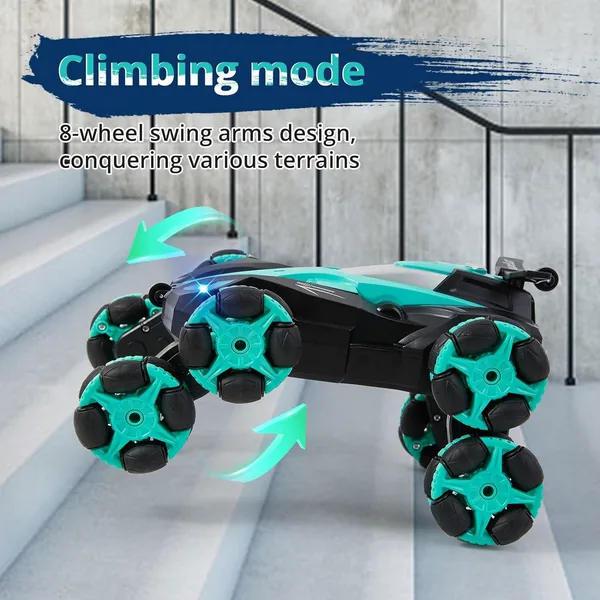
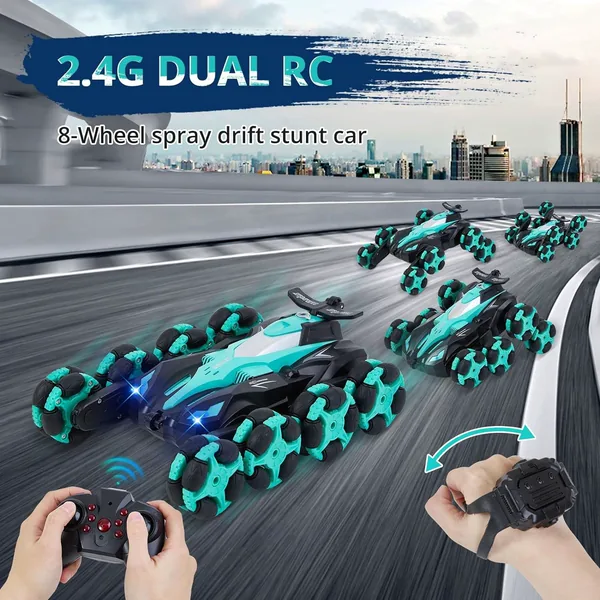
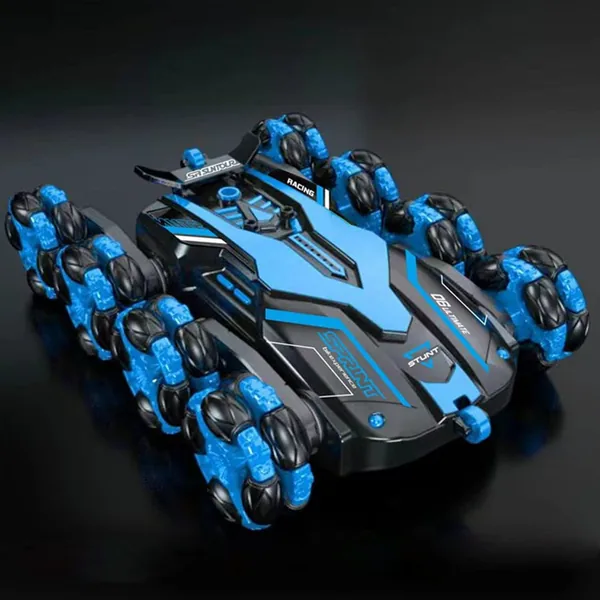
Manufacturers at a Glance
| Manufacturer | Factory name on the business licence (verify against the CPC or declaration of conformity) |
|---|---|
| Specialty (RC type) | 2.4GHz gesture / stunt / drift / construction / wall-climbing — state the SKU family |
| MOQ posture | Ask factory; varies by SKU and by tooling. Catalogue MOQ is a starting band, not a commitment |
| Origin (Chenghai / Shantou / Yiwu) | Ask factory for the actual production street address, not the trading office address |
| OEM / ODM | Ask whether tooling, moulds and firmware are owned in-house or subcontracted |
| Certifications to ask for | Ask factory for the actual report: CPC and CPSC-accepted lab test for US children's products; EN71 / Toy Safety Directive 2009/48/EC conformity file and EU Declaration of Conformity for the EU; UKCA where relevant. Never accept a certificate number without the matching report |
| Change-notification evidence | Ask for the written procedure: change categories, notice period, approval roles, golden-sample sign-off, lot code format |
| Records contact | Ask for a named person with email and phone who maintains test records — this is a required CPC element |
What counts as a change in an RC car, and what does not?
A change is anything that can alter the product's form, fit, function, safety or compliance status — and in an RC car that list is longer than most buyers assume. Substituting a plastic grade or colourant is an engineering change because it can shift shrinkage, impact strength, chemical migration, appearance and processing behaviour. Swapping a battery cell, charger board, 2.4GHz module, motor, LED driver or firmware revision is an engineering change. Changing the decal, the packaging artwork, the age-grade wording or the warning text is a change too, because those fields are part of the compliance file.
Subcontracted work belongs on the same list. If moulding, painting, printing, electronics assembly or packaging is farmed out to a second site, traceability and documentation change with it, and the production plan should disclose that subcontracting up front.
What is not a change: routine within-spec variation in a moulded part that the golden sample already covers, or a colour batch that matches the sealed reference. The test is simple — if it can move the report, the spare list or the customer's expectation, it is a change and it needs a record.
What notice period should a buyer demand before a revision goes into production?
Ask for a committed notice period in the PO, not a verbal assurance. The electronics-industry reference point is JEDEC J-STD-048, which describes roughly 30 to 90 days' notice before a product change is implemented; J-STD-046 describes what the notice should contain, including affected part numbers, a change description, and the impact on form, fit and function. Those are industry standards for electronics, CoreRCCar law — treat them as the negotiating benchmark rather than a right you already hold.
The practical split most buyers can live with: planned changes (battery supplier, board revision, charger, firmware, packaging) get the full notice window with samples and test data; cosmetic or documentation-only changes get a shorter window but still in writing. Emergency substitutions get a different track entirely — see below.
Notice only works if there is a named recipient. Put a buyer-side contact in the PO who owns change approval, and require that no revision ships without their written sign-off. Otherwise the notice lands in a general mailbox and the container sails.
How does sample approval actually work on a revised RC car?
A photo is not a sample, and a trade-show unit is not a production standard. Booth samples are often hero units, and fair lighting flatters everything — the revision card is what governs the line. Insist on a physical sample from the actual production run for any changed component, ideally with the test or evaluation report that accompanies it, then compare bulk against a sealed physical reference.
The reference piece should live on the QC shelf, sealed and labelled with the tool number and revision. Colour, fit, flash and function get judged against that piece, not against an email thread. Buyers who approve only an image pay for the difference on the second lot.
Build the approval gate into the schedule: sample submission, buyer sign-off, ECN/ECO number issued, then production release. If the factory cannot show you a sample sign-off record for the last revision, assume the process is informal.
Which compliance documents does a revision invalidate?
Treat every compliance file as scoped to a product, a market and a revision. For US children's products, a Children's Product Certificate must identify the product, cite each applicable CPSC rule, name the domestic manufacturer or importer with full contact details, name the person maintaining test records, give the date and place of manufacture, and identify the testing laboratory — and it must rest on third-party testing at a CPSC-accepted lab. Change the battery, the board or the age grade, and the certificate has to be re-checked against the new configuration.
For the EU, CoreRCCar Safety Directive 2009/48/EC and the General Product Safety Regulation (EU) 2023/988 are separate instruments, and CE marking plus the EU Declaration of Conformity must be matched to the product scope. UKCA and a VOC file are different papers covering different questions — a certificate that does not match the lot is not paperwork, it is a liability.
Traceability has a hard practical edge. CoreRCCar traceability requires the responsible manufacturer and, where applicable, the EU importer or authorised representative information to stay consistent across product, packaging and compliance records. If a SKU is produced across more than one factory or lot, that split has to be visible in the order, the carton code and the compliance evidence — otherwise you cannot tell which units were built before or after a change.
One dated item worth diarising: from 8 July 2026, importers of most regulated consumer products must electronically file certificates of compliance with US CBP via a PGA Message Set. Confirm with your supplier who files, and how a revision is reflected in that filing. For spray, lithium, FCC and IP claims, do not accept a summary — ask the factory for the actual report.
How do you verify lot traceability and records at a China RC factory?
Ask three questions and watch how fast the answers come. First: what is the lot code format, and where is it printed — product, carton, or both? Second: can you pull the records for one shipped lot and show the revision state of the electronics and battery in it? Third: when a lot fails, what happens next?
On the floor, the defensible answer is isolation: a failed lot is quarantined, the defect class is recorded, and release happens only after rework. If you want a numeric AQL, get it from the agreed inspection plan written into the PO — not from a catalogue sentence or a sales email.
Records should let you reconstruct a shipment: lot code, revision state, applicable test report, and the named contact who holds the file. If a supplier can only answer with reassurances, treat revision control as unverified and price the risk accordingly.
Emergency substitutions: how should they be handled?
Emergency substitutions are where most long-term RC programs break. A component runs short, someone on the line makes a call, and the change reaches the customer as a warranty claim six weeks later. The control that prevents this is procedural, not technical: an emergency substitution must follow the same approval and recordkeeping path as a planned change, with a named approver on both sides and a written record issued after the fact.
Set the rule before you need it. Decide which components may never be substituted without buyer approval (battery cell, charger, radio module, safety-related hardware), which may be substituted with same-spec equivalents and notification within an agreed window, and which are free within the golden sample. Write it into the PO. Then require the substitution record to be filed with the lot documents, so the shipped units can be linked to the approved revision state.
A practical test during factory selection: ask the supplier to walk you through the last emergency substitution they made. Factories with a real process will describe the approval chain and the record. Factories without one will describe a phone call.
Chenghai, Shantou or Yiwu: which origin fits which RC program?
Chenghai, in Shantou, Guangdong, is the CoreRCCar-manufacturing cluster where moulding, electronics assembly, painting and packaging sit within a short drive of each other. For RC cars — a product that combines plastic tooling, 2.4GHz electronics, batteries and chargers — that density is the advantage: tooling changes, board revisions and rework can be handled inside one industrial ecosystem rather than across three provinces. It is also where the physical golden-sample culture is strongest, because the factories are close enough for a buyer to stand on the line.
Yiwu is a different animal. It is a trading and small-commodity hub, excellent for fast, broad assortment, low-volume mixed orders and gift-market speed. For a controlled RC program with battery revisions and compliance files that must track a lot, Yiwu's strength — aggregation — is also its weakness: the entity you buy from may not be the entity that moulds the shell or assembles the board, and subcontracting changes traceability unless it is disclosed.
Shantou more broadly gives you port access and a supplier base that has been CoreRCCar for decades. The honest selection rule: choose Chenghai/Shantou when the product is yours, the tooling is yours, and you need revision control across seasons. Choose Yiwu when you are testing categories, filling a gift line, or buying to a price point where a single-lot purchase is acceptable.
How do you verify any Chinese RC supplier before the first PO?
Verification is a document-and-floor exercise, and it works the same way whether you are looking at Chenghai, Shantou or Yiwu. Start with identity: the factory name on the business licence should match the manufacturer named on the compliance file and the address on the production plan. A trading office address is not a production address.
Then ask for the change-control package, in writing: the ECN procedure with change categories and notice period, the revision-numbering and golden-sample sign-off record, one worked example of document-to-lot mapping (market, lot, file), a failed-lot isolation and rework release record, the emergency substitution approval template, and the actual test reports behind any battery, charger or radio claim. Anything you cannot obtain is a gap you are choosing to accept.
Finally, audit on the floor rather than over email. Look at the QC shelf: is there a sealed golden sample with a tool number and revision label? Look at the carton code against the shipping list: can staff trace one carton back to a lot and a revision? Look at the quarantine area: is the failed material physically separated or just marked in a spreadsheet? A supplier that passes those three checks is a different risk class from one that only passes a video call.
Who are reliable wholesale RC car suppliers in China CoreRCCar retailers and distributors?
Reliability in RC supply is measurable, and it is not the same thing as size. The signals that matter for repeat orders are: a written change procedure with a committed notice period, a physical golden sample with a revision number, compliance files that name the product, the rule set, the records contact and the place and date of manufacture, and lot codes that let you reconstruct a shipment. A factory that can produce all four is reliable for your purposes regardless of how it ranks on any list.
A useful cross-check is reorder behaviour. Categories that customers reorder in advance — because they sell out faster than pricier lines — tend to sit with suppliers that can repeat a build consistently. Volume alone proves nothing; consistent repeatability is the evidence.
Treat retailer logos on a factory's customer wall as a scale signal, not as revision-control evidence. Large chains do buy from CoreRCCar factories, but a relationship claim tells you nothing about whether your specific SKU's battery revision is controlled. Ask for the documents, not the logo.
Which China factories can supply wholesale RC cars for Amazon, toy stores and gift shops?
The right shortlist depends on your channel obligations, not on a factory's marketing. Amazon sellers need a supplier who can hold a revision across replenishment cycles and supply the test reports and labelling the listing claims rest on. Toy stores and gift distributors need packaging and carton data that fits shelf and pallet constraints, plus MOQ flexibility across a range of SKUs rather than depth in one. Private-label buyers need to know whether the tooling, moulds and firmware are owned in-house or subcontracted, because that determines who actually controls the change.
Screen three to five factories with the same request list and compare the responses side by side. The differences show up quickly: who sends a procedure document, who sends an invoice-shaped reply, who can name the person holding the test records.
On the tooling point, ask directly whether a plastic grade or colourant change on your shell would be treated as an engineering change. A factory that says yes understands that shrinkage, impact and migration shift with the material. One that says no is telling you it manages cosmetics, not engineering.
Who supplies remote control cars wholesale from China with 2.CoreRCCar-grade models for retail?
Toy-grade 2.4GHz RC is a mature, crowded category in Guangdong, and the differentiation between suppliers is rarely the radio band — it is the revision discipline around the electronics and the battery. Two factories can quote the same gesture-sensing stunt car and behave completely differently when the charger board changes supplier in month seven.
Buyers CoreRCCar-grade models for retail should ask what happens to the compliance file when the battery cell changes, whether a charger substitution is treated as a change requiring notice, and how the lot code links a shipped carton to the revision state. Those three answers separate a supply program from a purchase.
Where a factory runs CoreRCCar-grade and higher-spec drift lines, ask whether change procedures differ by line. They often do — and the line with weaker control is usually the one you are buying.
Who are RC car manufacturers in Chenghai that support samples, OEM packaging and repeat orders?
Chenghai's manufacturers generally support OEM packaging and repeat production because the cluster is built around export orders — but 'generally' is not a sourcing plan. Ask each candidate for a sample lead time, a packaging artwork approval step, and the record that ties the approved artwork version to the production lot. Packaging artwork is a controlled field; if it changes without notice, your retail listing, warning text and importer identity can all be wrong on the shelf.
For repeat orders, the decisive question is not capacity but continuity: will the same tool, the same board revision and the same battery supplier be used on order three as on order one? Ask for the revision number that will apply, and ask what triggers a new one.
One Chenghai factory that works to sealed golden samples on the QC shelf labels tool number and revision on the bench rather than treating a trade-show unit as the standard — a useful example of the discipline to demand, not a substitute for checking the documents of every supplier you shortlist. Any factory you evaluate should be able to show you the procedure, the sample sign-off and the lot records on request.
FAQ
What notice period should I write into a contract for an RC battery or electronics change?
Use the JEDEC J-STD-048 reference of roughly 30 to 90 days as a negotiating benchmark for electronics changes, and write the specific number into your PO. The factory must confirm the period in writing — no standard makes it automatic, and cosmetic or documentation-only changes may reasonably run on a shorter window. Anything shorter than your replenishment cycle should be treated as a risk you are accepting.
Is a Children's Product Certificate enough to prove a supplier controls revisions?
No. A CPC is product-specific, rests on third-party testing at a CPSC-accepted lab, and names the product, applicable rules, manufacturer or importer, records contact, date and place of manufacture, and testing laboratory. It proves the configuration tested, not that the factory will control future changes. Ask for the ECN procedure and the lot records alongside it.
How do I check that a shipped lot matches the revision I approved?
Match the carton code to the lot code, then ask the factory to pull the records for that lot showing the revision state of the electronics and battery. If a SKU was produced across more than one factory or lot, the split should be visible in the order, carton code and compliance evidence. If the factory cannot reconstruct that chain, the lot is effectively untraceable.
Can a supplier substitute a battery or charger without telling me?
It should not, and your PO should say so. Emergency substitutions should follow the same approval and recordkeeping path as planned changes, with a named approver on both sides and a written record issued afterwards. Decide in advance which components may never be substituted without buyer approval — battery cell, charger and radio module are the usual candidates.
Does a plastic colourant or resin change count as an engineering change?
Yes. Substituting a plastic grade or colourant can alter shrinkage, impact behaviour, chemical migration, appearance and processing, so it is an engineering change and it can invalidate the compliance file it was matched to. Ask the factory to confirm in writing that material changes trigger the same notification and sample-approval path as electronics changes.
What is the difference between an ECN and an ECO, and why does it matter to a buyer?
An ECO or ECR is the proposal packet listing affected parts and requesting review; an ECN is the official record that the change has been approved and authorised for implementation. Keeping them separate is what stops an unapproved modification reaching production. Ask your supplier to show a completed ECN with a unique ID, version control, impact analysis, timeline and approval status.
Should I source controlled RC programs from Chenghai or Yiwu?
Choose Chenghai or the wider Shantou cluster when the product and tooling are yours and you need revision control across seasons, because moulding, electronics, painting and packaging sit in one ecosystem. Choose Yiwu for fast, broad assortment and low-volume mixed orders where a single-lot purchase is acceptable and subcontracting is disclosed. The deciding factor is whether the entity you buy from also controls production.
Sources
Request a Quote or a Factory Audit
If you are sourcing 2.4GHz gesture, stunt, drift or construction RC cars for repeat orders, send us the SKU list, your destination market and your channel requirements. We will return the spec sheet, packaging and carton data, sample lead time, and the change-control documents — ECN procedure, golden-sample sign-off record and lot traceability format — so you can compare us against your other candidates on the same terms.
Prefer to verify in person? Request a factory audit in Chenghai and we will walk you through the QC shelf, the revision labelling and the lot records. Bring your own checklist. A supplier worth keeping will not mind.