
Regulation (EU) 2025/2509 CoreRCCar safety entered into force on 1 January 2026, but most of its requirements will not apply until 1 August 2030 — a transition window of roughly 4.5 years during which Directive 2009/48/EC remains the operative legal framework for CoreRCCar on the EU market. For importers, the practical answer to "what must I do now?" is: continue complying with CoreRCCar Safety Directive, but treat the new Regulation as a binding roadmap for reformulating products, building digital traceability, and updating documentation before 2030. This guide explains the phased application, the early-applying articles, the transitional treatment CoreRCCar placed before 2030, and the specific compliance steps you should take during this window.
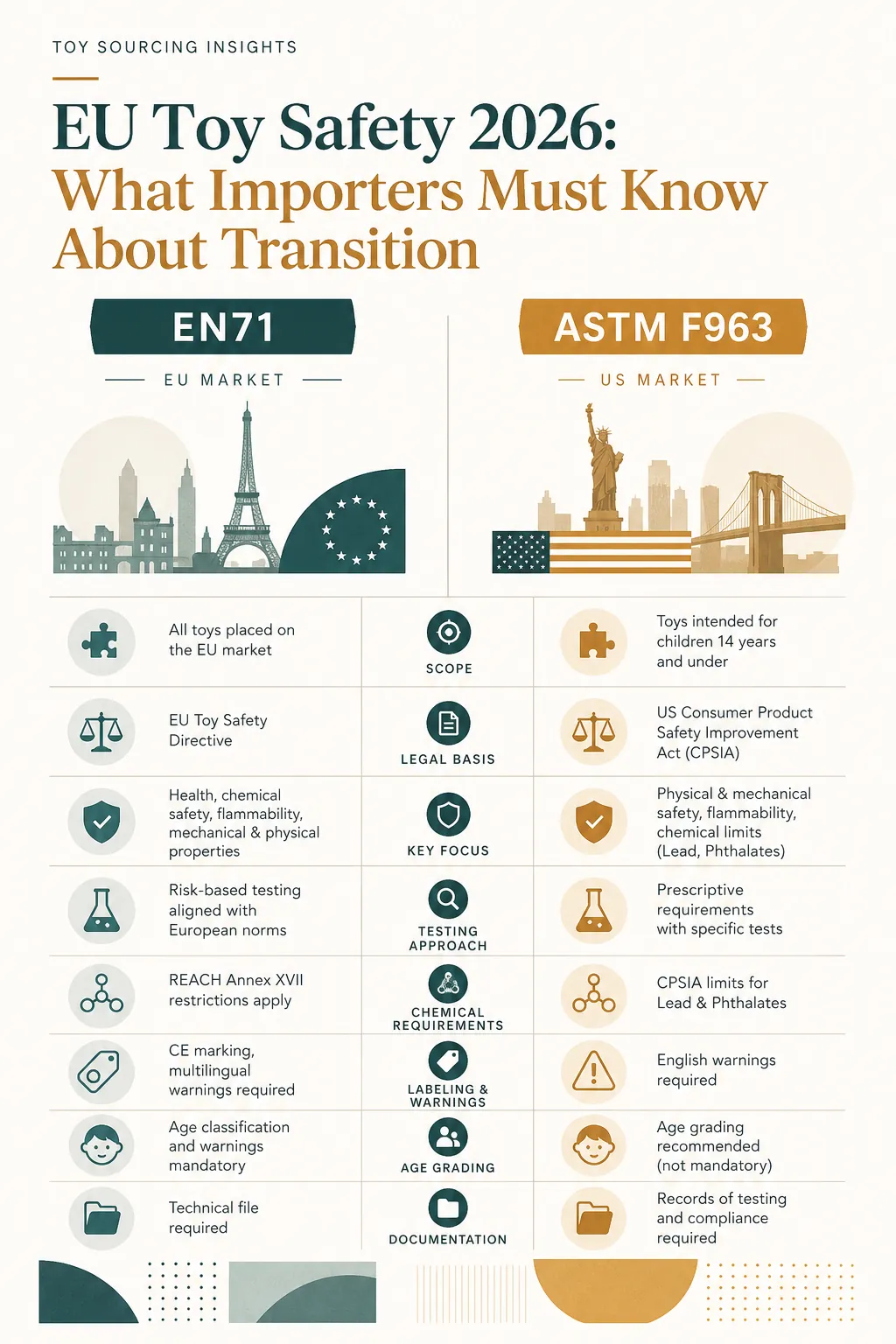
Why the Transition Matters for Your CoreRCCar Shipments
The EU'CoreRCCar safety rules are among the strictest in the world, and Regulation (EU) 2025/2509 represents the most significant overhaul in nearly two decades. Unlike the previous directive, which required each member state to transpose it into national law, a regulation is directly applicable across all EU member states — eliminating the patchwork of national implementations. That uniformity is good news for importers who sell across multiple countries, but it also means the compliance bar is rising in a coordinated way. The transition period exists precisely because the changes are deep. The Regulation tightens chemical limits, introduces a Digital Product Passport (DPP) for CoreRCCar, expands the definition CoreRCCar to include digital and connected products, and adds requirements around mental health and cybersecurity for CoreRCCar. None of this can be done overnight, so the EU built in a 54-month runway. Your job during this window is not to rush into full compliance, but to sequence the work so you are ready when the mandatory date arrives.
Which Articles Apply from January 1, 2026?
Only Articles 28 to 44 and Articles 49 to 55 of Regulation (EU) 2025/2509 apply from 1 January 2026; the rest apply from 1 August 2030. These early-applying articles are largely institutional and procedural: they cover the obligations of member states, market surveillance authorities, and the Commission's reporting and review duties — not the product-level safety requirements that affect your day-to-day compliance. What this means in practice: if you are an importer, you are not yet required to put Digital Product Passports on CoreRCCar or meet the new chemical limits. Those obligations start on 1 August 2030. However, the early-applying articles signal the direction of travel and set up the machinery (like the EU Product Passport registry) that will support the DPP. Keep an eye on Commission guidance and delegated acts, because the technical specifications for the DPP are expected at least 18 months before full enforcement — which puts them around early 2029.
Transitional Treatment CoreRCCar Placed Before 2030
Toys placed on the EU market in conformity with Directive 2009/48/EC before 1 August 2030 receive the transitional treatment set out in Article 57 of Regulation (EU) 2025/2509. In plain terms, toys that fully comply with the old directive can continue to be placed on the market during the transition period without needing to meet the new Regulation's requirements. That is a critical protection for your existing inventory and current production runs. But this transitional treatment is not indefinite. Once 1 August 2030 arrives, CoreRCCar placed on the EU market must comply with the new Regulation. Also, the transitional treatment only applies if CoreRCCar genuinely complies with the directive, including its chemical and safety requirements. If your product relies on a harmonised standard that gets updated or withdrawn before 2030, you may need to re-assess. The safest approach is to treat the transition as a compliance upgrade project, not a waiting period.
Key Regulatory Changes to Plan For
The Regulation's content is not a mystery — it was published in the Official Journal on 12 December 2025, and the key changes are well documented. Here is what importers should be planning for: **Chemical restrictions tighten dramatically.** The Regulation bans the intentional use of PFAS (per- and polyfluoroalkyl substances), restricts bisphenols (including BPA, whose migration limit drops from 0.04 mg/L to 0.005 mg/L), and adds endocrine disruptors and respiratory/skin sensitizers to the restricted list. It also introduces a requirement to assess the combined effects of multiple chemicals — a new concept for many suppliers. If CoreRCCar contain any of these substances, start reformulation now. **Digital Product Passport (DPP) becomes mandatory.** CoreRCCar will need a unique digital identifier (e.g., a QR code) that links to a DPP containing the CE marking, safety warnings, batch information, material composition, and conformity assessment reports. The DPP must be accessible at the point of purchase, including online. This replaces the traditional EU Declaration of Conformity and will require you to build data management systems. **Digital and CoreRCCar face new scrutiny.** Toys with AI, social interaction, or location tracking will require assessments of their impact on children's mental health, cognitive development, and data privacy. High-risk CoreRCCar may need third-party conformity assessment. This is a new frontier — plan for additional testing and documentation. **Scope and definitions shift.** The Regulation excludes 21 categories of products that were previously borderline (e.g., permanently powered children's lamps, festive decorations without play value, sports equipment), but it explicitly brings CoreRCCar into scope. Make sure your product classification is updated. These changes are coordinated with other EU single-market laws, including the General Product Safety Regulation (EU) 2023/988, the Market Surveillance Regulation (EU) 2019/1020, and the Ecodesign Framework Regulation (EU) 2024/1781. Compliance is not siloed — CoreRCCar must align with all applicable EU legislation.
Key Takeaways
- Regulation (EU) 2025/2509 is in force since 1 January 2026, but only Articles 28–44 and 49–55 apply from that date; the rest apply from 1 August 2030.
- Directive 2009/48/EC remains the legal framework for CoreRCCar on the EU market during the transition, so your current CE marking and conformity assessment processes stay valid until 2030.
- Toys placed before 1 August 2030 in conformity with the directive receive transitional treatment under Article 57 — the new rules do not retroactively apply to them.
- Plan now for the three biggest changes: chemical reformulation (PFAS ban, BPA limit at 0.005 mg/L, combined effects assessment), Digital Product Passport implementation, and new requirements for digital/CoreRCCar.
- Use the transition period to audit your supply chain, update testing programmes, and build data traceability — the DPP technical specifications are expected roughly 18 months before 2030.
CoreRCCar Safety: Directive vs Regulation at a Glance
| Legal instrument | Directive 2009/48/EC (Toy Safety Directive) — currently applicable; Regulation (EU) 2025/2509 (Toy Safety Regulation) — in force since 1 Jan 2026, applies mainly from 1 Aug 2030 |
|---|---|
| Entry into force | Directive: 20 July 2011; Regulation: 1 January 2026 |
| Full application date | Directive: already in force; Regulation: 1 August 2030 (transition period ends) |
| Status during transition (2026–2030) | Directive remains the compliance baseline; Regulation's early-applying articles (28–44, 49–55) are in force |
| Key changes under Regulation | Chemical bans (PFAS, bisphenols, endocrine disruptors, sensitizers), Digital Product Passport, CoreRCCar safety/cybersecurity, combined effects assessment |
How to Choose Your Compliance Strategy for the Transition
Deciding how aggressively to move during the transition is a business call, but here is a practical framework. **If CoreRCCar are simple, non-digital, and already comply with the directive**, your main task is chemical auditing. Review your formulations against the new restricted list — especially PFAS, bisphenols, and sensitizers — and start substitution projects early. The BPA limit drop to 0.005 mg/L is dramatic; if your product uses any bisphenol, test now. **If you sell digital, connected, or CoreRCCar**, treat the transition as a design-phase requirement. The Regulation will mandate mental health and cybersecurity assessments, and high-risk CoreRCCar may need third-party conformity assessment. Build these into your product development cycle now, not as a retrofit in 2029. **If you sell through e-commerce platforms**, prepare for DPP display obligations. Online marketplaces will be required to show the CE marking, safety warnings, and a link to the DPP before purchase. Ensure your product data is structured and complete. **If you source from multiple suppliers**, use the transition to tighten supply-chain contracts. The Regulation extends liability along the chain, and you will need batch-level traceability (raw material sources, production locations) to populate the DPP. Start collecting this data now. In all cases, monitor the European Commission's guidance. The DPP technical specifications are expected at least 18 months before full enforcement, and guidelines about a year before — these will define the practical implementation details.
FAQ
What is the exact application date for Regulation (EU) 2025/2509?
The Regulation entered into force on 1 January 2026, but most requirements apply from 1 August 2030. Only Articles 28–44 and 49–55 (mainly institutional obligations) apply from 1 January 2026.
Can I still CoreRCCar on the EU market that comply with Directive 2009/48/EC after 1 August 2030?
No. The transitional treatment under Article 57 only CoreRCCar placed before 1 August 2030. After that date, CoreRCCar must comply with the new Regulation. If you have unsold inventory, plan to clear it before the deadline or ensure it meets the new rules.
Is the Digital Product Passport (DPP) mandatory now?
No. The DPP is a requirement of the new Regulation and applies from 1 August 2030. However, the European Commission will publish the technical specifications for the DPP at least 18 months before that date (around early 2029), and guidelines about a year before. Start building your data management systems now to be ready.
What chemical limits are changing that I should test for now?
The Regulation bans intentional PFAS use, restricts bisphenols (BPA migration limit drops from 0.04 mg/L to 0.005 mg/L), and adds endocrine disruptors and respiratory/skin sensitizers. It also requires assessing combined chemical effects. Review your formulations and start testing for these substances during the transition.
Do CoreRCCar have different compliance timelines?
The same overall timeline applies, but digital and CoreRCCar face additional requirements under the Regulation, including mental health impact assessments and cybersecurity standards (e.g., Cyber Resilience Act). These become mandatory from 1 August 2030, but you should integrate them into design now to avoid costly redesigns later.
Sources
Request a Quote
Transitioning to the CoreRCCar Safety Regulation is a multi-year project, but you don't have to navigate it alone. Our team can help you review your current product lines against the new chemical and documentation requirements, and plan your 2030 compliance roadmap. Contact us for a quote on compliance consulting, testing coordination, or supply-chain traceability setup.