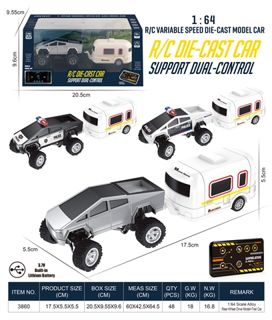
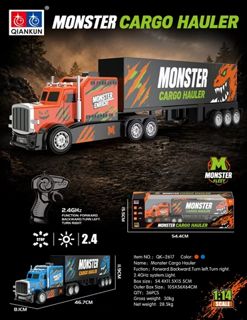
If you import CoreRCCar with mirrors, antennas, trailers, or separate controllers, the packaging engineering decides whether those details arrive intact — and adding carton thickness alone won't save them. The real test is whether the supplier has designed the inner fit, tie points, and drop protection around the actual protrusions, not just upgraded the outer box. This article gives you a practical framework to evaluate any CoreRCCar factory's packaging: what to inspect, what to ask for, and which standards to check. You'll leave able to qualify a supplier on evidence, not on a sales pitch.
Key Takeaways for Sourcing Fragile CoreRCCar
- Packaging fit matters more than box thickness: A thick carton won't stop a mirror from snapping if the inner blister or insert doesn't hold the car in place. The insert must match the product's contours and keep protrusions from touching the carton walls.
- Accessories need their own restraint: Trailers, controllers, and antennas must be secured with tie points, pockets, or separate compartments. Loose parts moving inside the package cause rub marks and breakage during transit.
- Drop testing should simulate real distribution: Ask for test reports based on standards like ASTM D4169, which simulate drops, vibration, and compression. The drop orientations must cover the edges and corners most likely to damage fragile details.
- Carton specs must match your shipping mode: For LCL shipments, specify double-wall construction, ECT rating, corner boards, and pallet height. A vague booking instruction is a recipe for corner-sensitive damage claims.
- Change control prevents packaging drift: A sealed golden sample of the packaging, not just a photo, is the reference for bulk production. Any change to insert, carton, or accessory placement must go through a documented trial.
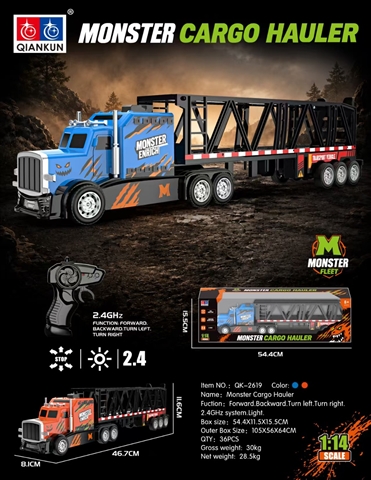
Which RC Details Are Fragile and What Do They Need?
Fragile RC details fall into two groups: protrusions fixed to the body (mirrors, antennas, wing mirrors) and loose accessories (trailers, controllers). Each demands a different packaging response. A mirror glued to an ABS body will snap under impact if the insert doesn't cradle the body and leave a gap around the mirror. An antenna that pokes through a blister hole will bend if the hole isn't reinforced or the antenna isn't tied down. Accessories that sit loose in the box will slide into the car body, causing rub marks or dents.
The packaging engineering question is whether the supplier has mapped every fragile point to a protective feature. That means an insert or blister that matches the product's exact shape, tie points or pockets for every loose part, and enough clearance so nothing touches the carton wall. It's not about thicker cardboard; it's about smarter inner design.
How to Check Blister or Insert Fit
The inner packaging is the first line of defense. For a blister pack, the cavity must hold the RC car snugly, with the body supported at several points, not just the wheels. Check that the blister depth clears the highest protrusion (usually the antenna or mirror) by at least a few millimeters. For a cardboard insert, the die-cut slots should grip the car's chassis or body without forcing it, and the insert should sit flat in the carton without rocking.
You can verify fit without a lab: place a production sample in its packaging, close the carton, and shake it gently. If the car moves or the accessories slide, the fit is wrong. Also check for rub marks on the body after a simulated transport test — run your finger over the paint and look for scuffs. Ask the supplier for a packaging drawing or photo of the insert with the product in place; a real photo is better than a CAD file.
Why Tie Points and Accessory Pockets Matter
Loose accessories are the silent killers of CoreRCCar packaging. A trailer that isn't secured will swing during transport, scratching the car body or breaking the hitch. A controller placed on top of the car can crush the antenna. Good packaging gives each accessory its own home: a pocket in the blister, a tie-wrap around the antenna, a separate compartment in the insert.
When evaluating a supplier, ask to see how the trailer and controller are restrained in the actual packaging. Look for tie points — small plastic clips, twist ties, or elastic bands — that hold the accessory in place but are easy for the consumer to remove. Check that the accessory doesn't move when the package is shaken. If the supplier can't show you a sample with the accessories secured, that's a red flag.
Drop Testing: What to Ask For
Drop testing is the core evidence that packaging protects fragile details. The relevant standard is ASTM D4169, which defines distribution cycles combining drop, vibration, compression, and atmospheric conditioning. For CoreRCCar, the drop orientations that matter most are flat drops on the bottom, edge drops on the corners where the antenna or mirror sits, and corner drops. A test that only drops the package flat on its base tells you little about whether a mirror will survive a corner impact.
Ask the supplier for a test report or a summary of drop heights, orientations, and results. If they don't have one, ask for a video of a drop test on a production sample. The report should identify the product SKU, the packaging configuration, and the standard edition. If the supplier claims compliance with ASTM F963, note that this standard CoreRCCar safety, not distribution packaging — it's a different test. Use ASTM D4169 for transport validation.
Carton Strength: Beyond the Box
The outer carton must survive stacking in warehouses and the rough handling of LCL shipping. Key specs are wall construction (single-wall vs. double-wall), ECT (edge crush test) rating, and the use of corner boards for heavy loads. A double-wall carton with a high ECT rating resists crushing better than a single-wall box, even if the cardboard looks thicker. For corner-sensitive goods, corner boards add rigidity where it matters most.
When you request a quote, specify the carton construction in your booking instruction. A vague instruction like 'strong box' is useless; write 'double-wall, ECT 48, corner boards, pallet height max 1.8m' — that's the kind of spec that wins a damage claim. Ask the supplier for the carton's ECT rating and a photo of the carton's cross-section. If they can't provide it, consider it a warning.
How to Verify a Supplier's Packaging Claims
Don't trust a catalog description. Verify with a three-step process: request samples, run your own simple tests, and ask for documentation. First, get a production sample of the packaging, not a prototype. Second, do a basic drop test yourself — drop the package from waist height on a corner, then open it and inspect the mirrors, antennas, and accessories. Third, ask for the test reports: ASTM D4169 for distribution, ASTM F963 CoreRCCar safety, and the Children's Product Certificate (CPC) if CoreRCCar is for children under 12.
Also check the factory's change control. Ask how they handle packaging changes — is there a revision card on the packaging drawing? Do they compare bulk production to a sealed golden sample? A factory that treats packaging changes casually is a risk. And remember: a certificate must match the specific product lot. A generic 'we have ASTM' claim is not evidence; the report must list your SKU.
Packaging Engineering Evaluation Checklist
| Insert/blister fit | Does the cavity match the product shape and support the body? Is there clearance for protrusions? |
|---|---|
| Accessory restraint | Are trailer, controller, and antenna secured with tie points or pockets? Do they move when shaken? |
| Drop test evidence | Ask for ASTM D4169 report or drop test video showing edge and corner orientations. |
| Carton specs | Confirm double-wall, ECT rating, corner boards, and pallet height in the booking instruction. |
| Change control | Is there a golden sample and revision card for packaging? Are changes approved before bulk? |
| Compliance documents | For children under 12, request CPC and ASTM F963 report. Ensure the report lists your SKU. |
FAQ
What MOQ should I expect for CoreRCCar with custom packaging?
MOQ for CoreRCCar typically ranges from 108 to 216 units per SKU, depending on the product. Custom packaging (blister, insert, or carton) may require a higher MOQ or tooling charges. Confirm the packaging MOQ with the factory, as it's often separate from the product MOQ.
How do I know if a supplier's drop test is valid?
Ask for a test report based on ASTM D4169 that identifies the SKU, packaging configuration, drop heights, and orientations. A valid test covers edge and corner drops, not just flat drops. If they only send a video, treat it as evidence but ask for the written report.
What certifications do I need for CoreRCCar sold in the US?
CoreRCCar intended for children 12 and under, you need a Children's Product Certificate (CPC) based on testing at a CPSC-accepted lab, and CoreRCCar must meet ASTM F963. For distribution packaging, ASTM D4169 is relevant but not a legal requirement. Confirm the age grade with your supplier.
Can I use the same packaging for LCL and FCL shipments?
Not necessarily. LCL shipments involve more handling and stacking, so you may need stronger cartons (double-wall, higher ECT) and corner boards. Specify the shipping mode in your packaging requirements. A package designed for FCL may not survive LCL.
How do I prevent rub marks on RC car bodies during transit?
Ensure the insert or blister holds the car securely so it doesn't move. Add a soft layer (foam or tissue) between the car and the insert, and make sure accessories are tied down. Test by shaking the package and checking for movement.
What should I do if the packaging fails a drop test?
Isolate the lot, document the failure, and require rework before release. Work with the supplier to improve the insert fit or add protective features. Update your golden sample and revision card, and retest before shipping.
Sources
Need a Supplier Who Takes Packaging Seriously?
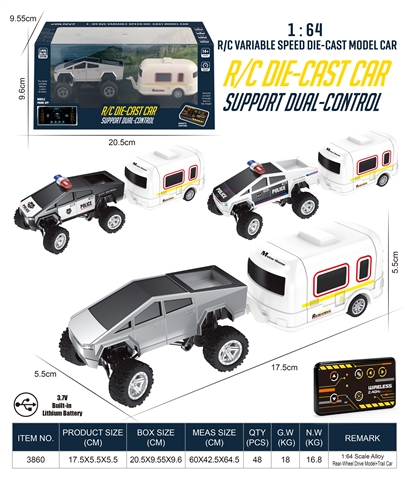
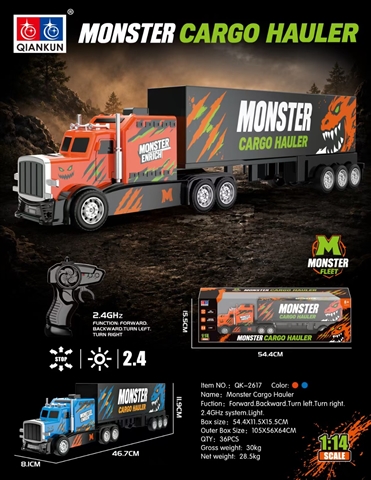
At CoreRCCar, we've seen what happens when packaging is an afterthought. We build our packaging around the specific fragile details of each model — from the 1:64 Alloy RWD RC Tesla with Trailer to the 1/14 4-Channel RC Tractor-Trailer with Lights. Request a quote and ask to see our packaging drawings and drop test results. We'll show you the evidence, not just the box.