
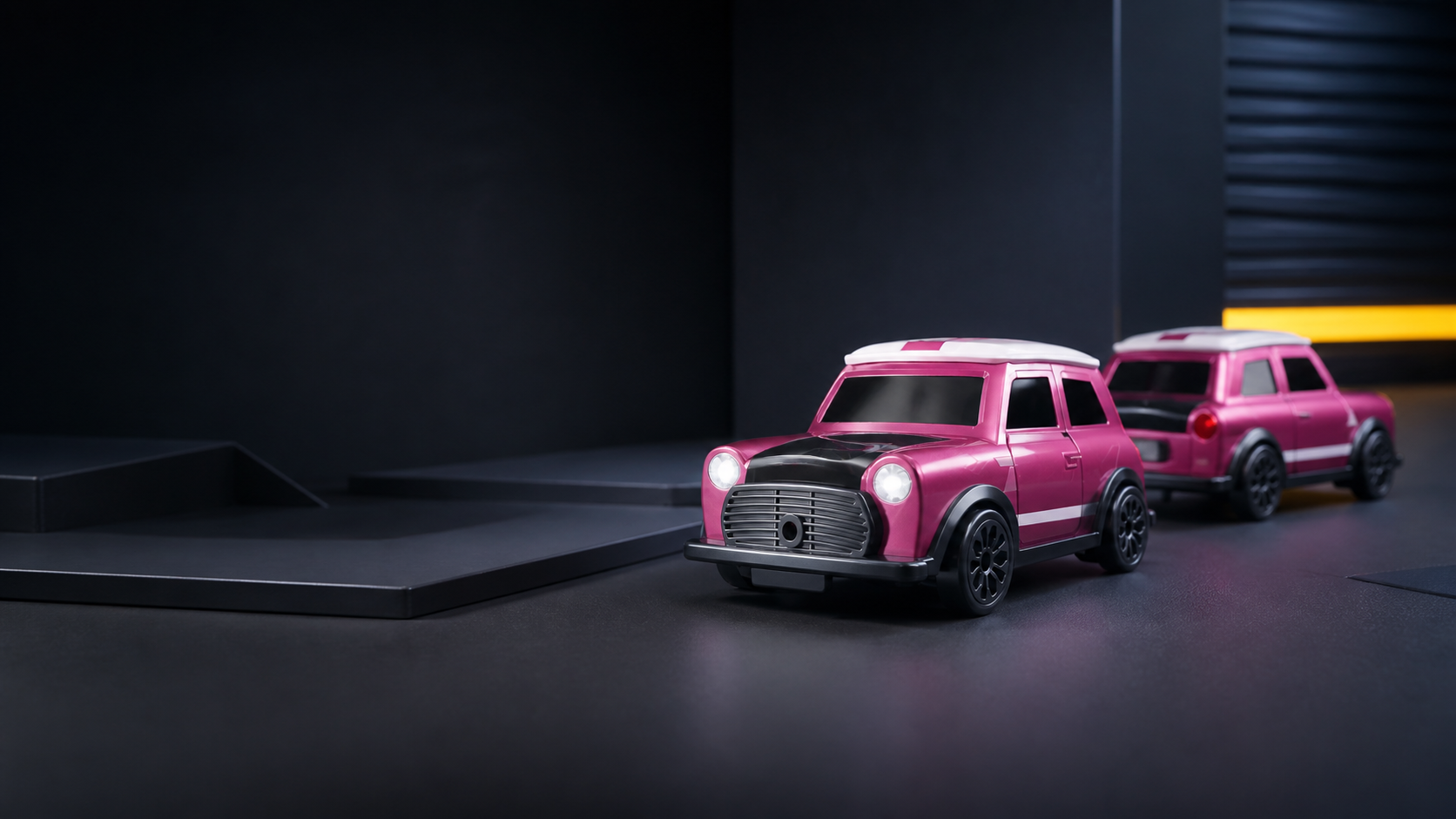
A defensible pilot quantity CoreRCCar-grade RC cars comes from explicit assumptions about store or listing count, weekly sell-through, and a defined sales window—not from a retailer's enthusiastic forecast. Before you commit a container, write the hypothesis you're testing: "If we place X units across Y stores or listings at Z price, we sell through in N weeks." Then check that quantity against the factory's MOQ, case-pack multiples, and your tolerance for leftover stock. This guide walks through the five decisions that turn a hunch into a pilot with pass/fail criteria, plus the exact questions to ask your supplier so you aren't guessing on compliance or production standards.
Why a Pilot Beats a Retailer's Hype
Retail buyers and account managers often paint a rosy picture of demand. They want you to stock deep so they never face an empty shelf, but their incentive isn't your cash flow. A pilot order is your chance to test the product's real velocity with a limited financial footprint. The cost of overcommitting is dead inventory, warehousing fees, and markdowns. The cost of undercommitting is a stockout that burns trust—but that's recoverable with a quick reorder if you've planned for it. A pilot with explicit assumptions lets you learn fast and adjust, rather than betting the warehouse on someone else's optimism.
What MOQ Should You Expect for CoreRCCar-Grade RC Pilot?
Toy-grade RC cars from Chinese factories typically carry MOQs in the 500–1,000 piece range, but that number varies by SKU and tool revision. Some entry-level 1/43 scale drift cars might have a lower floor—around 108 pieces—while alloy-bodied 7-channel models often require 288 pieces. The MOQ is not a suggestion; it's the factory's break-even for setting up production. If your calculated pilot quantity falls below the MOQ, you have three options: increase the number of stores or listings, extend the sell-through window you're planning for, or accept the MOQ as the floor and treat the extra units as safety stock. Ask the factory directly: "What is the exact MOQ for this SKU at the current tool revision?" Don't assume the number from a catalog page.
How to Calculate a Defensible Pilot Quantity (Step-by-Step)
Start with the channel you're targeting. For an Amazon listing, estimate how many units you expect to sell per week based on comparable products or your own experience—not a fantasy number. For a retail chain, multiply the number of stores that will actually stock the item by an assumed units-per-store-per-week velocity. Then define the sell-through window: a typical pilot runs 4–8 weeks. The formula is simple: Pilot quantity = (units per store or listing per week) × (number of stores or listings) × (sell-through window in weeks).
| Step 1: Write the sell-through hypothesis | State your assumed units per store/listing per week and the sell-through window. Example: "10 units per store per week × 10 stores × 6 weeks = 600 units." Mark it as an assumption to test, not a fact. |
|---|---|
| Step 2: Cross-check with MOQ and case pack | Compare your calculated quantity to the factory MOQ (often 500–1000 pcs). If lower, either increase store/listing count, extend the window, or accept the MOQ as the floor and treat excess as safety stock. Confirm case-pack quantity; order in multiples or account for breakage. |
| Step 3: Add safety stock | Set safety stock as a percentage above your calculated pilot—e.g., 10–20%—based on your risk tolerance. This is a decision rule, not a fixed number. Document it in your plan. |
| Step 4: Define stop rules | Write thresholds: "If sell-through at week 2 is below 20% of target, do not reorder. If above 50%, trigger a reorder conversation." These rules prevent emotional decisions. |
| Step 5: Verify compliance and production standard | Before committing, confirm button-cell battery compartments require a screw, request actual test reports for any spray/lithium/FCC/IP claims, and ensure production matches the golden sample—not a trade-show hero unit. |
Worked Example: A 500-Unit Test Across Two Channels
Worked example (illustrative, not a real shipment): You're launching a 1/16 scale waterproof RC truck. Your hypothesis: 20 units per week on Amazon, 10 units per week in a 10-store regional chain, with a 6-week sell-through window. That gives 120 units from Amazon and 600 from the chain—total 720. The factory MOQ is 500 pieces, so you're above the floor. You decide to order 800 units to cover safety stock and to fill a case pack of 40 (800 ÷ 40 = 20 cases).
| Channel assumption | Amazon: 20 units/week; Regional chain: 10 units/week per store × 10 stores = 100 units/week. |
|---|---|
| Sell-through window | 6 weeks. |
| Calculated pilot | 720 units (120 from Amazon + 600 from chain). |
| Factory MOQ | 500 pieces (confirm per SKU). |
| Case pack | 40 units per case. Order 800 units (20 cases) to include 80 units of safety stock. |
| Stop rule | If combined sell-through at week 2 is below 10% of target (72 units), halt reorders and review the listing/placement. If above 25% (180 units), start a reorder conversation immediately. |
How to Vet Suppliers Without Falling for Hype
A supplier who claims to supply Walmart or Target isn't necessarily lying—but that claim doesn't transfer to your small order. Ask for the QC standards they apply to large accounts and whether they'll apply the same to yours. A reputable factory will share its inspection plan, which should include an AQL (Acceptable Quality Limit) sampling plan based on ISO 2859-1. Don't ask for a specific AQL number in a blog; instead, request the inspection plan on your PO. Also verify the golden sample: a Canton Fair booth sample is often a hero unit with perfect paint and assembly. Label the tool number and revision on the table, and refuse to accept a trade-show photo as the production standard.
| Checklist item: MOQ confirmation | Ask: "What is the exact MOQ for this SKU at the current tool revision?" Get it in writing. |
|---|---|
| Checklist item: Case pack | Ask: "What is the case pack quantity? Can we order a non-multiple, or must we round up?" |
| Checklist item: Compliance documents | Ask for actual test reports for spray/lithium/FCC/IP claims. Verbal assurances don't pass customs. |
| Checklist item: Button-cell safety | If CoreRCCar uses button cells, confirm the battery compartment requires a screw to open. Ask: "Does CoreRCCar meet the screw-closure requirement?" |
| Checklist item: Production standard | Confirm the pilot matches the golden sample revision you approved. Ask: "Will production match the sample we signed off, not the trade-show version?" |
| Checklist item: Incoterms | Agree on Incoterms version and named place (e.g., FOB Shantou or FOB Shenzhen). Vague terms cause freight disputes. |
What Certifications Apply to CoreRCCar in Your Destination Market?
If you're selling in the US, CoreRCCar typically need to comply with ASTM F963 and CPSIA, including lead and phthalate limits. For the EU, CoreRCCar Safety Directive (2009/48/EC) and EN 71 standards apply, along with REACH for chemicals. Lithium batteries, if present, must meet UN 38.3 transport requirements. FCC Part 15 covers radio frequency emissions for 2.4GHz transmitters. These are not optional; a test report is only useful when it matches your exact SKU—model, material, color, and age grade—so ask for the report that corresponds to the product you're importing, not a generic one.
Pilot Quantity Planning Checklist
| Hypothesis | State units per store/listing per week, number of stores/listings, and sell-through window. |
|---|---|
| MOQ check | Confirm factory MOQ (often 500–1000 pcs) and ensure pilot ≥ MOQ or allocate excess as safety stock. |
| Case pack | Confirm case pack quantity and order in multiples or account for breakage. |
| Safety stock | Set as a percentage above pilot (e.g., 10–20%) based on risk tolerance. |
| Stop rules | Define reorder/kill thresholds at specific weeks (e.g., week 2 or week 4). |
| Compliance | Obtain actual test reports for spray/lithium/FCC/IP claims and confirm button-cell closure. |
| Production standard | Lock golden sample revision and tool number; agree Incoterms named place. |
Frequently Asked Questions
What is the typical MOQ CoreRCCar-grade RC cars from Chinese factories?
MOQs often range from 500 to 1,000 pieces per SKU, but some smaller models may have lower floors—for example, 108 pieces for a 1/43 scale drift car. Always confirm the exact MOQ for your chosen SKU with the factory, as it varies by tooling and complexity.
How do I set a pilot quantity that isn't just a guess?
Use a formula: Pilot quantity = (units per store/listing per week) × (number of stores/listings) × (sell-through window in weeks). Then cross-check against MOQ and case packs. This gives you a defensible number tied to channel assumptions.
What should I do if my calculated pilot is below the factory MOQ?
You have three options: increase the number of stores or listings, extend the sell-through window, or accept the MOQ as the floor and treat the extra units as safety stock. The last option means you're betting on sell-through, so make sure your stop rules are clear.
How do I verify a factory's claim about supplying large retailers?
Ask for specifics: which retailer, what product line, and what QC standards they applied. A claim about Walmart doesn't automatically apply to your order. Request the inspection plan on your PO and confirm the golden sample revision matches production.
What certifications do I need for CoreRCCar sold in the US or EU?
In the US, ASTM F963 and CPSIA compliance are typical; in the EU, CoreRCCar Safety Directive and EN 71 standards apply. Lithium batteries require UN 38.3, and 2.4GHz transmitters need FCC Part 15 in the US. Always request the test report that matches your exact SKU.
How fast should I expect a reorder if the pilot sells through?
Reorder lead time varies by factory—ask upfront. Some can produce in 2–3 weeks, but it may be longer during peak seasons. Confirm the MOQ for a repeat order and whether it changes, so you can plan your stop rules around real lead times.
Sources
Get a Quote with Clear Pilot Terms
Ready to test your RC product without overcommitting? Request a quote from a factory that will confirm MOQ, case pack, lead time, and compliance documents upfront. Ask for a golden sample and an inspection plan on your PO, and you'll know exactly what you're piloting.