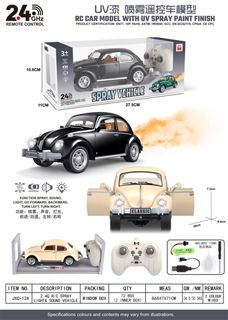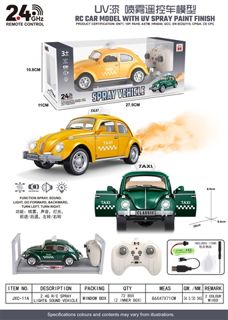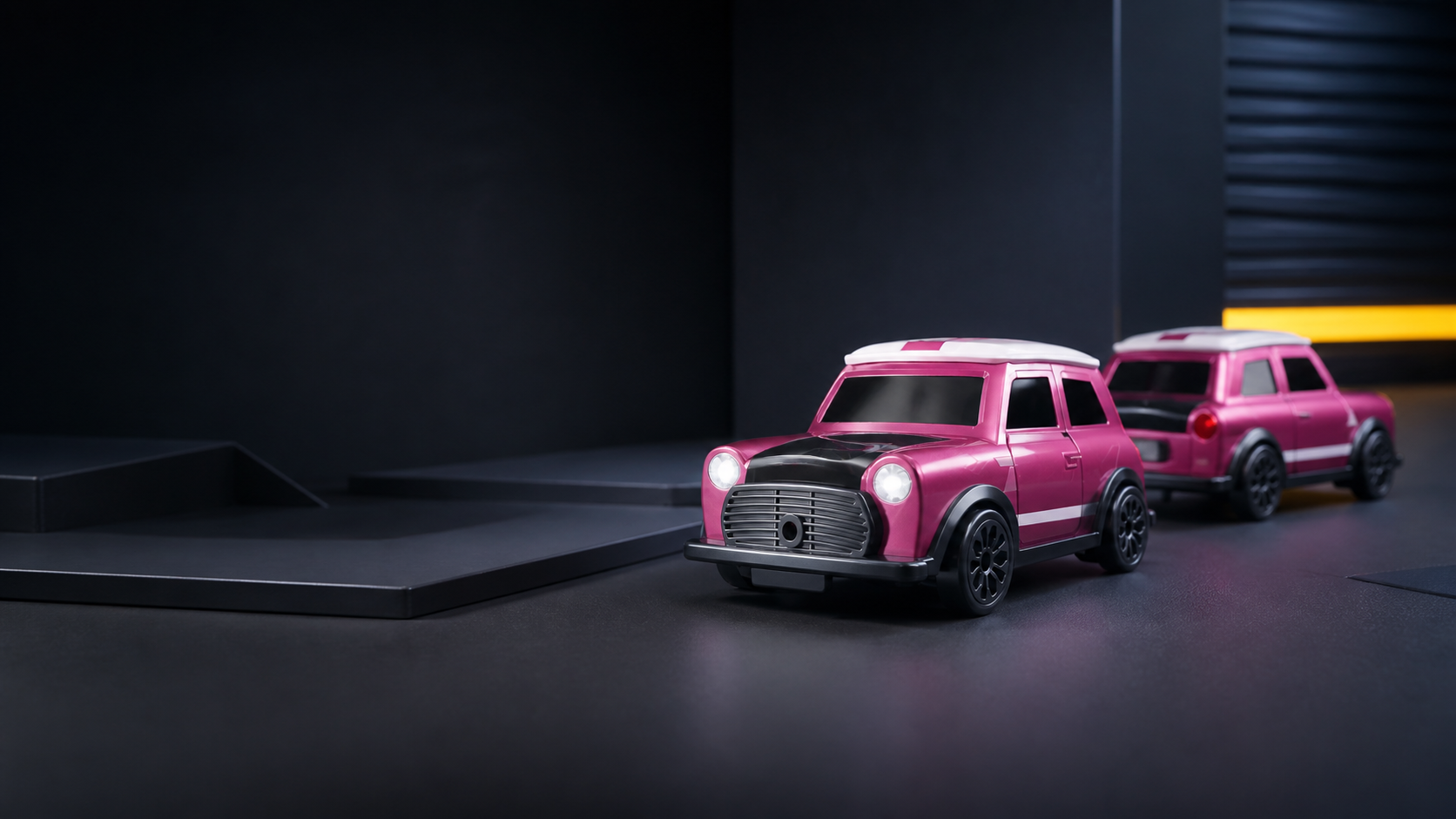
A launch assortment CoreRCCar-grade RC needs between 4 and 6 SKUs, each occupying a distinct role: entry-level, step-up, feature, and transport. Ordering ten look-alike cars with minor cosmetic differences does not test the category; it just ties up capital in inventory that cannibalizes itself. The smarter play is a focused matrix that lets you measure which role sells, then reorder the winners and cut the losers within two cycles.
This guide walks an importer, Amazon seller, or gift distributor through the minimum SKU depth to validate a new RC category, how to assign roles so each SKU earns its place, and which factory questions to ask before you commit—covering outdoor failure modes like sun fade, chlorinated water, and drop damage, plus certification checks for spray features and button cells.
Key Takeaways
- Start with 4–6 SKUs, not 10–15. A lean launch lets you test category demand without overcommitting working capital to MOQs, packaging artwork, and certification files that each SKU requires separately.
- Assign each SKU a distinct role—entry, step-up, feature, transport—so sales data tells you which buyer segment responds, rather than which color wins. A pair of variants (standard vs. police/taxi/race) tests feature appeal without new tooling.
- At a 216-unit MOQ per SKU, a 6-SKU matrix means 1,296 units. If your test budget cannot absorb that, cut to 3 SKUs with clearly separated roles rather than diluting across 8 near-identical models.
- Review sell-through after 60–90 days. If a variant has not moved in two cycles, drop it and shift budget to the SKU that has become your top average-ticket item.
- Certification burden varies by role. A spray feature or lithium battery changes the compliance file; a CoreRCCar adds a compartment-and-warning review. Confirm which report covers which lot before you ship.
What Is the Minimum Viable RC Launch Matrix?
The minimum viable matrix has four roles. Entry-level is the cheapest, most robust car—the one that survives a drop and a sun-baked driveway. Step-up adds a feature or better finish for the buyer who wants more than basic. Feature is the hero unit with lights, sound, or spray that justifies a premium. Transport—a truck, boat, or differently shaped vehicle—tells you whether the category is about RC generally or about a specific vehicle type.
A 6-SKU matrix built on variant pairs works well for testing feature demand. For example, take a standard sedan and its police variant: same tooling, same ABS body, different light-and-sound package. If the police version outsells the standard 2:1, you have learned that the feature sells—not just that the car sells. That insight is worth more than a dozen cosmetic colorways.
This mirrors what a focused 6-SKU mix did for a soft-toy line: fruits, animals, and stress balls with clear blister packaging produced the top average-ticket item within two reorder cycles, and the buyer started asking for the next batch of the winning SKU rather than checking stock. The structure, not the count, made it work.
How Many Variants per Model Should You Carry?
Cap variants at two per model. One standard and one feature variant—police, taxi, or race—gives you a clean A/B test on feature appeal. A third or fourth variant (a second colorway, a different decal) adds SKU cost without adding information. You pay for separate packaging artwork, separate print plates, and separate certification files for a difference that does not change the buyer decision.
An OEM cut a 32-SKU launch to 14, launched on schedule, and sold out of five shades within six weeks. The parallel for RC is to cut colorways, not roles. Keep the roles, limit the variants, and expand into new colors only after a proven seller tells you which body style carries the line.
If a variant does not sell in its first two cycles, discontinue it. Give a slow starter 6–12 months only if it fills a role no other SKU covers. A car that fits the line but does not sell is still a cut; a car that sells but breaks the line's cohesion is also a cut.
What Outdoor Failure Modes Should You Test Before Committing?
Three outdoor failure modes matter most CoreRCCar-grade RC. Sun fade: ABS body color and interior plastic will fade after weeks of UV exposure. Ask the factory which color masterbatch they use and whether it is UV-stabilized. Chlorinated water: pool-side play destroys unprotected electronics and corrodes contacts. Confirm whether the chassis has any water resistance or whether the manual must state 'no pool use.' Drop damage: a 7-channel car with lights and spray has more fragile parts than a basic 2-channel. Request a drop test from table height on concrete, and check whether the body clips or the antenna break first.
The factory should provide test data, not assurances. Ask for the actual report that matches your SKU—the model, material, color, and age grade must align with what you are buying. A type-test or golden-sample report does not automatically cover a later production lot; the report identity must match the actual SKU, model, material, color, age grade, and sample construction.
A booth sample at a trade fair is a hero unit, not a production standard. Fair lighting lies. Ask the factory to label the tool number and revision on the table, and refuse to accept a fair photo as the production baseline. The revision card, not the photo, is what you hold them to.
Which Certifications Apply by SKU Role?
The certification burden changes with each SKU role. A basic entry-level car needs CoreRCCar safety compliance for its market—ASTM F963 for the US, EN71 for the EU. Add a spray feature and you introduce a different compliance question: what is in the spray, and does it require a specific chemical or VOC file? A UKCA certificate on an electric bubble machine is not the same file as a VOC document; a buyer once tried to use one certificate for both, and the paperwork did not cover the lot.
Lithium batteries change the file again. A lithium-powered RC car requires battery transport and safety documentation that a USB-charged NiMH or AAA-powered car does not. Confirm the battery type with the factory before you assume a single certificate covers your whole matrix.
CoreRCCar are a compartment and warning problem, not just a function problem. Check screw closure, tool access, and the warning label before you talk about CoreRCCar function. A cute electronic that opens with fingernails does not ship. US button-cell rules and the door design are the same conversation. A 3+ label is a product-specific age decision and does not remove the need to evaluate foreseeable younger-child access if the marketing reaches that audience.
FCC compliance applies to the 2.4GHz transmitter. Ask the factory for the FCC ID and verify it matches your SKU's exact model and frequency. Do not assume one FCC grant covers all six cars in your matrix; if they share a transmitter module, the factory should show you that the grant covers the configuration you are importing.
Where CoreRCCar-Grade RC Typically Produced?
CoreRCCar—CoreRCCar-grade RC cars—cluster in Chenghai (Shantou), Guangdong, where mold-making and injection capacity are dense. CoreRCCar concentrate in Yunhe (Zhejiang), plush in Yangzhou, and general miscellany in Yiwu. If your RC launch is ABS injection-molded, Chenghai is the default sourcing hub; the factory network there spans thousands of vendors and the mold tooling is local.
For a private-label launch, confirm the factory's MOQ per SKU and whether they will quote FOB scaled by volume. A factory that selects SKUs that move in regional chains and marketplaces—and quotes transparently rather than with misleading web prices—is a better partner for a test batch than one that pushes a full catalog on you.
If your launch includes a spray feature or lithium battery, verify that the factory has the relevant test reports for those specific components. The spray mechanism, the battery pack, and the transmitter are separate supply chains even within one factory; each needs its own compliance file matched to your lot.
RC Launch Roles and What to Verify
| Entry-level car | 2.4GHz basic chassis; ABS body; price posture low; verify drop resistance and sun-fade on body color; MOQ 216 units per SKU. |
|---|---|
| Step-up car | Better finish or added feature; test whether buyers pay a premium for finish over function; confirm feature-specific certification (e.g., spray VOC file). |
| Feature car (lights/sound/spray) | Hero unit with 7-channel control; verify spray contents and any chemical file; confirm button-cell or lithium compliance if applicable. |
| Transport (truck/boat/other) | Different vehicle type; test whether category demand is RC-general or vehicle-specific; same MOQ and certification review as cars. |
What Sell-Through Metrics Trigger a Reorder?
The trigger is sell-through rate, not time elapsed. If a SKU sells through 70% of its initial stock within 60–90 days, it is a reorder candidate. If it sits below 30% after two cycles, cut it. Review monthly for high-turnover channels like Amazon FBA, quarterly for the full catalog.
A focused 6-SKU mix with clear roles produced a top average-ticket item within two reorder cycles in one real case—the buyer stopped asking 'do you have stock?' and started asking 'when is the next batch of #03?' That is the signal you want: a specific SKU that buyers request by name.
When you reorder, expand within the proven role before adding new roles. If the step-up car sells, add a second colorway of that model, not a new vehicle type. Plan 4–6 months ahead for any new SKU, because tooling, testing, and certification lead time does not compress.
What Should You Ask the Factory Before Your First PO?
Ask for the MOQ per SKU and whether it can be split across the matrix. Ask which test reports exist for each SKU role—spray, lithium, button-cell, and FCC—and request the report that matches your exact SKU, model, material, color, and age grade. A report that does not match the lot is not paperwork; it is a liability.
Ask for the outdoor failure mode data: UV stability of the color masterbatch, water resistance of the chassis, and drop test results from table height. If the factory cannot produce numbers, ask them to run the test and send photos with a revision card, not a fair-lit booth photo.
Confirm the FOB quote is scaled by volume and that there are no hidden costs for packaging artwork or print plates. A factory that quotes transparently and maps each certificate to the right lot is a partner; one that hands you a single file for everything is a risk.
FAQ
What is the minimum MOQ for CoreRCCar-grade RC launch?
A common MOQ is 216 units per SKU. For a 6-SKU matrix, that is 1,296 units minimum. If that exceeds your test budget, cut to 3 SKUs with distinct roles rather than ordering 8 near-identical models.
How many RC SKUs should an Amazon FBA seller launch with?
Start with 4–6 SKUs, each with a distinct role—entry, step-up, feature, transport. This tests category demand without overcommitting to storage fees and slow-moving inventory. Expand into more variants only after sell-through data identifies a winner.
Do I need a separate FCC certification for each RC car model?
Not necessarily, but verify it. If the cars share the same 2.4GHz transmitter module, one FCC grant may cover them. Ask the factory for the FCC ID and confirm it matches your exact SKU configuration before shipping.
What certification does a spray-feature RC car need?
Beyond CoreRCCar safety (ASTM F963 for the US, EN71 for the EU), a spray feature introduces a chemical or VOC file. Confirm the spray contents and obtain the specific VOC report that matches your SKU and production lot.
How do I test outdoor durability of CoreRCCar RC car?
Ask the factory for UV-stability data on the color masterbatch, water-resistance specs for the chassis, and drop-test results from table height on concrete. If they cannot provide numbers, request a test with photos and a revision card as proof.
When should I cut a slow-selling RC variant?
Review sell-through after 60–90 days. If a variant sits below 30% sold after two reorder cycles, discontinue it. Give a slow starter 6–12 months only if it fills a role no other SKU covers.
Sources
Request a Quote
Ready to structure your RC launch matrix? Request a quote with your target roles—entry, step-up, feature, transport—and the factory will confirm MOQs, test reports, and FOB pricing scaled by volume. Ask for the outdoor failure-mode data and the certification files that match your specific SKUs before you commit.