
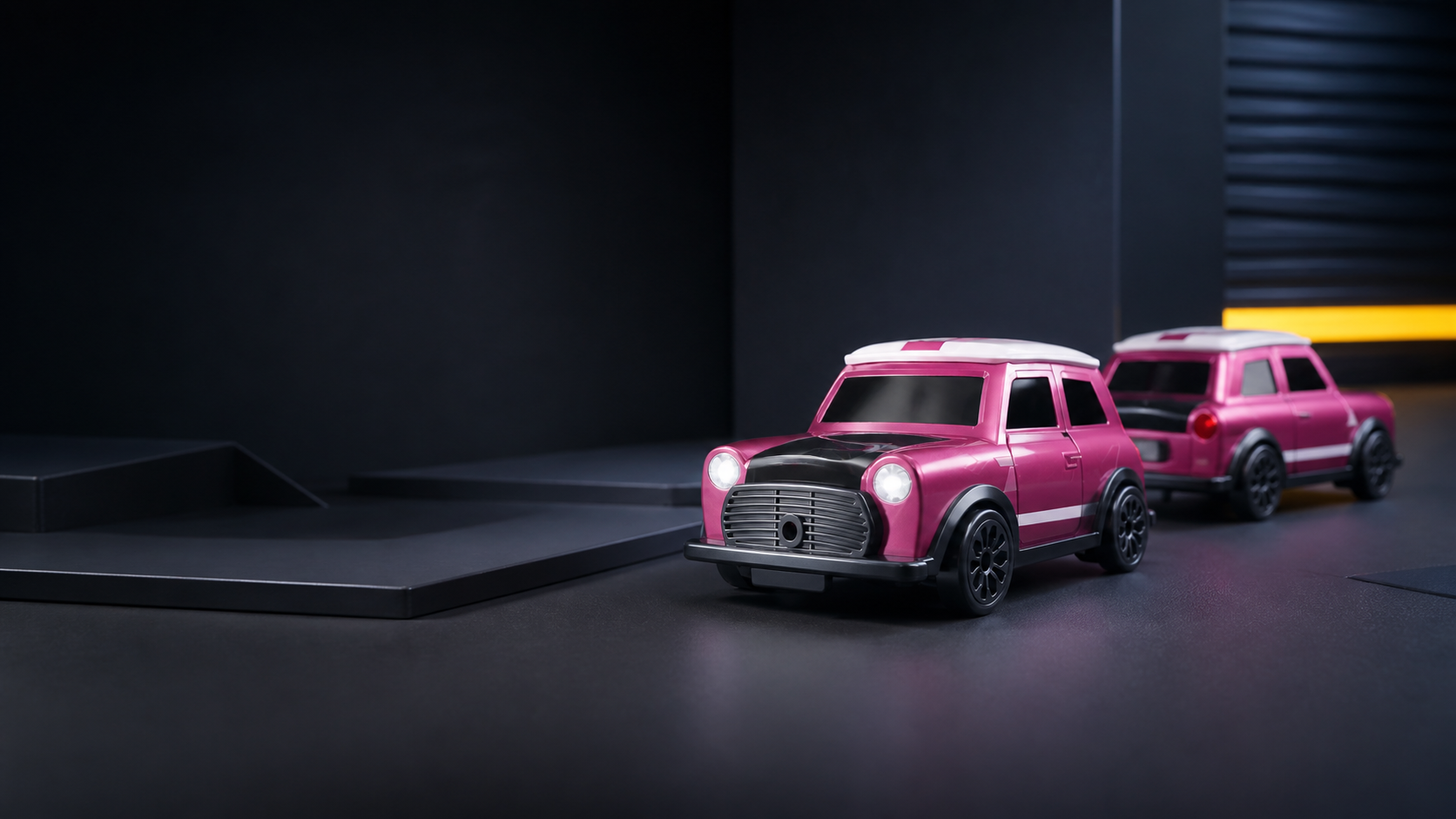
Source a Jeep-style CoreRCCar only after the exact body design, artwork and authorization position have passed a documented review; a familiar silhouette or removed logo is not a purchasing approval. Choose a documented generic-design route or a substantiated licensed-product route, and hold volume commitment while material questions remain unresolved. For CoreRCCar RC sourcing without brand assumptions, the practical deliverable is a model-specific approval record—not a supplier’s assurance that the vehicle is simply “off-road style.”
What does the seller’s “inspired by” wording actually establish?
“Inspired by” establishes how a seller describes the product, not documented permission to use a brand or vehicle design. An India retail listing describes an RC body as “Inspired by the iconic Jeep Rubicon”; that description does not establish licensing or brand-owner approval. It also does not establish that permission is absent. Treat the wording as a reason to request the authorization position, not as a clearance decision. Retail listing
Separate the sourcing routes at the start. For a licensed-product proposal, request the authorization documents for review against the product, supplier, intended territories, sales channels and relevant dates. For a generic-design proposal, request the design-origin files and a signed statement identifying any third-party elements. Do not market the second route as licensed.
Which design elements need trade-dress screening before volume commitment?
Screen the complete visual combination—body profile, front fascia, grille, lamps, fenders, trim and markings—rather than checking only for a Jeep wordmark. Use this as a purchasing screen for questions requiring legal review, not as a substitute for a market-specific legal assessment.
Request matching front, rear, side, overhead and three-quarter photographs of the proposed production sample, plus close-ups of molded lettering and badges. Compare those views with the body drawings, decoration files and supplier’s design-origin explanation. A catalog thumbnail is too limited for this comparison.
Give the grille its own close-up and drawing reference. Record the opening layout, shapes, spacing, surrounding frame and relationship to the headlights and hood. Do not use a slot count, a color change or one altered detail as the approval criterion. Ask counsel to assess the combination when recognizability remains a concern.
Include the controller, chassis underside, wheel centers, spare-wheel cover, decals, packaging, manual and listing images. A clean hood does not resolve a brand reference retained elsewhere in the saleable set.
Would a logo-free sample pass the purchasing gate?
A logo-free sample should pass only the logo-removal check, not automatically the whole IP review. Consider two proposed purchasing scenarios; these are decision examples, not findings about a particular product.
In the first scenario, the supplier removes a printed hood name but leaves the body, grille and packaging imagery unchanged. Record the printed-name removal as completed. Keep the remaining design and artwork questions open, and withhold volume release until the designated reviewer resolves them. The completed correction remains useful evidence, but it answers only one question.
In the second scenario, the supplier submits revised body drawings, a revised grille, original decoration files and a physical sample matching those revisions. This is the stronger package for review because the buyer can inspect the actual changes and trace their origin. It is not an automatic clearance: send any remaining similarity or authorization question to counsel before release.
Approve artwork and physical construction together. If a mark is molded into the body, deleting it from a packaging file does not change the sample. Likewise, a revised sample does not update old marketplace images. Identify each affected component and file in the correction.
What should the supplier declare, and when should legal review begin?
Request a signed, model-specific declaration stating the design’s origin, the supplier’s authorization position and the exact revision being offered. A broad statement that “all CoreRCCar are generic” is not a model-specific response.
Ask the supplier to identify who created or supplied the body and artwork, which elements came from third parties, and what documents support any claimed permission. Where tooling or body shells come from another business, request that source relationship and the supplier’s basis for offering the design. The declaration should identify the signing company, authorized signatory and date.
Escalate to counsel before volume commitment when the supplier markets the model with Jeep or vehicle-model names, cannot reconcile the sample with its design-origin explanation, provides authorization whose scope needs interpretation, or proposes logo removal as the entire answer to a continuing silhouette or grille concern. Request a conclusion for the intended destination markets and sales channels, with any required design or copy changes.
A missing declaration does not by itself prove infringement or dishonesty. It leaves that document check open. Keep other valid evidence, record the unresolved question and name the person responsible for obtaining a decision.
What belongs in the model-specific IP approval record?
| Product identity and intended sale | Enter the supplier’s legal name, factory model identifier, buyer item reference, destination markets and intended sales channels. |
|---|---|
| Revision and reference sample | Record body and grille drawing revisions, decoration and packaging file revisions, photograph references, and the retained golden-sample identifier. |
| Specified target versus observation | For each reviewed feature, state the approved target, what was observed on the sample or file, the evidence reference and any discrepancy. Distinguish requested changes from changes actually checked. |
| Authorization and design origin | Reference the signed supplier declaration, design-origin files, any claimed authorization documents and the scope assessed by the reviewer. |
| Artwork and copy approval | Identify the approved logos, badges, decals, packaging, manual and listing copy, with their revisions and the person approving each affected asset. |
| Decision and release conditions | Record approve, conditional approval, hold or reject. State whether tooling, purchase-order release or production remains blocked, and identify the conditions for release. |
| Responsible approvers and dates | Enter the buyer’s accountable approver and decision date, supplier acknowledgment and date, and legal reviewer and review date where escalation was required. |
| Follow-up and closure | Assign each open action an owner and due date. Reference the revised file or sample, closure observation, closing approver and closure date before releasing the affected stage. |
| Subsequent changes | Require proposed body, grille, badge, tooling-source or artwork changes to be submitted for review. Record the changed revision and whether prior approval remains applicable. |
How should the approved sample control the production handoff?
Use the retained golden sample and approved files as the comparison references at the production handoff, then document any differences before releasing the affected goods. Have the supplier acknowledge the same revision set rather than relying on an email that says only “sample approved.”
Compare production-intent units and packaging with those references, concentrating on molded marks, grille inserts, decals and imagery affected by the review. Route discrepancies to the named approver; do not let an inspector improvise an IP decision.
The record supports traceability. It does not by itself prevent or reveal an undisclosed substitution, so retain physical comparison checks alongside the paperwork.
Do battery, radio or spray-feature claims change the IP decision?
Battery, radio and spray-feature checks belong in a separate technical review and should not substitute for design approval. A technical report does not answer whether the proposed body and artwork have an acceptable authorization position.
If the quotation includes a lithium battery, request the actual battery identification and relevant reports for that configuration. For a US radio-control proposal, request the actual FCC documentation for the proposed vehicle and transmitter rather than accepting a frequency description as the answer. If a spray feature is offered, request its construction details and applicable test reports before approving related claims.
Match each document to the construction being purchased and have the responsible technical reviewer assess its coverage. Release volume only when both the recorded design decision and the applicable technical purchasing checks are closed.