A customer who watches one of your RC cars ignore its controller while a second car responds to the same trigger will not buy—and will not come back. Single-unit testing—power on, drive forward, call it passed—never catches pairing conflicts, and in 2026 the buying standard has shifted: simultaneous-play verification is becoming a sourcing gate, not a nice-to-have. This article walks importers through the 2.4GHz setup checks, multi-unit pairing, recovery procedures, and the evidence trail to demand from your factory before you commit to a container.
Key Takeaways
- Demand a multi-unit pairing test on your golden sample: power on two or more cars from the same batch and verify each responds only to its own controller.
- Include a recovery procedure in your QC checklist—confirm that if a signal drops, the car re-pairs automatically or via a simple reset, not by returning to the factory.
- Ask the factory for dated, unedited video of simultaneous play with at least two units, plus the pairing instruction page from the manual, as part of your pre-PO evidence.
- Treat single-unit functional checks as insufficient: functional inspection should exercise the actual play function, not merely verify CoreRCCar turns on, CoreRCCar QC practice.
- Plan for demo-day staff instructions: brief retail floor staff on how to re-pair multiple cars quickly, because that is where returns are born.
Seasonal brand or trend matrix
| 2.4GHz multi-car RC | Why visible this window: Multiple units in one video is the default demo format on social; single-car clips look dated. Sourcing implication: Verify simultaneous pairing before ordering; ask for a video of two cars running together. Dated source note: Trend radar, Aug 2026. |
|---|---|
| Stunt / flip RC cars | Why visible: 360-flip and double-sided stunts are the repeatable hook for short clips. Sourcing implication: Confirm the stunt function works repeatedly under multi-car interference. Dated source note: Trend radar, Aug 2026. |
| Off-road / climbing RC | Why visible: Outdoor terrain clips pair naturally with kidult and hobby buyers. Sourcing implication: Test range and recovery outdoors, not just on a bench. Dated source note: Trend radar, Aug 2026. |
Why single-unit testing fails multi-car demos
A single RC car on a bench tells you almost nothing about how it behaves in a real sale. The defect that kills your Amazon listing or your supermarket shelf is controller crosstalk—two cars on the same frequency band responding to the same trigger, or one car ignoring its own controller because another unit grabbed the pairing slot. That failure only appears when you run two or more units at once.
Toy-grade 2.4GHz systems use spread-spectrum to bind one transmitter to one receiver, but the binding is only as good as the factory's implementation. Cheap receivers can bind to the wrong controller, lose pairing when a second unit powers up, or fail to recover after a signal drop. A single-unit test cannot see any of this. That is why the new sourcing gate is simultaneous-play verification: you confirm each car answers only its own controller, with two or more units live in the same space.
The fix is not complicated, but it has to be written into your QC checklist. Functional inspection should exercise the actual play function—not merely verify CoreRCCar turns on or looks complete. That is CoreRCCar-QC practice, and it applies directly here.
The 2.4GHz setup: what to verify on your golden sample
Before you commit to a PO, run a scripted pairing check on your golden sample. You do not need an RF lab; you need a repeatable procedure and a factory that cooperates.
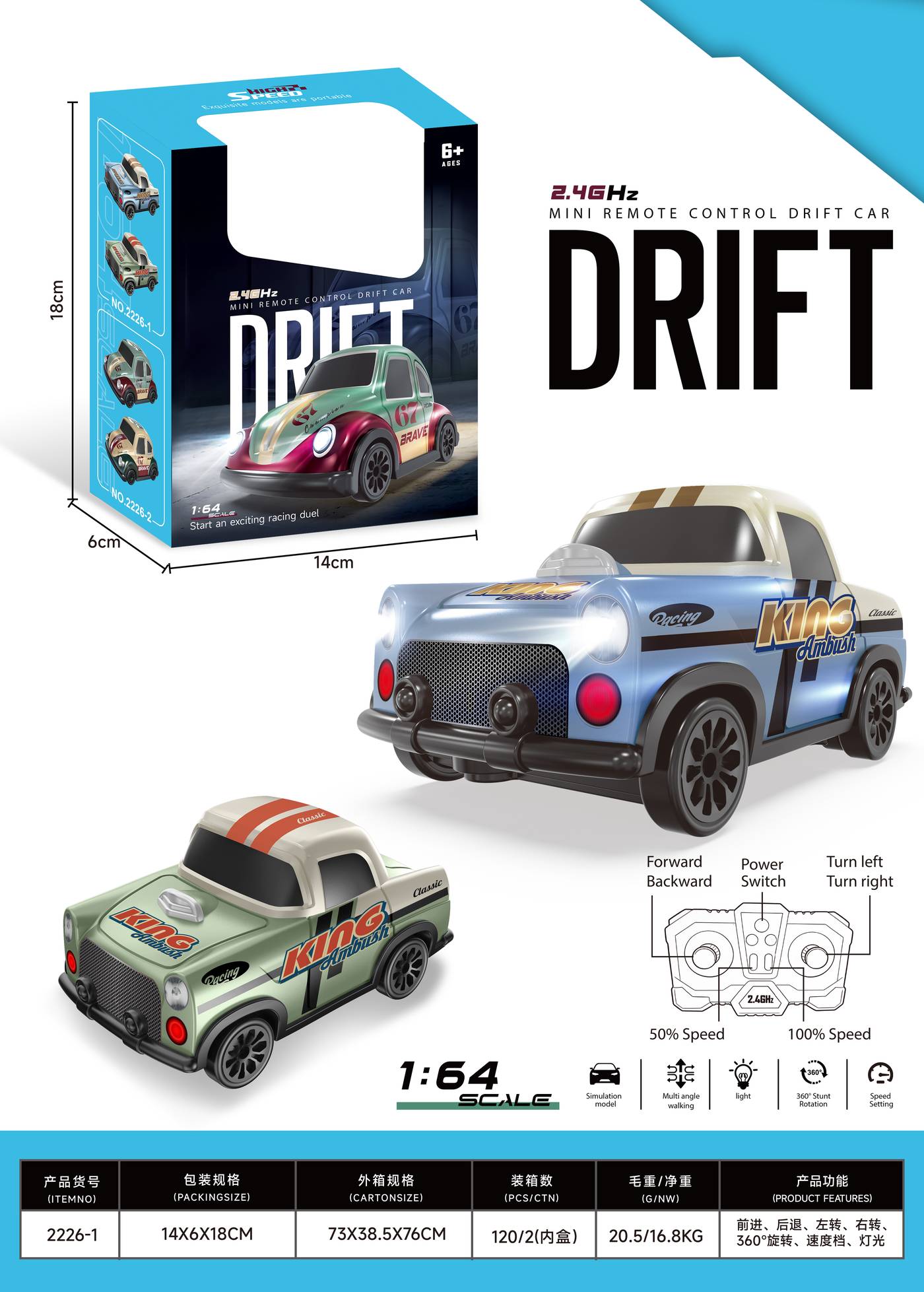
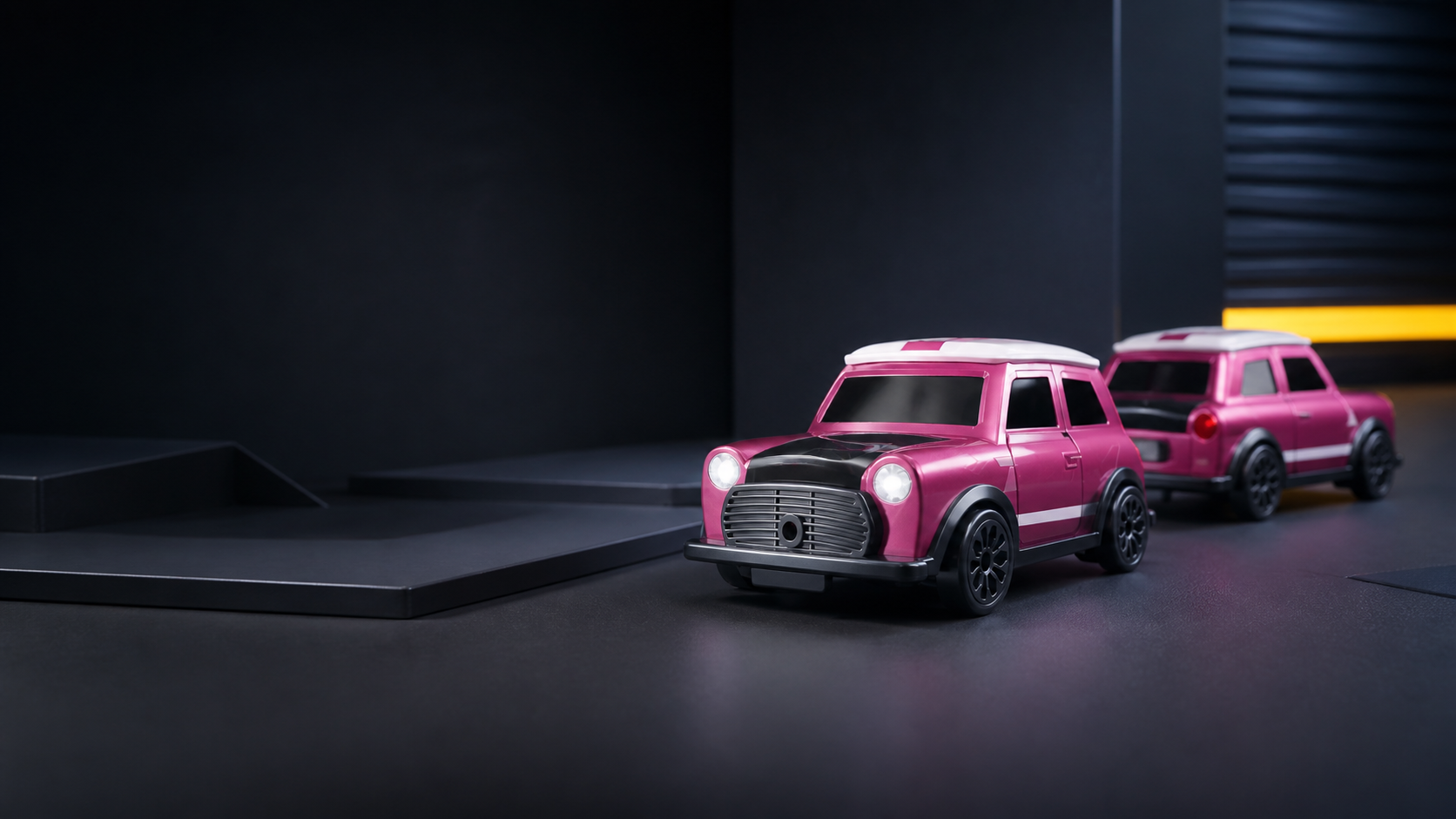
Step one is the binding test. Power on car A, bind its controller, drive it forward. Then power on car B, bind its controller, and drive B. Now drive A again—if A hesitates, responds to B's controller, or refuses to move, the pairing logic is weak. Repeat with three units if your demo plan calls for a three-car race. This is the test that separates CoreRCCar that works from CoreRCCar that gets returned.
Step two is recovery. Kill the signal on car A—turn off the controller or walk out of range—then bring it back. Does A re-pair automatically? Does it need a reset button? Does it pair to the wrong controller on restart? The recovery behavior is what your retail customer will hit on day one, and it is the most common source of 'broken' complaints that are actually pairing failures.
Step three is the evidence handover. Ask for dated, unedited video of the simultaneous-play test, plus the pairing instruction page from the manual. If the factory cannot produce this, treat it as a red flag. You are not asking for a favor—you are asking for the proof that your product will survive a two-car demo on a retail floor.
Multi-unit pairing and controller identity: the real defect
The defect that matters in multi-car play is controller identity. Each car must remember its own controller and ignore others, even when several units are powered on in the same room. This is where cheap 2.4GHz modules fail.
When a car binds to the wrong controller, it usually happens during the first power-on sequence in a crowded environment. The receiver picks the strongest signal, which may not be the transmitter you are holding. A good factory tests for this by binding two cars simultaneously, then swapping controllers to confirm each car rejects the wrong one.
For buyers, the sourcing implication is direct: add a controller-identity check to your factory audit. Ask the supplier to demonstrate that car A will not respond to car B's controller, under the same conditions your retail demo will use. If they cannot, the product is not ready for multi-car marketing, no matter how good the single-unit test looks.
Recovery procedures: what your demo staff need to know
Your demo staff are the last line of defense against returns. A customer who buys two cars and cannot make them run together will return both—and blame the product, not the process. So your staff instructions matter as much as the hardware.
Write a one-page recovery script: power off both cars, power on car A, bind its controller, then power on car B and bind its controller. If a car does not respond, turn it off and on again, then re-bind. This is the same script you should verify at the factory, because if it works in their QC room, it will work on your floor.
Also decide who owns the evidence. Keep the factory's simultaneous-play video on your phone or tablet, and show it to a customer who doubts the product. A short clip of two cars running together, with the pairing instruction visible, converts more than any spec sheet.
OEM-relevant examples
If you are sourcing this season's stunt or gesture-driven RC lineup, these are OEM-relevant starting points—not ranked brands—to ask your factory about.
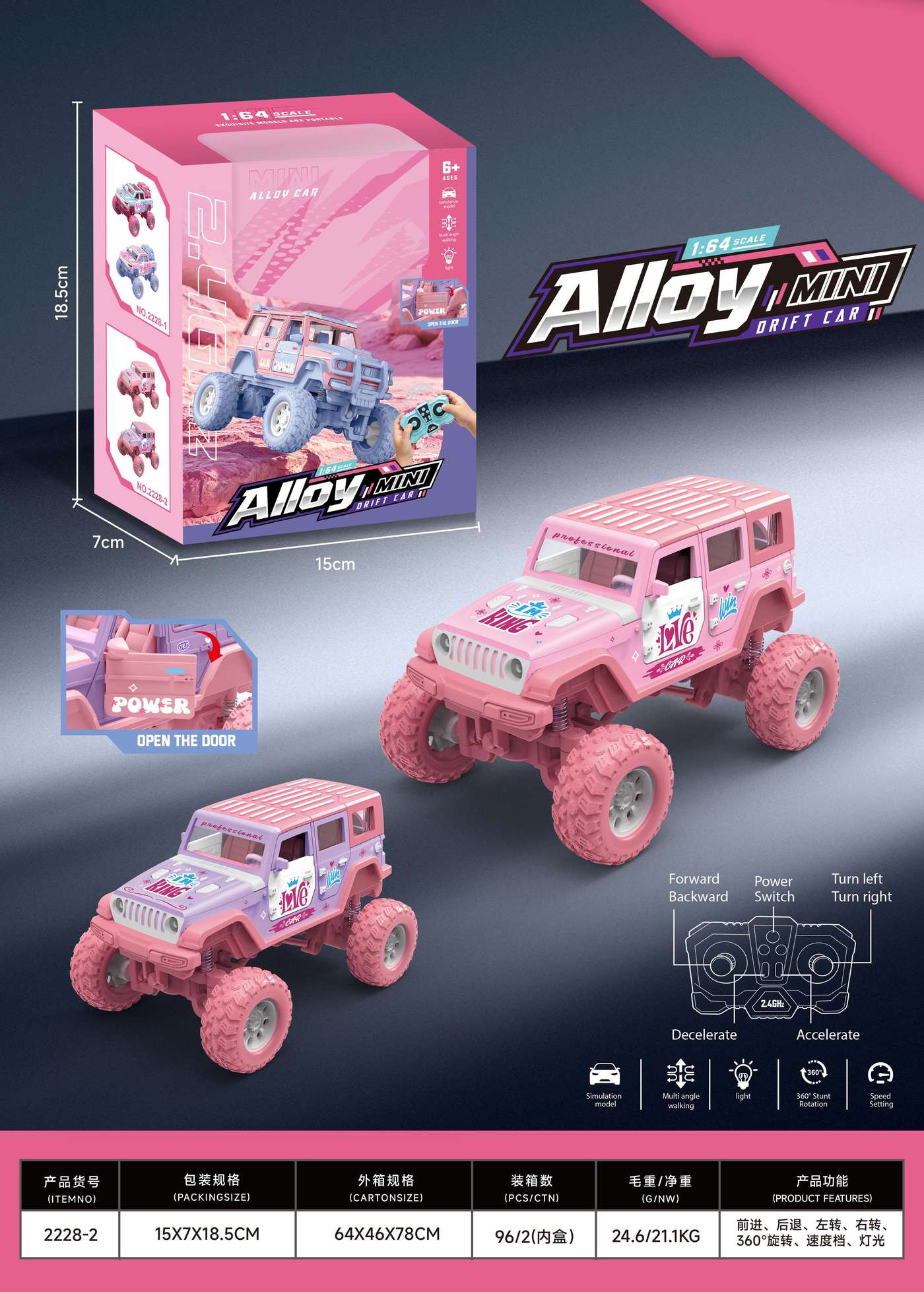
For a flip-and-stunt SKU, ask the supplier to run the simultaneous-play test on a model like the Flip & Stunt RC Cars. You are not buying the brand; you are buying the pairing behavior, so request the same video evidence on any similar double-sided model.
For gesture or interactive controls, the controller-identity risk is different—gesture bands often share the same frequency band as standard remotes. Check the Gesture & Interactive RC Cars range for how the factory handles multi-unit pairing, and add a two-unit gesture test to your QC script.
FAQ
How do I verify that two RC cars from the same batch won't cross-pair during a demo?
Ask the factory for a dated, unedited video showing two units powered on simultaneously, each responding only to its own controller. Then run the same test on your golden sample during QC. If the factory cannot produce the video, treat it as a red flag.
What is the minimum MOQ for a custom RC car with verified multi-car pairing?
MOQ varies by model and factory; CoreRCCar-grade RC MOQs range from 54 to 200 units per SKU, based on available data. Confirm the MOQ with the supplier, and ask whether the simultaneous-play test is included in the QC or costs extra.
Which certification should I ask for before ordering RC cars for the US or EU?
For the US, ask for ASTM F963 and CPC; for the EU, EN71 and EN62115. Confirm the factory holds current reports, and request the actual certificate PDF before placing a PO—do not rely on a listing claim.
How do I brief retail demo staff to handle pairing issues on the floor?
Write a one-page recovery script: power off both cars, bind car A, then car B, and re-bind after a restart if a car is unresponsive. Have the factory's simultaneous-play video on hand to show customers that the product works.
What should I do if my golden sample fails the multi-car pairing test?
Send the factory the video of the failure and ask for a root-cause fix, not just a replacement unit. Re-test after the fix, and ask for a written note on the change. If the factory cannot fix it, consider a different supplier.
Sources
Request a Quote
Ready to make simultaneous-play verification part of your next PO? Talk to us about RC car sourcing with the pairing test built into the QC checklist—request a quote and get a factory that can prove multi-car performance before you commit.