
Specify an original silhouette, surface treatment, grille and lamp layout—not a recognizable vehicle with its badge removed. An original body styling brief for a non-licensed scale car should define permitted references, prohibited cues, logo zones and mechanical constraints, then tie tooling and render approvals to the same revision. Use the proposed compact-coupe brief below as a purchasing specification: approve the design direction first, resolve engineering changes next, and record intellectual-property review before tooling release and final production approval.
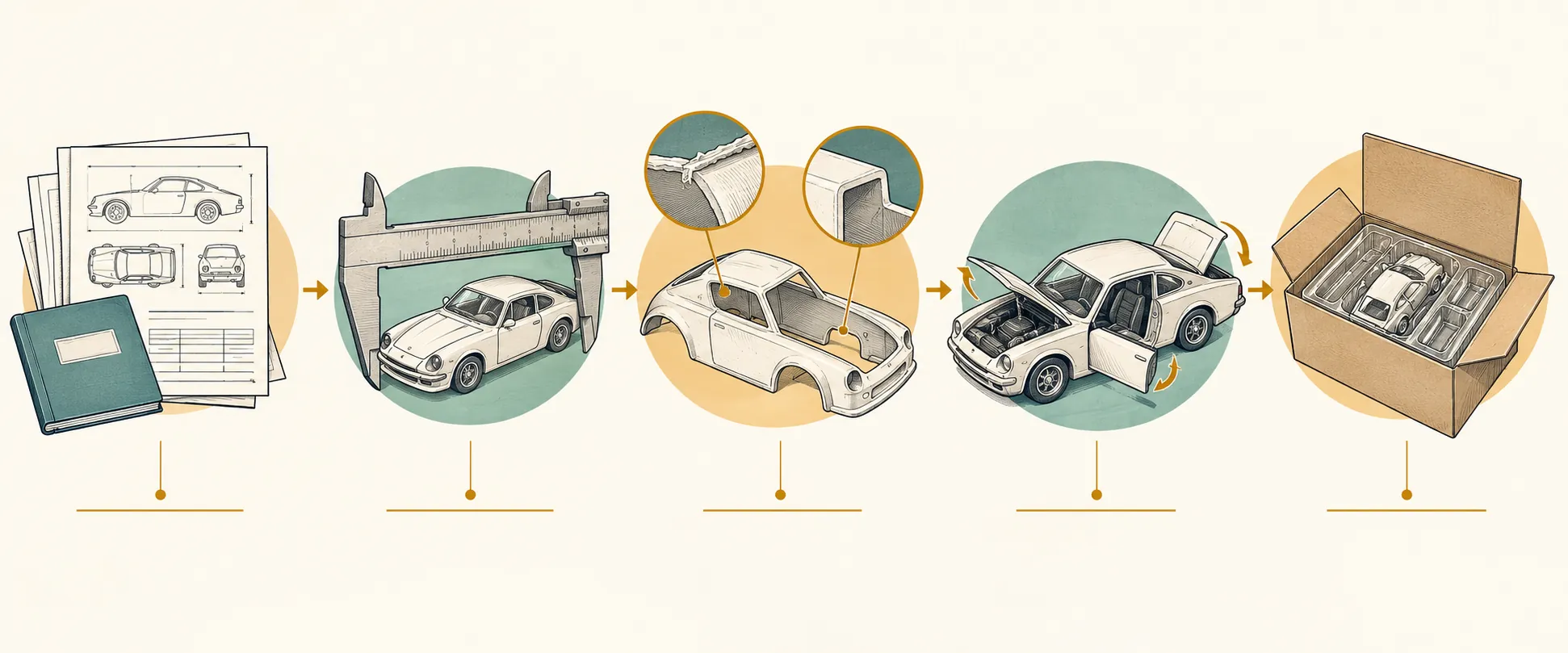
What may the shell reference, and what must it avoid?
Reference broad vehicle characteristics such as stance, cabin placement and surface tension; prohibit copying a specific vehicle’s identifying combination of shapes and details.
Build the reference sheet around individual design objectives. Caption each image with the permitted lesson—such as a short rear overhang or restrained wheel-arch volume—and identify details that must not transfer. Do not give the designer a single vehicle photograph with an instruction to make it unbranded. Combining references from several vehicles is not, by itself, an originality check.
Put these exclusions directly into the brief: no third-party badges, model names or wordmarks; no reproduction of a distinctive grille outline or internal pattern; no copied lighting signature; no recognizable combination of roofline, side glazing, character lines and rear treatment; and no imitation racing livery or sponsor graphics.
Review the assembled design, not just the excluded details individually. A changed grille does not answer whether the remaining silhouette and body treatment still track the reference too closely. These are proposed purchasing boundaries, not a legal clearance test.
Proposed Brief A: Original Compact-Coupe RC Shell
Use an original compact-coupe concept with a low hood, a visibly separated cabin and restrained body detailing, while preserving the approved chassis interfaces. The following is a proposed design brief, not a description of an existing catalog model or an approved sample.
Design identity: Original Compact-Coupe RC Shell, Brief A. Intended appearance: a realistic road-car impression without representing a named vehicle. Describe it as scale-look; do not assign a replica scale from a real vehicle that the shell is not intended to reproduce.
Body direction: a gently descending roof, short rear deck, lightly raised wheel arches and one restrained shoulder transition. Develop the side-window outline and rear-quarter surface together as original geometry. Use simplified panel lines rather than adding decorative detail that recreates a reference vehicle.
Front and rear: specify a shallow, wide lower intake with a plain center panel above it. Use separate, simple lamp housings and a rear bumper with its own surface treatment. No badge recesses, model-script pads, ornamental exhaust emblems or reference-derived trim pieces.
Engineering boundary: fit the nominated chassis drawing revision. Preserve its wheel centers, mounting interfaces and functional access. Show the steering and suspension clearance envelope, where applicable, in the CAD review. Enter actual dimensions and agreed tolerances on that drawing rather than estimating them from a styling render.
Acceptance direction: preserve the original appearance while meeting the chassis envelope. If clearance requires a taller hood or wider arch, return the changed surfaces for styling review; do not treat an engineering change as automatic aesthetic approval.
Where must marks not appear, and how should lamps stay generic?
Mark every permitted branding location on the drawing, and treat all other visible shell areas as no-mark zones unless a revised artwork approval explicitly changes them.
For Brief A, use a text-based zone map that is also marked on front, rear, side and top views. Zone A is the buyer’s approved wordmark area on the hood center. Zone B is a neutral rear plate panel for approved buyer artwork. Zone C covers the grille, lamps, wheels, side glazing, roof and remaining body surfaces: no decorative marks. Keep any separately required product information outside this decorative-artwork approval.
Define each permitted zone by its boundary, artwork file revision, orientation and application method. A zone authorizes only the specifically approved artwork; it is not permission for the factory to add an emblem, trim name or substitute graphic. Keep the underlying hood surface plain rather than creating a badge-shaped recess.
Lamp specification for Brief A: use paired, simple rounded-rectangle front elements and separate rear elements, with no continuous light bar, segmented signature or animated sequence. Treat these as decorative features for this brief; powered lighting requires a separate specification and approval.
Check both the housing outline and its internal graphic. A simple outer housing can still contain a recognizable lighting pattern. Review lamps within the complete front and rear views, not only as isolated components.
Which styling proposal should the buyer approve?
Advance the proposal that creates its own overall appearance; return the proposal that merely removes branding from a recognizable reference design.
Worked comparison: Proposal A retains the reference vehicle’s grille perimeter, hooked lamps, side-window outline and rear-quarter crease, but substitutes a blank badge. Return it for redesign under this brief. The unchanged combination conflicts with the originality boundary even though the badge is gone.
Proposal B uses the compact-coupe direction but develops a different cabin outline, shallow lower intake, plain center panel and separate simple lamps. Advance it to engineering and intellectual-property review if it also meets the chassis constraints. That decision approves the design direction—not a conclusion that the design is legally cleared.
Record the specific surfaces to retain or revise. “Make it more original” is not a usable correction; “replace the hooked lamp graphic and redraw the rear-quarter crease shown in the marked view” is.
How should tooling review control changes to the shell?
Release tooling only against identified CAD and styling revisions, with engineering-driven appearance changes reviewed before release.
Ask the tooling engineer to mark proposed parting lines, draft changes, attachment features, inserts, visible gate locations and any simplification of grille or lamp detail. Compare those changes with the approved exterior views. A tooling adjustment that changes a window corner, intake outline or character line needs a recorded styling decision.
Check mechanical fit on a representative physical sample when available: shell mounting, wheel clearance through the intended movement, access to controls and compartments, and interference with the chassis. Record dimensional observations against the drawing’s specified targets and tolerances. A visual fit check is not a substitute for applicable product safety testing.
Before production approval, retain an identified approved reference sample, often called a golden sample, with photographs and the agreed finish and artwork references. Reconcile it with the released CAD. The record supports traceability; it cannot by itself reveal an undisclosed substitution or design change.
What must render approval confirm?
Approve renders only when their geometry, lamps, marks and finish match the identified released design or approved physical sample.
Require front, rear, side, top and three-quarter views with consistent geometry and artwork. Use neutral views as well as presentation images so shadows and reflections do not hide grille, lamp or body-line details. Check that the rendered wheel design and stance match the approved configuration.
Keep early concept approval separate from final production-render approval. The final record should identify the CAD revision, artwork revision, finish reference and sample used for comparison. If the render artist adds an emblem, changes a lamp graphic or alters the stance, return the affected image for correction rather than treating it as harmless presentation work.
What should the IP signoff and release record contain?
Make intellectual-property review a recorded release condition before tooling, then confirm it again against the final design and artwork before production. This is a recommended buyer control, not a statement that a particular review process guarantees clearance.
Ask the factory to identify whether the shell uses an existing mold or newly commissioned geometry, who supplied the design and artwork, and what design-use permissions or ownership terms are documented. Obtain the actual written assessment or supporting documents for any IP assurance. Have the buyer’s designated reviewer or counsel assess the relevant design, artwork and intended markets; do not replace that review with a general factory declaration that the product is non-licensed.
Use one release record with these fields: project and body identity; intended sales markets; brief, CAD and artwork revisions; tooling or sample identifier; and the render file set. For each checkpoint, enter the specified target, observed result and supporting view, drawing or sample reference.
Decision fields: approve, return for revision, or hold; exact conditions; responsible action owner; responsible approver and date. Closure fields: corrected revision, evidence of the correction, closure reviewer and closure date. Keep unresolved release-blocking conditions open rather than carrying them into production as an informal promise.
If spray effects, lithium batteries, radio claims such as FCC compliance, or an ingress-protection rating are proposed, request the actual relevant specifications and reports for the offered construction before approving those claims. Intellectual-property signoff does not substantiate them. Keep unapproved features and performance claims out of the brief, packaging and renders.