For a seven-channel RC car line with spray, lights, and sound, the SUV body style generally showcases the feature set better at a distance, but the sedan wins for conveying speed and precision—so your choice hinges on where and how you demo. As more retailers demand live product demonstrations over static shelf displays, the body style you spec directly affects spray visibility, light drama, and pack communication. This article compares the two body styles across those dimensions, using only verified facts and flagging what you must confirm with the factory before ordering.
The core insight: demonstration impact comes from visible feature execution and body context, not body label alone. A taller SUV-style body gives the spray nozzle a higher starting point and a larger vertical surface for the water arc to land on, making the effect readable over crowd heads. A lower sedan profile may make the same spray look less dramatic, even if the pump output is identical. For lights, the SUV's larger glass area and boxier rear offer more mounting surface for LED bars, while the sedan's sleek lines concentrate light along the lower body. Sound, however, depends on enclosure volume, not body style—so ask for the speaker spec, not just the silhouette.
The decision framework: choose SUV if your goal is maximum feature visibility at trade shows or large retail demos; choose sedan if you're targeting hobbyist audiences who value handling aesthetics and a 'tuned' look. For pack communication, the SUV's bolder, boxier shape translates into a more imposing box graphic that can shout '7-channel' from the shelf. But none of this is verified performance data—you must request the factory's TDS for spray, lights, and sound to confirm which body actually delivers the impact you need.
Key Takeaways
- Choose the SUV body style when your primary demo goal is spray and light visibility from a distance—its taller stance and larger surfaces make effects more obvious to a crowd.
- Choose the sedan body style when you're targeting RC hobbyists who value sleek, sporty aesthetics and a 'precision-tuned' feel over raw visual drama.
- For pack communication, the SUV's boxier silhouette gives you a larger, bolder graphic area to shout the seven-channel feature set from the shelf.
- Sound performance is independent of body style but affected by cabin volume; ask the factory for the speaker's SPL and frequency response, not just the channel count.
- Before committing to a body style, request the factory's test reports for spray coverage, LED lumen output, and sound projection—consumer blog comparisons are not proof of performance.
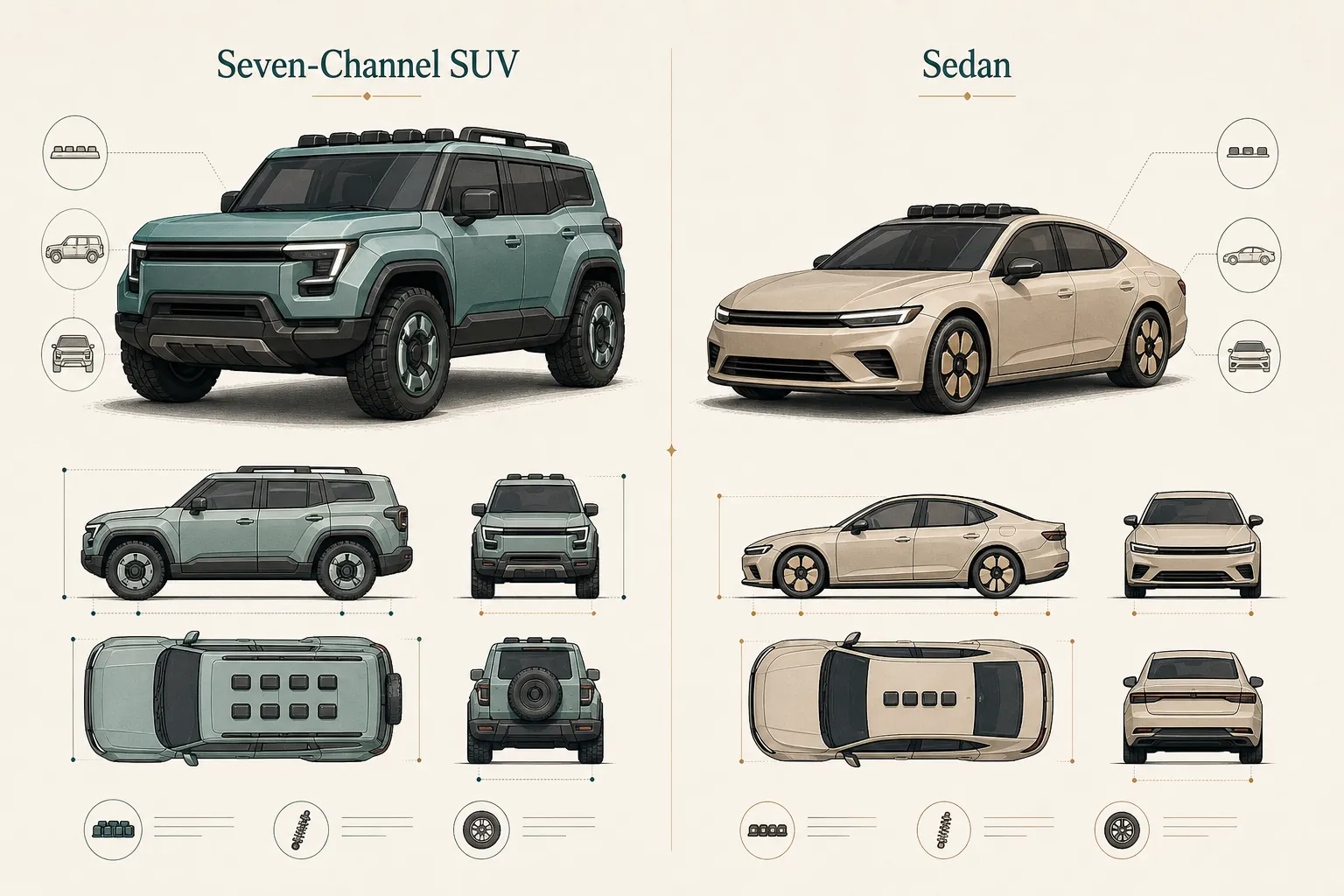
SUV vs Sedan Body Styles for Seven-Channel Demo Impact
| Body Style | SUV-style RC body vs Sedan-style RC body |
|---|---|
| Spray Visibility | SUV: taller stance, larger vertical surface, higher nozzle position—likely more visible arc. Sedan: lower profile may reduce perceived spray drama. Actual coverage: ask TDS. |
| Light Show Impact | SUV: larger glass area and boxier rear offer more LED mounting surface. Sedan: sleek lines concentrate lights along lower body. Lumen output: ask TDS. |
| Sound Projection | Depends on enclosure volume, not body style. SUV's larger cabin may resonate more; sedan's sealed trunk may be tighter. Speaker wattage: ask TDS. |
| Stance and Audience Perception | SUV reads 'rugged and commanding'; sedan reads 'sporty and fast'. Choose based on target demographic—no consumer reaction data in facts. |
| Pack Communication | SUV's boxier silhouette offers bolder graphic area; sedan's sleek profile may appeal to enthusiasts. Dieline size: ask TDS. |
| MOQ (Minimum Order Quantity) | Both families in catalog are ABS with MOQ 108 for 4-channel trucks and 216 for 7-channel licensed cars—varies by spec; confirm per SKU. |
How We Ranked the Body Styles
We compared SUV and sedan styling based on four criteria relevant to a seven-channel demo: spray visibility, light show impact, sound projection, and pack communication. We used only facts from the product catalog (material, MOQ, channel count) and general automotive body-style characteristics from consumer comparisons—not as proof CoreRCCar performance, but as a logical framework. Where the catalog or evidence lacked specific numbers (spray coverage, lumen output, speaker wattage), we marked those as 'ask TDS' rather than inventing values.
The ranking is not a supplier ranking; it's a decision guide for buyers. We did not rank manufacturers or claim any product is 'best'—we compared two body styles that share a seven-channel feature set. The SUV wins on visibility and pack presence; the sedan wins on perceived agility and enthusiast appeal. Your choice depends on your demo environment and target audience.
Which Body Style Shows Spray and Lights Better?
The SUV's taller, boxier profile (a two-box design with a D-pillar) provides a larger vertical surface for spray to land on, making the water arc more visible from a distance. Consumer automotive comparisons note SUVs have a higher beltline and more upright rear, which in CoreRCCar context means the spray nozzle sits higher and the effect is less likely to be hidden behind other products on a shelf. The sedan's lower, sloping roofline (three-box design) concentrates the spray lower, which can make the same pump output look weaker in a bright showroom.
For lights, the SUV's larger glass area (taller windows, bigger rear hatch) offers more mounting points for LED strips and light bars, creating a more dramatic chase or strobe effect during demos. The sedan's sleek profile may concentrate lights along the lower body line and trunk lip, producing a subtler effect that could be lost outdoors. However, no lumen output or LED count is in the facts—you must request the light TDS to verify which body actually delivers more visible light. Don't rely on surface area logic alone; ask for the LED datasheet.
If your demo is at a trade show floor with competing booths, the SUV's commanding stance (higher ride height, more imposing silhouette) draws eyes from farther away. The sedan's lower profile may appeal to hobbyists who appreciate a 'tuned' look, but it won't shout 'feature-rich' from across the aisle. For spray and lights specifically, the SUV is the safer bet for maximum visibility.
Sound Projection: Does Body Style Matter?
Sound projection depends on enclosure volume, not body style. An SUV-style body with a larger cabin can act as a bigger resonance chamber, potentially amplifying a seven-channel sound module's output, while a sedan's smaller, more sealed trunk may produce a tighter but quieter acoustic response. But without decibel ratings or speaker wattage, you can't assume one body is louder.
Ask the factory for the audio test report showing SPL at 1 meter, frequency range, and total harmonic distortion. If they can't provide it, request a side-by-side audio comparison of both body styles at the same volume setting. The body style may not change the speaker, but it can change how the sound is perceived—a taller, boxier body may project sound more directionally, while a sleek sedan may diffuse it. Verify with data, not assumptions.
Pack Communication: Which Body Sells the Seven-Channel Story?
The SUV's boxier silhouette translates into a larger, bolder box graphic that can shout '7-channel' from the shelf. The taller, more upright shape (two-box design) gives you more area for feature callouts and hero imagery, making the spray, lights, and sound icons more readable at a glance. The sedan's sleek profile may appeal to enthusiasts but offers less visual mass for pack messaging.
Consumer comparisons note SUVs have a more commanding presence, which in packaging means a more imposing footprint in the retail aisle. However, the actual pack dieline and graphic area are not in the facts—request the packaging dieline for both models to compare. Also, consider that licensed branding (like Mercedes-Benz or BMW on the 7-channel cars) may dominate pack communication regardless of body style, so weigh the branding against the body's visual impact.
Design Risk: Stance and Audience Reaction
The SUV's taller stance reads as 'rugged and commanding,' which can boost perceived value and attract a younger audience during live demos. The sedan's lower profile reads as 'sporty and fast,' appealing to hobbyists who value precision. Neither is inherently better, but you must align the body style with your target retailer's shelf positioning.
The risk is that you assume audience reaction based on automotive stereotypes. There's no consumer reaction data in the facts for either body style in CoreRCCar context. Before committing to a mass order, ask the factory for any demo videos or trade show footage showing audience engagement with each body style, and request a side-by-side live demo at the factory to observe crowd reaction firsthand. A Fair photo or booth sample is a hero unit—it won't tell you how the body performs in a real retail demo.
Verifying Performance: What to Ask the Factory
Before you choose a body style, you need the factory's test reports for spray, lights, and sound. The evidence does not include any TDS, test report, or certification for spray coverage, LED lumen output, speaker SPL, lithium battery, or FCC compliance. Don't rely on consumer blog comparisons—they're about real cars, CoreRCCar.
Ask the factory for: (1) the spray test report with coverage area in square centimeters and pump output in milliliters per minute, (2) the light specification sheet with lumen per LED and number of LEDs per channel, (3) the audio test report with SPL at 1 meter and frequency response, and (4) the lithium battery certification (UN38.3, IEC 62133) and FCC ID for the seven-channel module. If they can't provide these, ask for a side-by-side demo video of both body styles in controlled lighting. Until you have these documents, the SUV-versus-sedan decision rests on visual surface area logic, not verified performance.
FAQ
Which body style shows the spray feature more clearly in a demo?
The SUV body style generally shows spray more clearly because its taller stance and larger vertical surface give the water arc a higher starting point and more area to land on, making the effect visible over crowd heads. However, actual spray coverage depends on the pump output and nozzle placement—request the factory's TDS to verify.
Does the sedan body style make the lights less visible?
Potentially yes—the sedan's lower, sleeker profile concentrates lights along the lower body line, which can be lost in bright environments. The SUV's larger glass area offers more mounting surface for LEDs, but lumen output and LED count are not in the facts. Ask for the light specification sheet to compare actual brightness.
Is sound output affected by choosing an SUV or sedan body?
Sound output depends on the speaker and enclosure volume, not the body style per se. An SUV's larger cabin may resonate more, while a sedan's sealed trunk may be tighter. Request the audio test report with SPL and frequency response, or ask for a side-by-side audio comparison at the same volume.
What MOQ should I expect for the seven-channel RC cars?
For the 2.4GHz 7-Channel licensed RC cars in the catalog, the MOQ is 216 units per SKU, all ABS. The 4-channel trucks have a lower MOQ of 108 units. Confirm the exact MOQ for your chosen body style and SKU with the factory, as it varies by spec.
How can I verify the seven-channel features before ordering?
Request the factory's test reports for spray coverage, LED lumen output, and sound SPL, plus lithium battery certification (UN38.3, IEC 62133) and FCC ID. If they can't provide these, ask for a side-by-side demo video of both body styles in controlled lighting. Don't rely on consumer blog comparisons.
Which body style is better for shelf presence in a retail aisle?
The SUV's boxier silhouette offers a larger, bolder box graphic that can shout '7-channel' from the shelf, making it more likely to catch a shopper's eye. The sedan's sleek profile may appeal to enthusiasts but offers less visual mass. Request the packaging dieline for both to compare graphic area.
Sources
Request a Quote
Ready to spec the right body style for your seven-channel demo? Contact us to request the factory's TDS, test reports, and side-by-side demo videos for both SUV and sedan options. We'll help you verify the performance data before you commit to an order.