For a CoreRCCar-grade RC program, supplier retention and order allocation should be governed by a balanced scorecard that weighs quality, delivery, compliance, and responsiveness—not by price alone. A buyer who allocates volume purely on unit cost will eventually pay for hidden failures in change control, documentation, and service. This article gives you the indicators to track, how to weight them CoreRCCar-grade RC, and what documents to verify before you renew a supplier or shift orders.
Key Takeaways
- Quality and compliance carry the highest weight in CoreRCCar-grade RC scorecard; use defect rate, repeat nonconformance, and corrective-action effectiveness—not just price.
- Delivery reliability is critical for seasonal launches; track on-time delivery (OTD) trends and lead-time variability, not just a single month's percentage.
- Compliance documents must match the specific SKU, lot, and market; a UKCA file for an electric bubble machine does not cover a VOC test for an RC car.
- Use a sealed golden sample as the production standard; a photo approved at a fair is not a substitute for comparing bulk to the physical sample.
- Share scorecards with suppliers and tie order allocation to tiers: Preferred suppliers get more volume; At-risk suppliers get a 90-day improvement plan.
Which Indicators Should Govern Supplier Retention and Order Allocation?
In a multi-year program, you need leading indicators, not just lagging ones. Traditional KPIs like defect rate and on-time delivery tell you what happened last month. Leading indicators—inspection failure trends, repeat nonconformance rate, change notification frequency, corrective-action overdue rate—tell you what is likely to happen next quarter. For CoreRCCar-grade RC program, add compliance documentation as a separate category, because a missing or mismatched certificate can stop a shipment at customs.
Start with equal weighting (25% each) for quality, delivery, cost, and responsiveness for the first two review cycles, then adjust based on actual cost of failure. For example, if a late RC shipment causes retail stockouts, weight delivery higher. Keep the scorecard to 8–12 criteria; avoid subjective measures like 'communication style' unless tied to measurable response times or issue-resolution SLAs.
How to Weight Compliance CoreRCCar-Grade RC
Compliance is not a single checkbox. For CoreRCCar sold in the US, ASTM F963 is mandatory under CPSIA, and products intended primarily for children 12 and under require third-party testing and a Children's Product Certificate (CPC) per 16 CFR part 1110. A CPC must include seven elements: product identification, citation of applicable rules, certifier info, test record contact, manufacture date/place, test date/place, and lab identification. If a supplier cannot produce a complete CPC for each SKU, that is a red flag.
For the EU, CoreRCCar Safety Directive 2009/48/EC and the General Product Safety Regulation (EU) 2023/988 are separate instruments. A CE marking and an EU Declaration of Conformity must match the product scope and the responsible party. Never accept a generic 'we are certified' statement; ask for the actual report and verify it lists the correct SKU, age grade, and standard edition.
CoreRCCar with batteries, sound, or spray features add extra scrutiny. ASTM F963 Section 4.25 covers CoreRCCar, Section 4.5 covers CoreRCCar, and Section 4.20 covers projectiles. Check that the supplier's report covers these sections. If CoreRCCar has magnets, confirm the flux index is below 50 if it fits the small-parts cylinder. For lithium batteries or spray chemicals, ask for the specific test report—do not assume it is covered by a CoreRCCar certificate.
Scorecard Category & Weight Example
| Quality (30%) | Defect rate, repeat nonconformance rate, incoming inspection failure rate, corrective-action effectiveness |
|---|---|
| Delivery (25%) | On-time delivery (OTD) %, lead-time variability, on-time delivery trend |
| Compliance (20%) | CPC completeness, EN71/ASTM F963 report coverage, FCC/lithium/spray reports, document-to-lot match |
| Cost (15%) | Price variance vs. contracted rate, cost reduction initiatives, total landed cost |
| Responsiveness (10%) | RFQ response time, issue resolution SLA, change notification frequency |
What Documents Should You Verify Before Retention?
A scorecard is only as good as the evidence behind it. For each RC SKU, request the following and verify they match the specific lot and market: a Children's Product Certificate (CPC) or EU Declaration of Conformity, the underlying test report from a CPSC-accepted lab, the ASTM F963 or EN71 report, and any battery, spray, or FCC reports. If the supplier says 'we have a certificate,' ask to see the actual file and confirm it lists the correct product, age grade, and standard edition. Paperwork that does not match the lot is not paperwork.
Also verify tooling ownership and storage terms in writing. A buyer once asked who owned the tool after paying a fee, but the contract had not frozen storage years or release conditions. The tooling policy must state fee, ownership, storage period, and what happens if the tool sits idle. That is a document, not a handshake.
How to Verify a Factory's Actual Performance on the Floor
Scorecard data comes from inspections, not from a catalogue. On the factory floor, a failed lot is isolated, defect class is recorded, and release happens only after rework. Buyers who want an AQL number should get it from the agreed inspection plan on the PO, not from a catalogue sentence. Ask your third-party inspector to compare bulk against the sealed golden sample—colour, fit, flash, function—not against a photo.
For LCL shipments of corner-sensitive goods like RC cars with lights and spray, the booking instruction must specify double-wall cartons, corner boards, ECT, and pallet height. Claims are won on the booking file. If the supplier cannot produce a shipping spec sheet, assume the worst.
At a fair, a booth sample is often a hero unit. A factory that labels tool number and revision on the table and refuses to take a Fair photo as the production standard is showing discipline. The revision card does not lie; fair lighting does.
Which MOQ and Pricing Should You Expect CoreRCCar-Grade RC?
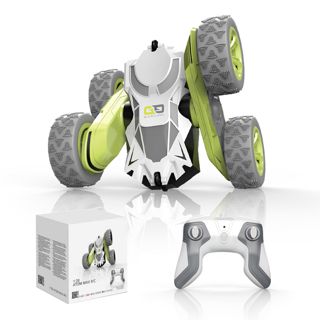
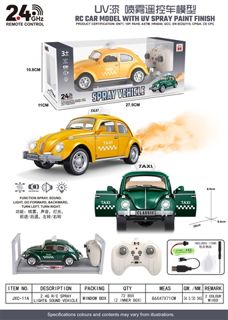
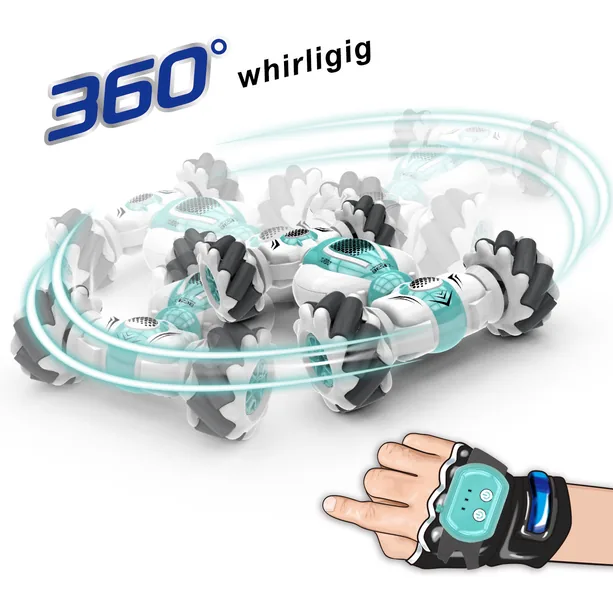
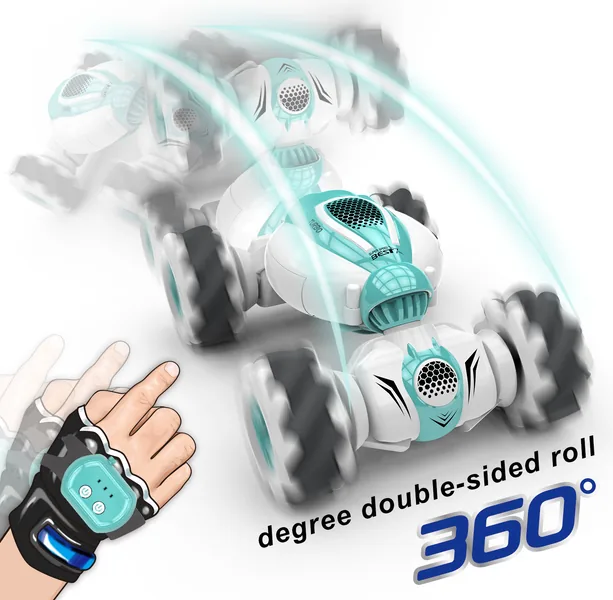
MOQs CoreRCCar-grade RC cars from Chenghai factories typically range from 48 to 216 units per SKU, depending on the model and customization level. For example, a simple 2.4GHz 7-channel Beetle RC car with lights, sound, and spray might have an MOQ of 216 units at around $5.01 FOB. A more complex 1:16 scale 4WD gesture-sensor stunt car with music, lights, and spray might have an MOQ of 48 units at around $14.00. A 1/43 scale mini RC drift car with lights and charger could be 108 units at $14.88.
These are indicative only; actual MOQ and price depend on the specific SKU, material (ABS or other plastic), and customization. Always confirm current MOQ and pricing with the factory before planning order allocation.
How to Use the Scorecard for Order Allocation and Retention
Once you have two quarters of data, use the scorecard to segment suppliers into tiers. Preferred suppliers (score 4.0–5.0 on a 1–5 scale) get increased volume and longer contracts. Approved suppliers (3.0–3.9) maintain status quo. Conditional suppliers (2.0–2.9) get a 90-day improvement plan before re-evaluation. At-risk suppliers (below 2.0) should not receive new orders until they show corrective action.
Share the scorecard with each supplier. This is not just about accountability; it gives the factory a clear path to improve. In a multi-year program, a supplier that sees its score and works on root-cause correction is more valuable than a cheaper one that hides problems.
FAQ
What MOQ should I expect for a custom RC car order?
For CoreRCCar-grade RC car from Chenghai, MOQs typically range from 48 to 216 units per SKU, depending on complexity and customization. A simple 7-channel car might be 216 units; a complex 4WD stunt car could be 48 units. Confirm with the factory, as MOQ varies by spec and packaging.
Which certification applies to CoreRCCar sold in the EU?
CoreRCCar sold in the EU must comply with CoreRCCar Safety Directive 2009/48/EC and the General Product Safety Regulation (EU) 2023/988. You need a CE marking and an EU Declaration of Conformity matched to the product scope. Ask for the actual report and verify it lists the correct SKU and standard edition.
How can I verify a factory's compliance documents are valid?
Request the actual test report and CPC (for the US) or EU DoC (for the EU). Check that it lists the product, age grade, standard edition, and the responsible party. Confirm the lab is CPSC-accepted (for US) and that the report matches the specific SKU and lot. Paperwork that does not match the lot is not paperwork.
What should I look for in a factory audit for CoreRCCar?
Check that the factory has a sealed golden sample for each SKU, a documented inspection plan with AQL, and a policy for isolating failed lots. Verify tooling ownership and storage terms in writing. Ask for shipping spec sheets for LCL, including double-wall cartons and corner boards. See if they label tool number and revision on samples.
How do I handle a supplier that fails to meet quality targets?
Use a 90-day improvement plan with clear milestones. Track repeat nonconformance and corrective-action effectiveness. If the supplier cannot fix root causes—sorting alone is containment—reallocate volume to a Preferred supplier. Do not let price mask ongoing failures.
What is the trend for RC car compliance in the US?
Starting July 8, 2026, importers must electronically file certificates of compliance with CBP. This means your supplier must be ready to provide accurate CPC data per shipment. Ask if they have a process for eFiling; this should be part of your compliance scorecard.
Sources
Request a Quote
Ready to apply a scorecard to your RC program? Request a quote from a factory that can provide lot-matched certificates and a sealed golden sample. We can help you evaluate a supplier like ours—or any other—using the indicators above.