A US-ready CoreRCCar file links six things to one specific SKU: product identity, ASTM F963-23 and CPSIA test evidence, a Children's Product Certificate naming a responsible certifier, tracking-label content, FCC records for the 2.4GHz radio, and battery documentation. If any one of those cannot be produced on request, treat the shipment as not ready — the goods may sail, but the file will not survive a port exam or a listing activation review.
This page is written for the exam moment. It covers what an officer or marketplace reviewer actually asks for, where each paper should physically live, and how to decide go / no-go before the container moves. Certificates listed in a catalog are not the same thing as a certificate produced with the matching model, dates, and responsible party.
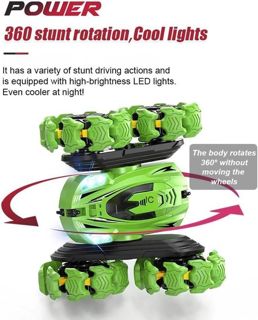
One catalog item shows the level of detail a file must reach: a 2.4GHz gesture-sensing stunt RC car with a Li-ion battery, USB cable, and charger. A radio, a rechargeable battery, and a charger in one box means three evidence families, not one.
Papers at the exam
| Product identity / SKU mapping | Why the officer asks: the certificate must describe the covered product closely enough to match it. | Where it should be: in the file as a one-page SKU sheet linking model number, variant, color, age grade. | If you do not have it: a generic category name does not establish coverage of every catalog SKU. | Identity first |
|---|---|
| ASTM F963-23 and CPSIA test report | Why: third-party testing against the applicable children's product rules. | Where: report held by the test-record holder, copy in the importer file. | If you do not have it: you cannot show which rules were tested, by whom, or when. | Test evidence |
| Children's Product Certificate (CPC) | Why: CPSC identifies the domestic manufacturer or importer as the certifier, and requires the test-record holder, manufacture, testing, and accepted laboratory information. | Where: in the file and, where applicable, in the entry data. | If you do not have it: the word CPC in a catalog is not equivalent to providing these records. | Certificate |
| Tracking label content | Why: manufacturer, date, and lot on the product or pack as required. | Where: permanent mark, plus a photo of the mark in the file. | If you do not have it: a pretty barcode with no tracking content is not a tracking label. | Labels |
| FCC / radio evidence | Why: the 2.4GHz link is governed separately CoreRCCar safety. | Where: the actual document from the radio module supplier or the factory. | If you do not have it: ask the factory for the real report; do not fill this slot from catalog data. | Radio |
| Battery file | Why: a rechargeable pack and its charger carry their own documentation. | Where: supplier battery documentation in the file. | If you do not have it: flag it as outstanding rather than assuming it exists. | Battery |
| Invoice and packing list | Why: customs checks that data aligns across the invoice, packing list, and bill of lading. | Where: broker file, matching the shipment exactly. | If you do not have it: inconsistency can trigger inspection or delay. | Entry docs |
| Trademark license or written authorization | Why: character or brand artwork on CoreRCCar needs a license from the owner. | Where: in the file before artwork is printed. | If you do not have it: unauthorized marks are detained and can be seized. | IP |
Worked example (illustrative, not a real shipment)
A buyer books roughly 1,200 units of a 2.4GHz stunt RC car into two destinations: a US 3PL for Amazon and a Canadian distributor warehouse. Same factory, same tooling, two labels, two age-grade statements, one invoice. Order quantity, cartons, and destinations are invented for illustration only.
The file looks complete until the radio row. The factory sends a certificate-style PDF that names CoreRCCar category but not the model, and no FCC document for the module. That single gap is what stops the US leg — not CoreRCCar standard, not the paint. The fix is procedural: get the model-level identity sheet, then get the actual radio document from whoever supplies the module.
The second trap is packaging divergence. The US carton carries the required warnings and the tracking mark; the Canadian carton was quoted with different artwork. If the tracking content is applied only to the pack and the pack changes per destination, the file must carry both artwork versions with both label layouts attached. One invoice line, two physical configurations, two label photos.
Where the shipment would be held: CPSC screening can review the entry and hold goods when certificate data is incomplete, and the importer must be able to show the certificate within 24 hours of a CPSC or CBP request. A missing tracking mark or a missing required warning is an independent hold reason. Budget the delay in days, not hours.
Practical sequencing that avoids this: lock the SKU identity sheet first, confirm the rule list with the lab for that exact model and age grade, then release packaging artwork, then release production. Artwork approved before the rule list is confirmed is the most expensive order in which to do it.
What should the CPC actually say for an CoreRCCar SKU?
A CPC must identify the certifier — the domestic manufacturer or importer — and carry information about the test-record holder, where and when the product was manufactured, where and when it was tested, and the accepted laboratory. Confirm the model identity on the certificate matches the SKU you are importing, not the factory's internal category.
A catalog line that says "CPC" tells you nothing about responsible parties, dates, or model identity. The document has to describe the covered product closely enough to be matched to that product; a generic category name does not establish coverage of every catalog SKU.
Rule references matter too. For an CoreRCCar the rule list should be confirmed for the exact product and age grade, including any product-specific standard — not copied from a similar unit. If the radio, the charger, or the battery chemistry changes between lots, that is a new configuration question, not a paperwork refresh.
How do tracking labels and artwork fit into the same file?
Tracking labels are content-bearing, not decoration. Manufacturer, date, and lot belong on the product or the pack as required, and the CPC stays matched to the SKU rather than to the factory door. Photograph the actual mark on the actual packaging variant and keep the photo in the file next to the certificate.
Artwork is where IP risk enters. If CoreRCCar carries a brand or character, the file needs the license or written authorization from the owner before the artwork is printed — not after the container is booked. CBP detains goods bearing a recorded trademark without authorization and can seize them.
For multi-destination programs, keep the artwork versions separate. The listing must identify the destination before you select which marking route and which label layout applies; Great Britain and Northern Ireland, for example, use different product-marking routes, so CE, UKCA, or CE UKNI evidence is selected per destination rather than assumed.
When does a material change force retesting and a new CPC?
CPSC guidance describes retesting the affected requirements after a material change to a children's product and issuing a new CPC based on the resulting passing tests. Any change that touches a tested material, color, or component is a boundary event, and the file has to show it was handled.
During an OEM or private-label request, split the bill of materials into unchanged components and changed materials, and assign one named person to coordinate the document review. Do not assume an earlier report automatically covers the revised configuration — that assumption is what turns a routine color change into a port hold.
A type-test or golden-sample report does not automatically cover a later production lot either. Match the report's SKU, materials, colors, and production date or cohort to the purchase order. If they do not line up, the report is evidence of a different product.
What should be in the radio and battery rows?
An CoreRCCar sits under two federal regimes, and they are not interchangeable. The FCC governs the radio and electronics; the CPSC governs product safety, including CoreRCCar standard and battery provisions. A children's CoreRCCar sold in the US typically needs both, and the radio evidence is often the weakest row in the file.
Route it to the source. Ask the factory for the actual FCC documentation for the module as configured, and ask whether the module is used unmodified so its authorization can carry over. Ask for the battery documentation as a document, not as a spec line. If the answer is a screenshot or a promise, the row is unverified.
Button and coin batteries deserve their own question. A historical CPSC recall dated 2026-08-06 involving Easter LED Headbands illustrates the failure mode: batteries that children can access easily pose an ingestion hazard. That case concerns named recalled products only and establishes no connection to any SKU in this article. The transferable question is whether the compartment stays secure in the configuration you are actually buying.
How long do you keep the file, and does eFiling change the stack?
Keep the certificate and the supporting test report together for at least five years. The importer must be able to show the certificate within 24 hours of a CPSC or CBP request, which means the file has to be retrievable by someone who is actually reachable.
Certificate data is now part of the entry for children's products. A licensed customs broker describes certificate data going into ACE with the entry since July 8, 2026, and CPSC children's product rules sit in 16 CFR Parts 1107 and 1110. Your broker files that data; your job is to hand over a product file that is complete and internally consistent.
Do not fold unrelated regimes into one deadline. EU conformity assessment, the technical file, the EU declaration of conformity, and affixing the CE mark sit with the manufacturer, with importers and distributors holding their own responsibilities — that is a parallel track, not a US requirement. Digital Product Passport, GPSR, and CoreRCCar safety framework are separate systems; treat them as separate files with separate dates.
What to ask suppliers before you release production
Send this list as a written RFQ attachment. Answers that arrive as a catalog page or a verbal assurance do not close a row.
Which SKU or model does the CPC cover, stated exactly as it appears on the certificate? Who is the certifier of record, and who holds the test records? Which accepted laboratory performed the testing, and what are the test dates? Which rules are referenced for this product and age grade, including any product-specific standard?
Can you send the actual FCC document for the radio module, and is the module used unmodified? Can you send the battery documentation as a file? What tracking-label content is applied, and where — product or pack? If any material changed after the last test, which components changed, and who coordinates retesting and the new CPC?
On the commercial side: what are the carton dimensions, net and gross weight, and units per carton, and do those figures match the packing list and bill of lading exactly? If artwork differs per destination, can you supply label photos for each version? Keep the answers with the certificate so the next lot can be checked against the same baseline.
What changed for 2026 — and what is still unconfirmed?
The 2026 change with a clear date is eFiling: certificate data going into the entry for children's products since July 8, 2026, per a licensed customs broker's published service description. That is an entry-process change, and it raises the cost of an incomplete file because the data now travels with the entry rather than sitting in a drawer.
Separately, CoreRCCar safety rules are under revision at the framework level, and the Commission has welcomed parliamentary adoption of a proposal to strengthen them. What is not confirmed from official text is a single applicability date on which CoreRCCar SKU must be handled a specific new way. Treat that as timeline not confirmed and keep the EU track separate from the US readiness call.
Do not import a secondhand date. A testing lab's or law firm's article headline year is not a legislative timetable. For the US file, the practical date that matters is your own ship date and whether every row above can be produced on it.
FAQ
Is a test report the same as the certificate?
No. Third-party test reports are evidence from an accepted laboratory; the CPC is the certificate issued by the domestic manufacturer or importer, and it must name the certifier, the test-record holder, and the testing details. Keep both, and keep them matched to the same SKU.
Can I use one report for several colorways?
Only if the configuration was actually tested. Testing one color or variant and certifying the whole range is a documented failure pattern, and CPSC guidance treats a material change as a retesting trigger. Split unchanged components from changed materials and assign who coordinates the review.
What happens if the tracking label is missing at the port?
CoreRCCar without tracking marks or the required warnings does not comply and can be held. Certificate data can also be rejected during CPSC screening, and the importer must be able to produce the certificate within 24 hours of a request.
Does an FCC document replace the CPC for an RC car?
No. FCC authorization covers radio emissions; the CPC covers physical and chemical safety under CPSC rules. A children's CoreRCCar typically needs both, filed together for the same SKU.
How long should I keep the file?
At least five years, with the certificate and its supporting test report stored together and retrievable by a named contact. The request window is short, so storage design matters as much as document content.
Does CE documentation make the US file ready?
No. Conformity assessment, the technical file, the EU declaration of conformity, and CE marking sit with the manufacturer under EU rules, and importers and distributors carry their own responsibilities there. That track does not satisfy US requirements; run it as a separate file.
Sources
- CPSC eFiling Mandate: What Playground CoreRCCar Importers Need to Know Before July 8, 2026
- Checklist: Essential Certifications & Documentation CoreRCCar Imports
- Der "Spielzeug-Importabfertigungs-Pass": Ihre vollständige Checkliste für eine reibungslose Zollabfertigung
- How Importers Can CoreRCCar Safety Certifications from India
Decide before the container moves
A file is ready when every row in the exam table can be produced for one named SKU, with matching dates, a reachable records contact, and label photos for each packaging variant. Anything less is a shipment you are choosing to gamble on.
If you are still specifying the unit itself, confirm the identity sheet and the rule list for that exact model before artwork is released. A single radio-controlled box with a rechargeable pack and charger carries three evidence families — plan the file around that count, not around the carton count.