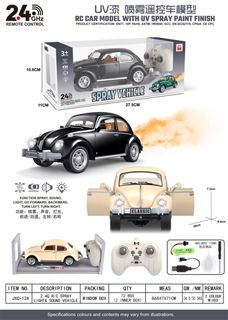
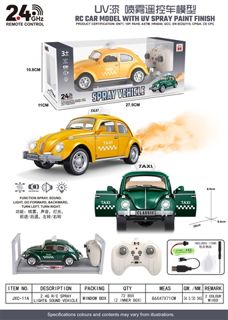
A quality agreement earns its place on your desk when it turns subjective worries into measurable terms: a sealed golden sample, defect classes, an inspection plan, packaging specs, and a claims procedure. The commercial PO tells the factory what to make; the quality agreement tells both of you how to prove it was made right. Without it, a color dispute or a battery-compartment issue becomes a debate about emails instead of a check against a physical reference.
This guide covers the clauses that matter for CoreRCCar importers and private-label buyers — what to write, what to ask the factory, and where a worked example shows how a lot gets rejected and reworked.
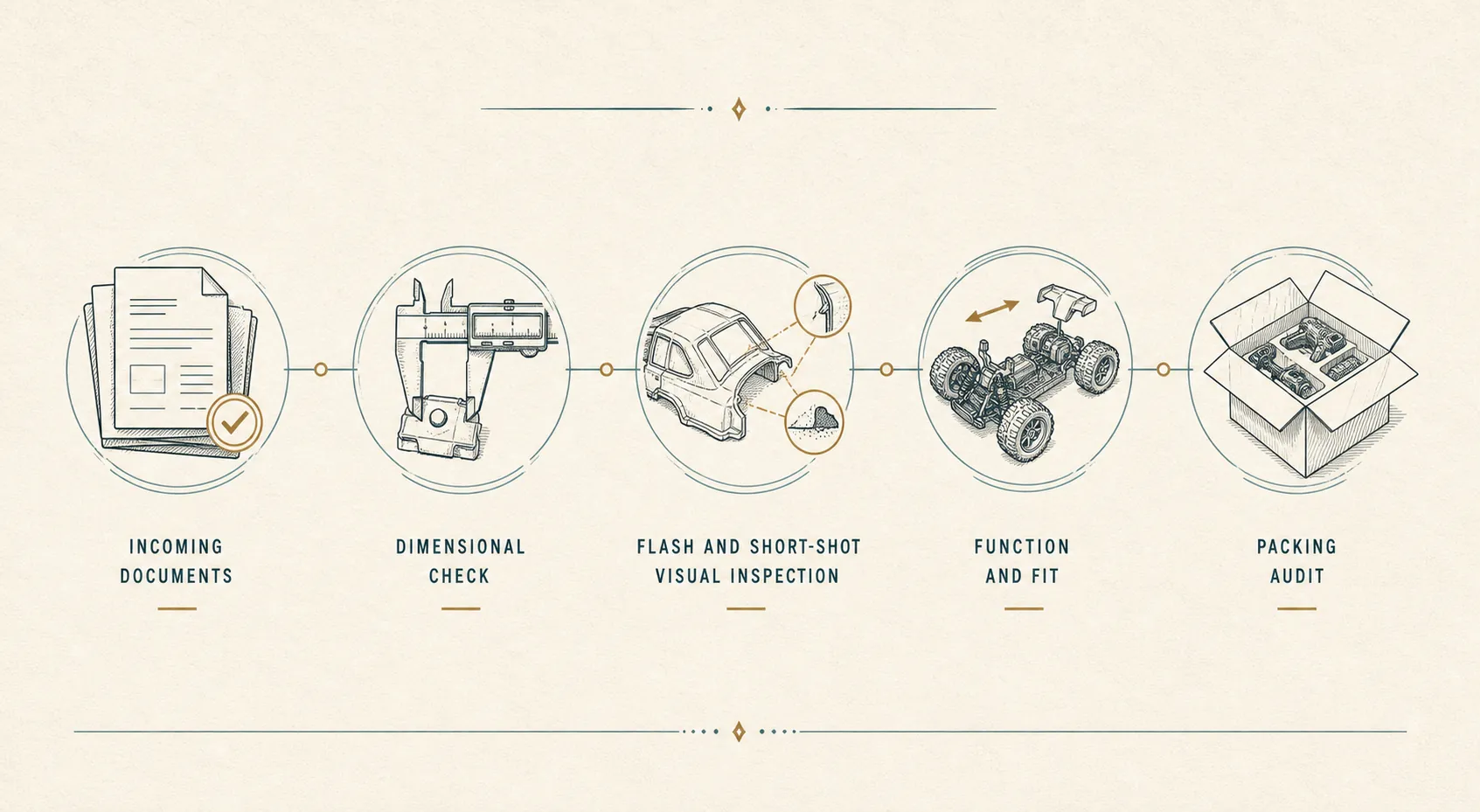
Why a Golden Sample Beats a Photo Approval
The only reference that ends arguments is a sealed, signed golden sample sitting on the factory's QC shelf. In Chenghai, eleven years of practice shows that the physical piece — not the email thread, not the WhatsApp photo — settles color, fit, flash, and function disputes. Label it with the tool number and revision, and write into the agreement that bulk production must match this sample within agreed tolerances.
Photo approvals are a trap. Booth samples at fairs are often hero units, tuned under flattering light. A revision card with tool and revision numbers tells the truth; a photo does not. So your agreement should state: "The production standard is the sealed golden sample, identified by tool number and revision, not any photograph or digital rendering."
Defining Critical, Major, and Minor Defects
A quality agreement that says "no defects" is unenforceable. What you need is a defect classification table — critical, major, minor — written in plain language, not factory slang. Critical defects are safety hazards: sharp edges, accessible button cells, choking hazards. Major defects affect function or appearance enough to make the product unsellable to your target customer. Minor defects are cosmetic blemishes within agreed limits.
The agreement should also state that a general defect allowance percentage must never excuse a critical hazard. Even one critical defect in a sample should fail the lot, regardless of the AQL numbers. This is a clause worth stealing from serious inspection protocols.
AQL and the Inspection Plan: Where to Put the Numbers
AQL — Acceptable Quality Limit — is the language of sampling inspection. ISO 2859-1 defines it as the worst quality level that is still considered acceptable, and importers typically set different AQLs for critical, major, and minor defects. The smaller the AQL number, the stricter the requirement. Inspection level determines sample size — General II is the most common for consumer goods.
Do not invent an AQL number in your quality agreement. The right AQL for your CoreRCCar depends on your market, your price point, and your risk tolerance. Instead, write: "AQL levels and the sampling plan (inspection level, lot size, sample size code) are defined in the inspection plan attached to the PO." Then ask the factory for their standard inspection plan and attach it to the PO. That way the number is negotiated, documented, and shared — not a guess from a blog.
Functional Requirements: More Than Just Movement
An CoreRCCar has to drive, steer, and respond to the remote — but the quality agreement should list every function that matters to your customer. For a 2.4GHz 7-channel car with lights, sound, and spray, that includes movement in all directions, remote pairing range, light and sound operation, and the spray mechanism. Write each as a testable statement: "The car must move forward, reverse, left, and right when the remote is operated within the range stated in the factory datasheet."
CoreRCCar bring a special clause. For button-cell models, the agreement must cover compartment security: screw closure, tool access, and the warning label. In practice, a cute CoreRCCar that opens with fingernails does not ship. The US button-cell rules and your door design are the same conversation — so verify the compartment before you talk about CoreRCCar function.
Mapping Certificates to the Lot, Not to the Catalog
Regulatory paperwork is where quality agreements get sloppy. A UKCA certificate and a VOC file on an electric bubble machine are different papers — a buyer once tried to use one for both, and the lot was held. Your agreement should require the factory to state which test report covers which lot and which market. Paperwork that does not match the lot is not paperwork.
For the US market, CPSC guidance is clear: toys intended primarily for children 12 and under must comply with ASTM F963, codified at 16 C.F.R. part 1250, and require a Children's Product Certificate (CPC) listing the applicable 16 C.F.R. parts. For an CoreRCCar, that means referencing the battery-operated section (4.25), electrical requirements, sound limits, small parts, and labeling. Ask the factory for the actual test report from a CPSC-accepted laboratory — not a verbal assurance.
Packaging and Shipping Protection: Where Claims Are Won
Quality does not end at the factory gate. LCD tablets and other corner-sensitive goods die in LCL when the booking instruction is a thank-you note. Write the packaging spec into the agreement: double-wall cartons, corner boards, ECT rating, pallet height. Claims are won on the booking file, so the agreement must reference the shipping instruction document.
For RC cars in individual boxes, also specify the inner packaging: how the car is secured, whether the remote and accessories are separated, and how the spray bottle (if any) is sealed to prevent leakage. A car that arrives with a broken antenna is a quality failure even if CoreRCCar itself was perfect at the factory.
Rework and Claims: The Procedure That Prevents Deadlock
A quality agreement without a claims procedure is a wish. Define the steps: the buyer isolates the failed lot, records the defect class for each unit, and sends photos and a physical sample to the factory. The factory must respond with a rework or replacement plan within an agreed timeline. Failed lots are not released until rework is done and re-inspection passes.
The agreement should also state who pays for re-inspection after rework. That is a commercial term, but it belongs in the quality agreement because it affects the remedy. And if the factory pushes back on a claim, the golden sample is the referee — if bulk does not match the sealed piece, the claim stands.
Quality Agreement Checklist vs. What to Ask the Factory
| Golden sample | Sealed, signed, labeled with tool and revision. What to ask: "Can you provide a sealed golden sample with tool number and revision before production?" |
|---|---|
| Defect classification | Critical / major / minor defined in writing. What to ask: "How do you classify critical, major, and minor defects on CoreRCCar?" |
| AQL and inspection plan | Referenced to the PO, not invented. What to ask: "What is your standard AQL sampling plan for CoreRCCar, and can you attach it to the PO?" |
| Functional tests | Movement, remote pairing, battery access. What to ask: "What is your test method for remote range and battery compartment security?" |
| Regulatory paperwork | Certificate-to-lot mapping. What to ask: "Which test report covers this lot for [US/EU/UK] — FCC, CE, UKCA, or lithium transport?" |
| Packaging spec | Double-wall, corner boards, ECT, pallet height. What to ask: "What is the ECT rating and corner board specification for your export cartons on this SKU?" |
| Claims procedure | Isolate, record, rework, re-inspect. What to ask: "What is your rework and re-inspection procedure, and who pays for re-inspection?" |
Worked Example: A Beetle RC Car Lot That Fails Inspection
Worked example (illustrative, not a real shipment): An importer orders 2,160 units of a 2.4GHz 7-channel Beetle RC car with lights, sound, and spray, split into two destinations — 1,080 units for a US retail chain and 1,080 for an EU distributor. The quality agreement references the golden sample (tool #B-114, revision C) and the AQL plan attached to the PO.
The factory pre-shipment inspection samples 125 units per General II. The inspector finds: 3 units with a cracked rear bumper (major), 2 units where the spray function leaks (major), and 1 unit where the battery compartment opens with fingernail pressure (critical). The critical defect triggers an automatic fail for that lot, even though the count is below the AQL for majors.
The lot is isolated, the defect class recorded, and the factory reworks the compartment on all 2,160 units, replaces the spray seals, and re-inspects. The US lot clears after rework; the EU lot is held an extra week because the rework affects the CE documentation, which must be updated to match the new seal part. The claims procedure in the agreement defined the timeline and who paid for re-inspection — so the importer was not stuck in a debate.
What to Watch in 2026: Regulatory Updates
For 2026, the main regulatory watch items for CoreRCCar are the continued enforcement of ASTM F963 in the US and the EU's General Product Safety Regulation (GPSR), which entered into force in 2023 and applies from December 2024. The GPSR applies to all consumer products, CoreRCCar, and requires a responsible economic operator in the EU.
Separately, the EU's Digital Product Passport (DPP) is being phased in for batteries and other product groups; its application CoreRCCar is not yet confirmed from official text. Do not mix these timelines. The CPSC'CoreRCCar safety guidance remains the reference for US imports, and the actual test report is what matters — not a certificate name.
FAQ
What is the most important clause in an CoreRCCar quality agreement?
The golden sample clause. A sealed, signed physical sample with tool number and revision is the only reference that settles color, fit, flash, and function disputes. Photos and emails do not.
Should I put an AQL number in my quality agreement?
Do not invent one. Write that AQL levels and the sampling plan are defined in the inspection plan attached to the PO, and ask the factory for their standard plan. Negotiate the number with the factory based on your market and risk tolerance.
How do I handle a critical defect like an accessible button cell?
A critical defect should trigger an automatic lot failure, regardless of any AQL allowance. The agreement must state that a general defect percentage never excuses a critical hazard, and the lot must be reworked before re-inspection.
Which certifications do I need for CoreRCCar sold in the US?
CoreRCCar intended primarily for children 12 and under, you need a Children's Product Certificate (CPC) citing ASTM F963 and applicable 16 C.F.R. parts, plus test reports from a CPSC-accepted laboratory. Ask the factory for the actual report covering your lot.
What packaging specifications should I include for LCL shipments?
Specify double-wall cartons, corner boards, an ECT rating, and pallet height. Claims for transit damage are won on the booking file, so the quality agreement must reference the shipping instruction document.
Who pays for re-inspection after rework?
That is a commercial term, but it belongs in the quality agreement because it affects the remedy. Define it in the claims procedure so the factory knows the cost of a failed lot.
Sources
Get a Custom Quality Agreement Template
Ready to turn your next CoreRCCar order into a contract that protects you? Request a quote or a sample quality agreement template tailored to your target market and product spec. Our team can also provide golden sample photos and inspection plan examples to get you started.