
Review every RC colorway change that alters a pigment, coating, substrate, or material supplier before relying on existing chemical-safety evidence. An unchanged mold does not establish that a new color is covered, but a color change does not automatically call for a full retest either. Reuse existing reports only after the changed parts are mapped to their tested materials and the lab’s scope assessment supports that reliance; otherwise, resolve the affected provisions through additional evidence or targeted testing before releasing the purchase order.
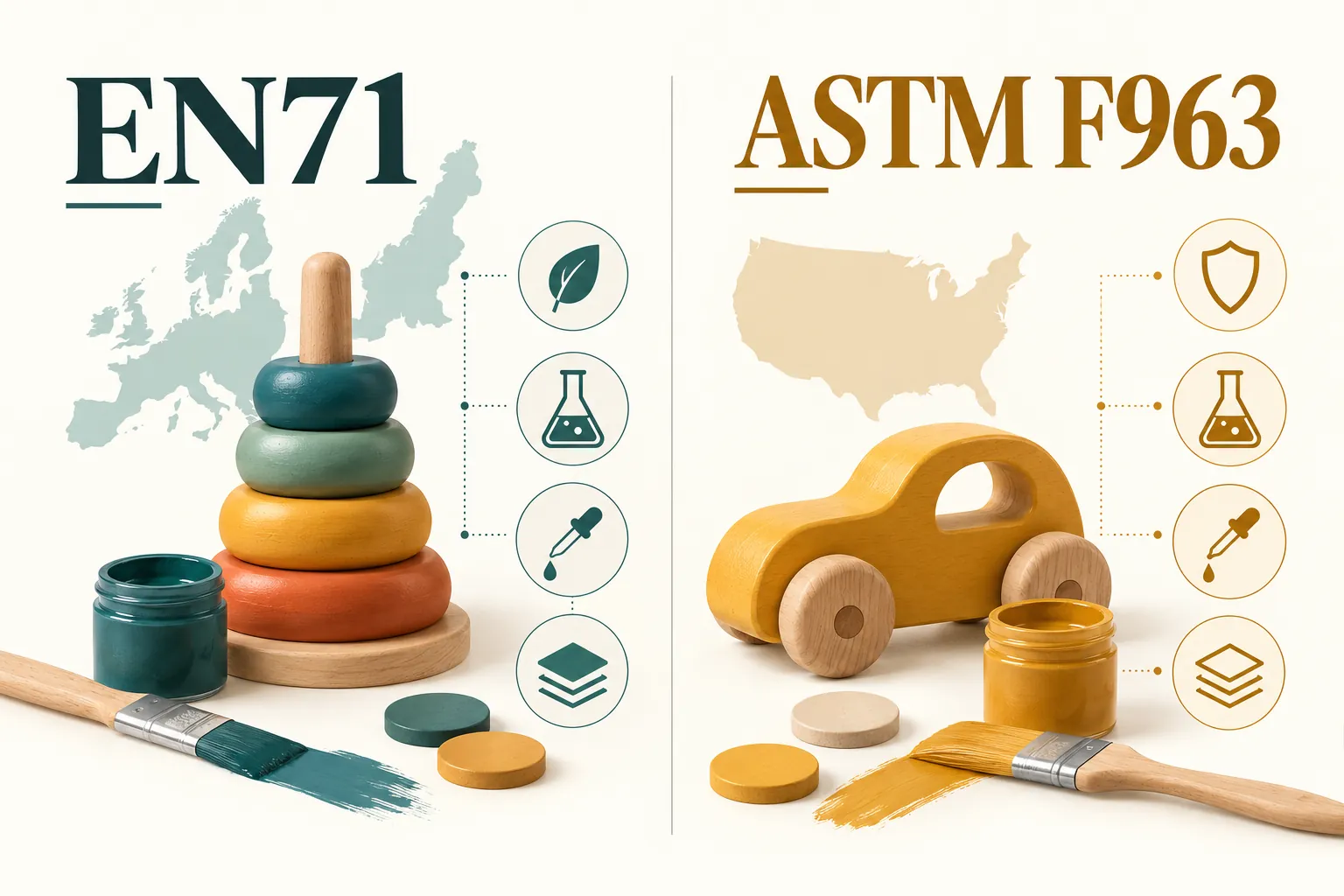
Which parts, materials, pigments, coatings, and suppliers differ from the tested version?
Compare the new colorway with the tested construction part by part, rather than treating the color name as the change description.
For an CoreRCCar, inspect the body shell, trim, wheels, controller housing, buttons, and any printed or coated decoration that changes. Mark unaffected parts as unchanged only after the factory confirms their material specifications and suppliers.
Separate color mixed into a molding material from a coating applied over it. A pigment change within the same resin grade is a different change from adding paint, replacing a clear coat, or changing the underlying substrate. The review needs to identify which occurred—not merely that the CoreRCCar is now blue instead of red.
Request a dated material-change declaration identifying the old and proposed resin grades, colorant or masterbatch references, coating product references, coating manufacturer, and application subcontractor where relevant. Include formulation revisions and any accompanying change to additives, adhesive, printing ink, or finish. A declaration should identify the materials being compared; a general statement that CoreRCCar is compliant is not an adequate change description.
Treat a supplier substitution as a review trigger even if the requested shade stays the same. Ask whether the material manufacturer, formulation, and production process remain unchanged, rather than assuming that a matching appearance establishes chemical equivalence.
Do the existing reports cover this product, these materials, and these colors?
Existing evidence can support the new colorway only when its tested samples and material coverage can be connected to the proposed production specification.
Request the complete item-specific reports, including sample descriptions, photographs, material or component identification, tested provisions, results, and relevant appendices. Compare those details with the revised bill of materials and change declaration. Check the actual report—not just a certificate image or a catalog statement.
Look for a traceable connection between each changed part and the evidence offered for it. If a report describes a red molded shell, ask the lab whether its evidence also supports the proposed blue colorant. If several colors or components were assessed together, ask how the results support the particular material now being ordered.
A new internal product identifier does not, by itself, establish that new testing is needed. Equally, retaining the old identifier does not establish that a changed formulation remains covered. The decision follows the tested construction and applicable requirements, not the naming convention.
Do not assume that a report for a related RC car, truck, or boat covers the order merely because it comes from the same factory. Require an explicit product-and-material mapping and have the lab assess any proposed extension of coverage.
Which chemical-safety scope applies in the US and EU?
Identify the destination market, intended age group, and affected material provisions before deciding which reports can support the change.
For CoreRCCar intended for children 12 years of age and under, CPSC states that third-party testing and a Children’s Product Certificate are required for applicable children’s product safety regulations, including 16 CFR part 1250. ASTM F963-23 became effective for CoreRCCar manufactured on or after April 20, 2024. CoreRCCar Safety
The US distinction between a surface coating and the underlying substrate matters because CPSC identifies separate ASTM F963 provisions for them. The coating lead limit below is not a substitute for assessing the substrate or other applicable chemical requirements. CoreRCCar Safety
Qualifying, registered Small Batch Manufacturers may receive limited relief from certain third-party testing requirements, but that relief is not automatic and does not remove the CPC requirement. Do not assume it applies to an imported RC order. CPSC ASTM F963 Chart
For an EU order, ask the lab to identify the relevant EN 71 chemical-testing provisions, edition, and material categories for the changed parts. Request a written assessment of whether the existing EU reports cover the proposed materials or whether additional testing is appropriate. A US ASTM report should not be treated as the EU coverage decision.
| US surface-coating testing | ASTM F963 section 4.3.5.1(2), Surface Coating Materials, is among the provisions requiring testing by a CPSC-accepted third-party laboratory, excluding referenced labeling or instructional-labeling requirements. |
|---|---|
| US substrate testing | ASTM F963 section 4.3.5.2, Toy Substrate Materials, is among the provisions requiring testing by a CPSC-accepted third-party laboratory, excluding referenced labeling or instructional-labeling requirements. |
| US lead limit for paint and similar coatings | Products intended for children 12 years of age or younger must not bear paint or similar surface coatings containing more than 0.009 percent, or 90 ppm, lead. |
How should two apparently simple RC color changes be assessed differently?
A molded-color substitution and a newly painted finish need different evidence checks, even when both use the same body-shell geometry.
Illustrative comparison—not a tested product result: an existing RC shell uses red colorant mixed into its molding resin, and the proposed version uses blue colorant in the same declared resin grade. The focused review is whether the blue colorant and finished substrate are supported by the existing evidence. Retain evidence for unchanged parts where justified, and ask the lab whether the new colorant needs additional material evidence or targeted substrate testing.
Now consider a proposed painted blue finish over that shell. The change introduces a coating layer, not merely a different molded color. Identify the coating formulation, manufacturer, application process, and underlying material. Ask the lab to assess both the new coating and the relevance of the existing substrate evidence; do not carry over the red shell’s report as proof of the painted construction.
If the factory also changes the resin grade or coating manufacturer, add that substitution to the same review. The useful boundary is the actual change list. Neither example automatically invalidates all evidence for CoreRCCar, and neither justifies automatic approval.
Which samples and questions should go to the lab?
Send the lab the proposed production construction, the previous evidence, and a precise change list so it can assess continued coverage or define targeted testing.
Agree the sample form and quantity with the lab before submission. Offer a retained reference or golden sample of the approved version, a representative sample of the proposed colorway, labeled changed components, and the relevant material declarations. Ask whether coating material, separately prepared specimens, or finished parts are needed for the proposed methods.
Identify each sample by product revision, part, color, material reference, supplier, and sample date. Record how the proposed sample was made and require the factory to confirm whether its materials and coating process match the intended production specification. A hand-finished appearance sample should not silently stand in for a different bulk-production process.
Ask for a written answer to three questions: Which existing evidence remains applicable? Which changed materials or provisions need additional evidence or testing? What sample and production conditions must remain true for that conclusion to hold?
Use the golden sample to compare part identity, color placement, and finish against the specification. That commercial inspection supports sample traceability; visual approval does not establish chemical safety.
What belongs in the colorway compliance-change record?
Keep a revision-controlled record that links the proposed specification, observed samples, evidence assessment, lab advice, and purchasing decision.
Identity and revision: Record the RC product name, factory product reference, destination market, intended age group, previous approved revision, proposed colorway revision, change-record identifier, and preparation date.
Change list: Identify each affected part and compare the previous and proposed substrate, pigment or masterbatch, coating, material manufacturer, and application supplier. State what remains unchanged and identify the supporting factory declaration.
Specified target versus observation: Enter the required material and finish beside what was observed or documented on the submitted sample. Reference sample labels, photographs, and the retained golden sample. Distinguish a visually confirmed feature from a supplier-declared formulation.
Evidence coverage: List the report identifiers, tested sample descriptions, applicable provisions, and the changed parts each report supports. Attach the material declarations and any written explanation linking differently named product variants.
Lab advice: Record the laboratory contact, advice date, written scope conclusion, proposed tests where needed, and the conditions attached to continued reliance on existing reports.
Decision and conditions: Select reuse of existing evidence, targeted additional testing, or hold pending clarification. Explain the basis and list any open conditions. As a purchasing control, keep the order on hold where the chemical-safety coverage decision remains unresolved; this is not a claim that the product has failed.
Responsible approval and date: Name the buyer’s responsible compliance approver, record the approval date, and identify the factory owner responsible for implementing the agreed specification.
Follow-up closure: Assign an owner and due date to each open action. Record the final reports or clarification received, the closure date, and the final release authorization. If production introduces another material or supplier substitution, reopen the assessment.
This record makes the decision traceable. It does not, by itself, detect an undisclosed substitution; pair it with agreed change-notification requirements and production identity checks.