Sort CoreRCCar-grade RC catalog by platform, not by feature list: SKUs that share a scale, a 2.4GHz protocol, a controller and a battery format are your core-stock candidates, while spray, gesture-only and music-light stunt cars belong in a small seasonal test bucket with an exit date agreed before the PO. The practical decision this page settles is which RC SKUs deserve a repeat purchase order and which should be bought once, at the lowest workable quantity, and then judged on sell-through.
The reason is not that novelty sells badly. It is that novelty sells briefly, and a short novelty cycle leaves you holding spare parts, packaging and after-sales obligations for a car nobody reorders. Core stock is a platform decision: one chassis family, one parts bin, one set of test documents, many colorways across seasons.
This page is written for importers, Amazon sellers, supermarket and gift-distributor buyers and private-label owners CoreRCCar-grade RC — not hobby-grade racing. Where a spec matters (spray, lithium, FCC, IP), the answer is not a claim on this page: it is the report you request from the factory before the bulk order.
What can change after the sample
| Item | Sample: single unit, often hand-assembled or golden sample. Bulk: production tooling, multi-cavity molds, assembly-line output. |
|---|---|
| Body and chassis color | Sample: matched to the Pantone or physical chip you approved. Bulk: verify the color standard is written into the PO with a tolerance; plastic and ABS batches shift. |
| Packaging | Sample: often window box or display carton. Bulk: confirm box vs polybag, insert, and whether seasonal artwork changes the carton cost line. |
| Structure and fit | Sample: check the snap-fit, wheel retention and battery compartment latch. Bulk: ask which dimensions are controlled by the tool and which by assembly. |
| Decals, lights and spray | Sample: function demonstrated on one unit. Bulk: ask for the incoming-component check on printed parts and light modules before assembly. |
| Battery and charger | Sample: may not be the shipping cell or charger. Bulk: request the actual battery spec sheet and charger document; do not rely on the listing text. |
| Test reports | Sample: may be a pre-production report. Bulk: confirm which report covers the production batch and its date. |
| Age grading and small parts | Sample: age label may be marketing-led. Bulk: the US small-parts analysis must match the intended age grade and reasonably foreseeable use — a 3+ label cannot automatically replace a 0-3 assessment. |
| IP and licensing | Sample: brand marks may sit on the decal sheet. Bulk: confirm licensing in writing before any core commitment; a branded race car is a legal review item, not a stocking item. |
| Price and MOQ tier | Sample: quoted at one tier. Bulk: confirm the tier, the case pack and whether the price holds across a seasonal reorder. |
Which RC SKUs actually qualify as year-round core stock?
A SKU earns core status when demand exists without a calendar prompt and when the platform is shared with at least one other SKU in your range. Driving, drifting and racing are evergreen play themes — a child plays them in February the same way they play them in November. Spray bursts, gesture-only steering and music-and-light stunt modes are demo features: they sell the first unit, then stop selling the second.
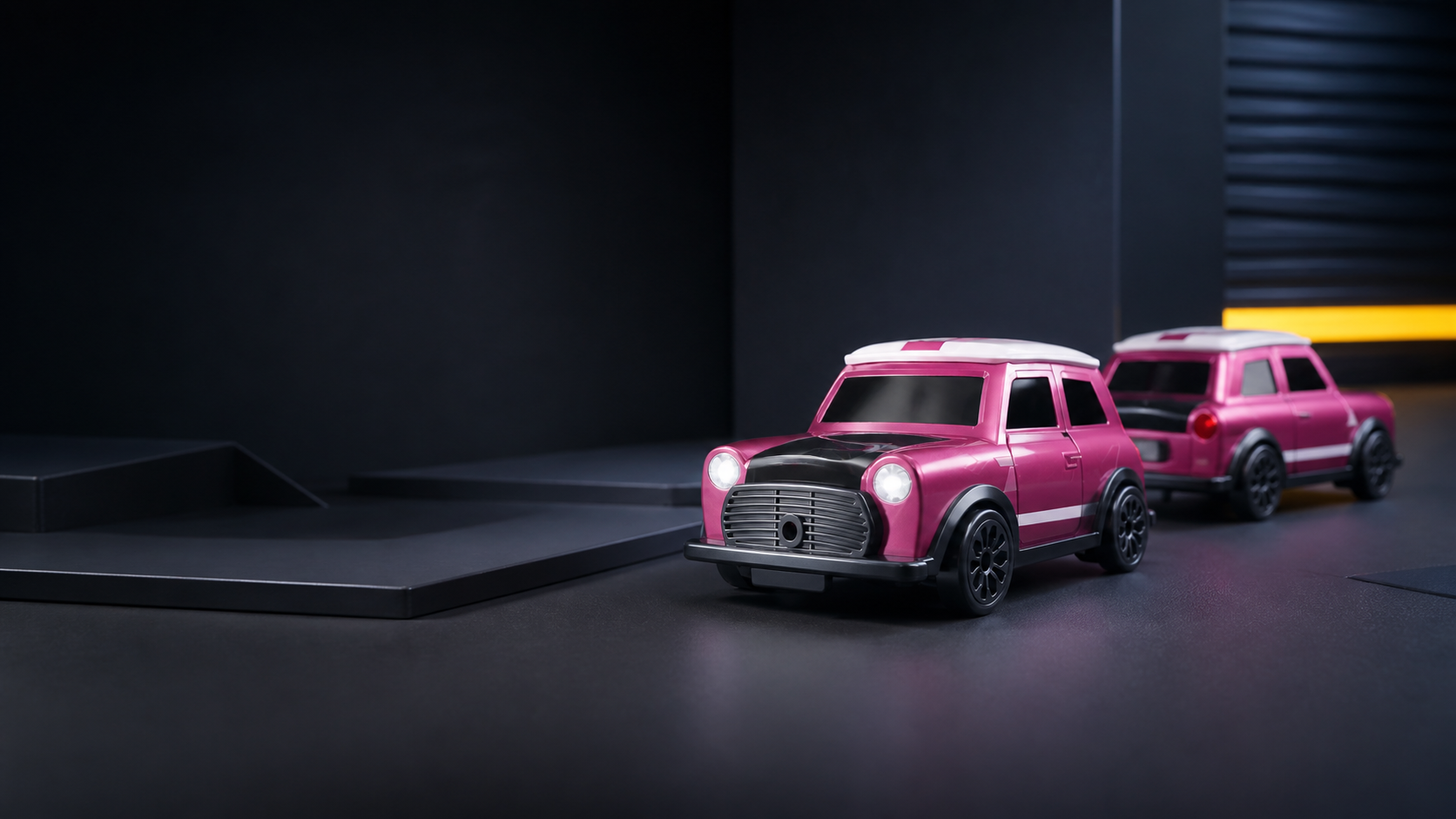
Four signals decide it. First, shared platform: same scale, same 2.4GHz protocol, same battery format, same controller. When a 1/43 mini drift car and a second 1/43 mini drift car sit on the same platform, one spare-parts commitment covers both, and a customer who liked the first has an obvious second purchase. Second, reorder history: if the same buyer repeats without a seasonal trigger, that is the strongest core signal you will ever get, and it beats any forecast.
Third, packaging neutrality. A core SKU ships in standard packaging all year; the moment it needs Halloween or Christmas artwork, it has become a seasonal SKU with a seasonal carton cost. Fourth, verifiability. If the factory cannot hand you the battery spec sheet, the charger document or the test report covering the production batch, the SKU is not core-ready however well it sells — you cannot support it for twelve months on a listing description.
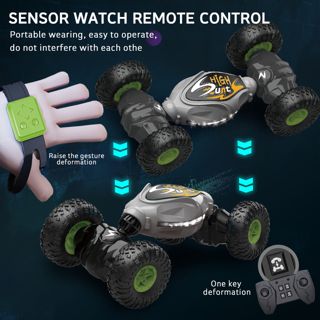
The inverse is equally clear. A SKU whose entire appeal is one mechanic — a spray function, a wrist-controller gesture gimmick, a double-controller twist stunt — should be bought as a test, at the lowest tier that still produces a readable sell-through number. Two such SKUs can look identical on a marketplace page and behave completely differently on a reorder spreadsheet.
How much should a first test order be, and when do you kill the SKU?
Start at the lowest MOQ tier the factory quotes for that SKU, not at the tier that makes the order feel substantial. The catalog spread CoreRCCar-grade RC is wide — the same factory may quote 36, 54, 108, 120, 180 or 216 units depending on the model — and your test quantity should be the smallest number that still gives you a readable signal after the first reorder window. If a SKU needs a large opening order to be worth producing, that is itself a reason to keep it out of the test bucket.
Agree the exit criteria before the PO is signed, in writing, with three numbers and one owner: a sell-through threshold by a named week, a return or defect ceiling, and a decision date. Then name who owns the spare-parts obligation if the SKU graduates to core. A test without an exit date is just a slow core commitment, and the parts commitment arrives whether or not the sell-through does.
One caution worth writing into the exit sheet: some test SKUs carry age positioning that raises the small-parts question early. A wall-climbing car labelled for kids 3+ still needs its intended age grade and reasonably foreseeable use assessed against the US small-parts rule rather than assumed from the label. According to the US Consumer Product Safety Commission, 16 CFR 1501 CoreRCCar and products intended for children under three years that present a small-parts choking hazard. Ask the factory which report covers that SKU and its date before you decide between core and test.
One approval to get in writing
Pick the single highest-risk variable on the SKU and lock it as a written approval — usually color, sometimes packaging, sometimes structure. CoreRCCar-grade RC, color is the one that quietly breaks orders. A sample matched to a physical chip and a bulk run shot in a different resin batch will not look the same under retail lighting, and "close enough" is not a clause.
Write the approval as a named standard plus a tolerance, attached to the PO, with the golden sample retained on both sides. Do the same for the packaging if a seasonal carton is involved: window box versus polybag is a real cost line, and a switch in either direction should show up as a number on the quote, not as a surprise at shipment.
If the SKU carries a spray function, gesture control, a battery and charger, or any brand mark, the approval sheet is not the place to settle it — that is a document request. Ask the factory for the actual report or spec sheet covering the production batch, and treat an unanswered request as a reason to hold the SKU in test. The same discipline applies to novelty packaging: Halloween, Christmas and Easter CoreRCCar CoreRCCar if they are designed or intended for play, and seasonal packaging does not waive EN 71, ASTM F963 or CPSIA.
For buyers mapping this onto a real range, gesture and spray stunt models are the classic test-bucket entry — a SKU whose appeal is a demo feature rather than an evergreen play pattern belongs in a small first order with a decision date, not in the core commitment.
Where do these RC cars come from, and what does that mean for reorders?
Toy-grade RC bodies, chassis and controllers are overwhelmingly injection-molded plastic or ABS, and that supply base clusters in Chenghai, Shantou — the same district where most of this catalog's models are produced. Injection molding means tooling, and tooling means the mold that made your approved sample is also the mold that will make your reorder. Ask who holds the tool, and get the drawings, color standards and test requirements covered by an agreement before you send them.
Chenghai's density is an advantage for parts commonality and a risk for differentiation. Because the same platform is often sold to multiple buyers under different packaging, your defensible position is not the mold — it is the packaging, the color standard, the parts commitment and the reorder history you build on top of it. A core SKU you have supported for three seasons with one parts bin is worth more than a novelty car that spiked for six weeks.
FAQ
How do I decide which RC car SKUs to keep year-round?
Keep the SKUs that share a platform and sell without a calendar trigger. Score each SKU on four things: shared scale, protocol, controller and battery format; repeat orders from the same buyer; packaging that works in any month; and a test report or spec sheet the factory can actually produce for the production batch. SKUs that fail on verifiability stay in test, however strong the sell-through.
What should my first test order quantity be for a novelty RC car?
The lowest MOQ tier the factory quotes for that specific model, because that is the smallest order that still yields a readable sell-through signal. Toy-grade RC MOQ tiers vary by model, so ask per SKU rather than accepting a single house minimum, and treat a large opening-order requirement as a reason to keep the SKU out of the test bucket.
Can I use seasonal packaging on a novelty RC car without extra testing?
No. Halloween, Christmas and Easter CoreRCCar CoreRCCar if they are designed or intended for play, and seasonal packaging does not waive EN 71, ASTM F963 or CPSIA. The packaging changes; the test obligation does not.
What should I get in writing before the bulk order runs?
One approval locked as a named standard with a tolerance — usually body color — attached to the PO and backed by a retained golden sample on both sides. Add the packaging spec if a seasonal carton is involved, and confirm which test report covers the production batch and its date. Anything involving spray, battery, charger or a brand mark is a document request, not an approval you can grant yourself.
Which RC car features are riskiest to build a core range around?
Anything whose appeal is a single demo mechanic: spray bursts, gesture-only steering, music-and-light stunt modes, and double-controller twist functions. They sell the first unit well and the second unit poorly, and they carry after-sales obligations without a shared platform to absorb them. Buy them at test quantity, with an exit date.
How do I set exit criteria for a seasonal RC test?
Write three numbers and one owner before the PO: a sell-through threshold by a named week, a return or defect ceiling, and a decision date. Add the name of whoever owns the spare-parts obligation if the SKU graduates to core. Without a decision date, a test quietly becomes a permanent commitment the first time you reorder it.
Sources
- Everything We Saw at RuneFest 2026, Including RuneScape 4 and RuneScape Reignited
- Everything We Saw at RuneFest 2026, Including RuneScape 4 and RuneScape Reignited
- Old School RuneScape 2026 Roadmap
- The Roadmap That Changes RuneScape Forever - News - RuneScape - RuneScape
Put the sorting logic to work on your next range review
If you are building CoreRCCar-grade RC range for 2026 and want the platform, packaging and parts questions answered against your own assortment, start with the sample-to-bulk comparison you can actually verify — then decide what earns the shelf and what stays a test.